


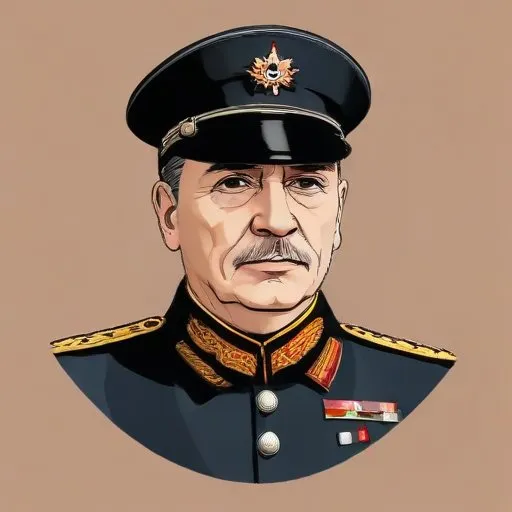
A renowned German actor and singer, celebrated for his iconic roles in film and theater, particularly in the Weimar Republic era, and his distinctive baritone voice.
Ernst Busch was a renowned German singer and actor, celebrated for his powerful voice and unwavering commitment to his craft. Born on January 22, 1900, in Kiel, Germany, Busch is best known for his iconic performances in the Berlin Kabarett scene of the 1920s and his starring role in Bertolt Brecht's The Threepenny Opera.
Busch's early life was marked by a passion for singing and acting. He began his career as a shipyard worker, but soon turned to the performing arts, leveraging his talents to become a prominent figure in the Berlin Kabarett scene. It was here that he developed a reputation for his powerful voice and interpretive skills, earning him the admiration of audiences and critics alike.
A lifelong communist, Busch was forced to flee Nazi Germany in 1933, seeking refuge in the Netherlands. He later settled in the Soviet Union, where he worked with Gustav von Wangenheim on the film Kmpfer (Fighters) in 1935. During the Spanish Civil War, Busch joined the International Brigades, fighting against the nationalists and recording songs that were broadcast by Radio Barcelona and Radio Madrid.
After the fall of the Spanish Republic, Busch was interned in Belgium and later imprisoned in Camp Gurs, France, and Berlin. He was finally freed by the Red Army in 1945, settling in East Berlin where he began a new chapter in his career, acting in the first play to be produced in the American-occupied zone, Thunder Rock by Robert Ardrey.
Busch's post-war career was marked by a series of critically acclaimed performances, including his iconic portrayal of the title role in Brecht's Life of Galileo. He also founded his own record label, working with luminaries such as Bertolt Brecht and Erwin Piscator at the Berliner Ensemble. His recordings of workers' songs, including those written by Hanns Eisler, remain some of his most enduring legacies.
Ernst Busch's remarkable life and career serve as a testament to the power of art and activism. Through his music and performances, he inspired generations of artists and intellectuals, leaving an indelible mark on German cultural heritage. Today, his legacy continues to inspire, reminding us of the importance of standing up for one's beliefs and using one's talents to make a positive impact on the world.
Ernst Busch's remarkable life and career serve as a testament to the power of art and activism. Through his music and performances, he inspired generations of artists and intellectuals, leaving an indelible mark on German cultural heritage.
Born in 1889
The dictator of Nazi Germany, responsible for the genocide of six million Jews and millions of other people during World War II, and infamous for his extreme nationalist and anti-Semitic ideology.
Born in 1893
A high-ranking Nazi official, he was a decorated World War I fighter pilot and later became a prominent politician, serving as Minister President of Prussia. He's infamous for his role in the Nazi regime and war crimes trials.
Born in 1900
Leading the SS and Gestapo, he oversaw the Nazi regime's brutal security apparatus and implemented the "Final Solution," orchestrating the genocide of six million Jews during World War II.
Born in 1893
A German diplomat who served as the Nazi regime's Foreign Minister, orchestrating key alliances and treaties that led to World War II. He was a close associate of Adolf Hitler and played a crucial role in shaping Nazi foreign policy.
Born in 1882
A high-ranking Nazi officer who served as the Chief of the OKW, the German High Command, during World War II, and was known for his unwavering loyalty to Hitler. He was tried and executed for war crimes after the war.
Born in 1876
A German naval leader who played a key role in the Kriegsmarine during World War II, overseeing the German U-boat fleet and naval operations. He was a close advisor to Adolf Hitler and implemented the German naval strategy during the war.
Born in 1891
A German naval commander who led the U-boat fleet during World War II and briefly served as President of Germany after Hitler's death, known for his role in the war and its aftermath.
Born in 1880
A German field marshal who led the Wehrmacht during World War II, playing a key role in the invasion of Poland and the Battle of Moscow. He was a prominent figure in the German high command during the war.
