


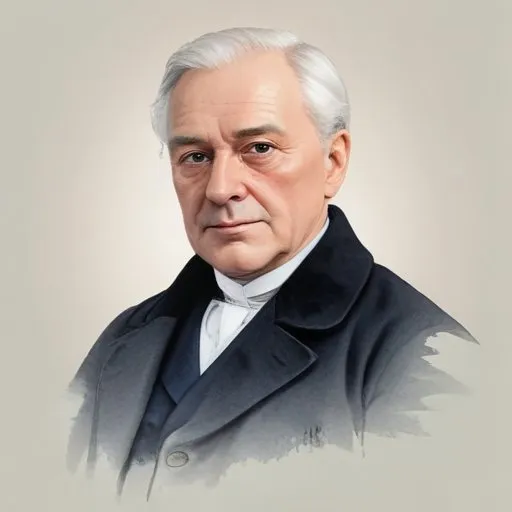
A German physician who conducted medical experiments on prisoners in Nazi concentration camps, leading to the deaths of thousands. He's infamous for his inhumane practices during WWII.
Ernst Robert Grawitz, a German physician, is infamously known for his pivotal role in Nazi human experimentation on concentration camp inmates and his administration of the T4 Euthanasia Program, which sought to systematically eliminate individuals deemed physically or mentally unfit. His involvement in these atrocities has left an indelible mark on the history of medical ethics, making him one of the most controversial figures of the Nazi era.
Grawitz was born on June 8, 1899, in Charlottenburg, Berlin, Germany. He pursued a career in medicine, eventually becoming the Reichsarzt SS und Polizei (Reich Physician SS and Police), a position that granted him significant authority and influence within the Nazi regime.
As a key administrator of the T4 Euthanasia Program, Grawitz played a crucial role in the systematic killing of mentally and physically handicapped individuals, including children. This program, which began in 1939, involved the selection of doctors who would carry out the operational part of the killing program, with Grawitz responsible for forwarding requests to Reichsführer-SS Heinrich Himmler for final approval.
Grawitz also funded Nazi programs aimed at eradicating homosexuality, which involved experimentation on inmates in concentration camps. These experiments were allegedly conducted to find a "cure" for homosexuality, further highlighting the depraved nature of Grawitz's actions.
Towards the end of World War II in Europe, Grawitz served as a physician in Adolf Hitler's Führerbunker. When he learned that other officials were fleeing Berlin to escape the advancing Soviet Red Army, Grawitz petitioned Hitler to allow him to leave Berlin; however, his request was denied. As the Soviet Red Army advanced on Berlin, Grawitz killed himself and his family with grenades at their home, bringing an end to his life of atrocities.
Grawitz's actions serve as a stark reminder of the dangers of unchecked authority and the corrupting influence of power. His involvement in the Nazi regime's darkest atrocities has left a lasting impact on our understanding of medical ethics and the importance of upholding humanity, even in the face of extreme ideologies.
Grawitz's role in the Nazi regime's atrocities has made him a reviled figure, with many regarding him as a symbol of the horrors perpetrated during World War II. His actions have sparked intense debate and reflection on the nature of humanity and the importance of protecting human life.
Grawitz's actions can be compared to those of other notorious figures of the Nazi regime, such as Josef Mengele and Adolf Eichmann, who also played significant roles in the regime's atrocities. A comparative analysis of these individuals can provide valuable insights into the psychological and ideological motivations behind their actions.
The atrocities committed by Grawitz and his contemporaries have had a lasting impact on modern society, serving as a stark reminder of the dangers of extremism and the importance of upholding human rights. His legacy has also led to the development of stricter ethical guidelines for medical professionals, ensuring that such atrocities are never repeated.
Born in 1900
Leading the SS and Gestapo, he oversaw the Nazi regime's brutal security apparatus and implemented the "Final Solution," orchestrating the genocide of six million Jews during World War II.
Born in 1889
The dictator of Nazi Germany, responsible for the genocide of six million Jews and millions of other people during World War II, and infamous for his extreme nationalist and anti-Semitic ideology.
Born in 1897
A mastermind of Nazi propaganda, he crafted a persuasive narrative that fueled the Third Reich's rise to power, leaving a lasting impact on the world.
Born in 1893
A high-ranking Nazi official, he was a decorated World War I fighter pilot and later became a prominent politician, serving as Minister President of Prussia. He's infamous for his role in the Nazi regime and war crimes trials.
Born in 1894
A high-ranking Nazi official who flew to Scotland on a solo mission to negotiate peace with the UK, but was instead arrested and imprisoned.
Born in 1893
A German diplomat who served as the Nazi regime's Foreign Minister, orchestrating key alliances and treaties that led to World War II. He was a close associate of Adolf Hitler and played a crucial role in shaping Nazi foreign policy.
Born in 1891
A German naval commander who led the U-boat fleet during World War II and briefly served as President of Germany after Hitler's death, known for his role in the war and its aftermath.
Born in 1876
A German naval leader who played a key role in the Kriegsmarine during World War II, overseeing the German U-boat fleet and naval operations. He was a close advisor to Adolf Hitler and implemented the German naval strategy during the war.
