


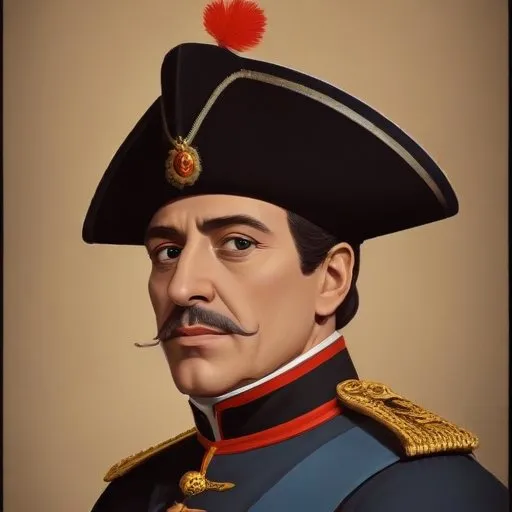
A ruthless and skilled military leader who led Spanish forces to victory in the Italian Wars and was known for his brutal suppression of the Dutch Revolt. He's infamous for his cruel tactics and massacres.
As a skilled diplomat, Toledo played a crucial role in shaping the foreign policy of the Spanish Empire. He was instrumental in negotiating the Treaty of London in 1559, which secured a temporary peace between Spain, France, and England. Toledo's diplomatic efforts also helped to frustrate the ambitions of the Ottoman Empire, which threatened to overrun Europe during the 16th century.
Toledo's personal milestones include his appointment as Viceroy of Naples in 1556, a position he held until 1558. He was also granted the title of Duke of Alba in 1556, which solidified his position as one of the most powerful men in Europe.
Despite his conservative outlook, Toledo was also a patron of the arts and sciences. He was known to have supported the work of humanist scholars and poets, including the famous Spanish writer, Juan de Valdés.
Today, Toledo is remembered as a symbol of Spanish power and prestige, and his name is invoked by both admirers and critics of his legacy. His life and career serve as a reminder of the complexities of history, where great achievements are often tempered by darker realities.
In terms of his military prowess, Toledo is often compared to other great generals of his time, including the French Marshal, Anne de Montmorency, and the German mercenary, Georg von Frundsberg. However, his unique combination of military and diplomatic skills set him apart from his contemporaries.
Today, Toledo's legacy is a subject of ongoing debate and controversy. While some view him as a hero and a champion of Catholicism, others see him as a symbol of oppression and brutality. Regardless, his impact on European history is undeniable, and his life serves as a testament to the power and intrigue of the Spanish Empire at its zenith.
Born in 1545
A brilliant military commander who led the Spanish navy to a decisive victory against the Ottoman Empire at the Battle of Lepanto in 1571, turning the tide of the war in favor of Christendom.
Born in 1533
The Virgin Queen, a powerful and beloved monarch, ruled England during a golden age of culture, literature, and exploration, establishing the Church of England and defeating the Spanish Armada.
Born in 1519
King of France from 1547 to 1559, known for his cultural and artistic patronage, and his role in the Italian Wars.
Born in 1502
Introduced the Gregorian calendar, a solar-based calendar that's widely used today, reforming the Julian calendar's inaccuracies.
Born in 1500
Ruling over a vast empire from 1519 to 1556, he was a powerful and influential leader who played a crucial role in shaping European politics and religion. He is most known for his efforts to unify Christian Europe and defend it against the Ottoman Empire.
