


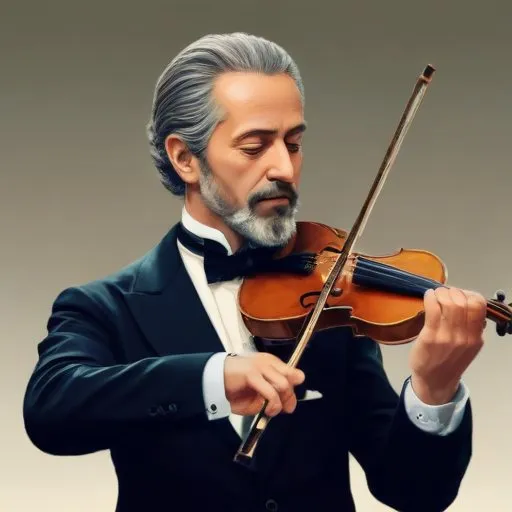
An 18th-century virtuoso violinist and composer, known for his concertos and sonatas that blended Italian and German styles, influencing the development of classical music.
Francesco Manfredini was a renowned Italian Baroque composer, violinist, and church musician, celebrated for his significant contributions to the development of the concerto grosso and sinfonia. Born on June 22, 1684, in Pistoia, Italy, Manfredini's work showcased a unique blend of Italian and European musical influences, earning him a prominent place among his contemporaries, including Johann Sebastian Bach and Antonio Vivaldi.
Manfredini was born into a musical family, with his father being a trombonist. He received his early education in violin and composition in Bologna, where he studied under the tutelage of Giuseppe Torelli, a leading figure in the development of the concerto grosso. Additionally, Manfredini received instruction in composition from Giacomo Antonio Perti, the maestro di cappella of the Basilica of San Petronio.
Manfredini's career was marked by his exceptional talent and versatility. He began his professional life as a violinist in the orchestra of the Church of San Spirito in Ferrara, around 1700. In 1704, he returned to Bologna, where he became a member of the reformed orchestra of San Petronio and published his first compositions, a set of twelve chamber sonatas titled Concertini per camera, Op. 1.
In 1709, Manfredini published Sinfonie da chiesa, Op. 2, a collection of chamber pieces that complemented his earlier chamber sonatas. After 1711, he spent an extended period in Monaco, serving Prince Antoine I, during which he composed several works, including concerti grossi and sinfonias.
Manfredini's music, though largely destroyed after his death, has left an indelible mark on the Baroque era. His extant works, comprising 43 published compositions and a handful of manuscripts, demonstrate his mastery of the concerto grosso and sinfonia. His music showcases a unique blend of Italian and European styles, reflecting the influences of his contemporaries, including Vivaldi and Bach.
Manfredini's contributions to the development of the concerto grosso and sinfonia have had a lasting impact on the world of classical music. His works continue to inspire and influence composers to this day, solidifying his position as one of the most important Italian composers of the Baroque era.
Little is known about Manfredini's personal life, including the precise nature of his relationship with the court of Monaco and the length of his stay. However, his professional milestones, including his membership in the Accademia Filarmonica and his numerous publications, demonstrate his dedication to his craft and his commitment to advancing the art of music.
Francesco Manfredini's life and works serve as a testament to his dedication to the art of music and his significant contributions to the Baroque era. Despite the loss of much of his music, his legacy continues to inspire and influence composers, ensuring his place as one of the most important Italian composers of the 18th century.
Born in 1678
A virtuosic violinist and prolific composer, he crafted over 400 concertos, including "The Four Seasons," which remains a beloved and iconic masterpiece of classical music.
Born in 1685
A master of Baroque music, he composed over 1,000 works, including orchestral suites, cantatas, and passions, that still inspire and influence musicians today. His innovative use of counterpoint and harmony raised the bar for classical music.
Born in 1685
A renowned Baroque composer and organist, famous for creating majestic orchestral suites, operas, and oratorios, including the iconic "Messiah" masterpiece.
Born in 1653
A virtuosic violinist and composer who revolutionized the concerto grosso form, creating a new era of classical music. His influential works elevated the violin to a solo instrument, shaping the course of Western classical music.
Born in 1692
A virtuosic violinist and composer who wrote over 150 concertos and sonatas, known for his technically demanding and expressive works that showcased his mastery of the instrument.
Born in 1782
A virtuosic violinist and composer who revolutionized the instrument's technical possibilities, leaving an indelible mark on classical music.
Born in 1685
A virtuosic harpsichordist and composer, renowned for crafting over 550 sonatas that showcased his innovative and expressive style, blending Italian and Portuguese influences. 42
