


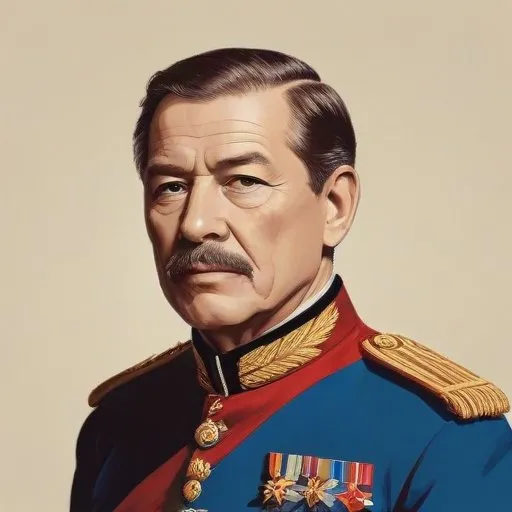
The 6th Governor-General of the Philippines, a military leader and politician who played a significant role in shaping the country's early 20th-century governance and infrastructure development. He's most known for his progressive reforms and infrastructure projects.
Francis Burton Harrison, a trailblazing American statesman, left an indelible mark on the Philippines, serving as the Governor-General from 1913 to 1921 and earning the distinction of being the only former Governor-General to be awarded Philippine citizenship. This remarkable achievement is just one facet of his illustrious career, which spanned multiple decades and offices, solidifying his legacy as a champion of cultural understanding and cooperation.
Born on December 18, 1873, in New York City, Harrison was surrounded by influential figures, being the son of Burton Harrison, a lawyer and private secretary to Confederate President Jefferson Davis, and Constance Cary Harrison, a novelist and socialite. Through his maternal lineage, Harrison was a great-grandson of Thomas Fairfax, 9th Lord Fairfax of Cameron, and a relative of United States founding fathers Gouverneur Morris and Thomas Jefferson.
Harrison's academic prowess earned him a degree from Yale College in 1895, where he was a member of the Psi Upsilon fraternity and the esteemed Skull and Bones secret society. He furthered his education at the New York Law School, graduating in 1897, and later served as an instructor in the Evening Division from 1897 to 1899.
Harrison's entry into politics began with his election to the 58th United States Congress in 1903, where he served for two years. He attempted to secure the lieutenant governorship of New York in 1904, but was unsuccessful. Undeterred, Harrison resumed his law practice and later won elections to the 60th, 61st, 62nd, and 63rd United States Congresses, serving from 1907 to 1913.
During his tenure in Congress, Harrison introduced the Harrison Narcotics Tax Act, a landmark legislation aimed at regulating the opium trade and combating drug addiction.
In 1913, President Woodrow Wilson appointed Harrison as the Governor-General of the Philippines, a position he held until 1921. During his tenure, Harrison fostered strong relationships with the Filipino people, earning their trust and respect. His commitment to the country's development and independence led to his appointment as a prominent adviser to the president of the Philippine Commonwealth and the subsequent presidents of the Republic of the Philippines.
Harrison's contributions to the Philippines are immeasurable. He played a crucial role in shaping the country's path towards independence, and his appointment as a naturalized citizen is a testament to his dedication and commitment to the Filipino people.
As a statesman, Harrison embodied the essence of cultural understanding and cooperation, bridging the gap between two nations and fostering a legacy that continues to inspire generations.
Francis Burton Harrison's remarkable journey, marked by unwavering dedication and commitment to public service, serves as a beacon of inspiration, reminding us of the transformative power of cultural understanding and cooperation.
Born in 1858
A pioneering leader who championed progressive reforms, trust-busting, and conservation, earning a Nobel Peace Prize for mediating the Russo-Japanese War. He's also famous for his rugged outdoorsmanship and "big stick" diplomacy.
Born in 1857
The 27th President of the United States was a lawyer and jurist who served as the only person to hold the offices of President and Chief Justice of the United States. He's known for his significant contributions to the country's judicial system.
Born in 1890
Led the Allied forces to victory in World War II and later served as President, maintaining peace and prosperity during the Cold War era. He's known for his strategic leadership and diplomatic skills.
Born in 1880
A highly decorated war hero and master strategist who led troops to victory in World War I and II, and later became a prominent figure in the occupation of Japan.
Born in 1869
Led the Philippine Revolution against Spanish colonial rule and later established the First Philippine Republic, becoming its first president. He's revered as a national hero for his fight for independence.
Born in 1878
The 2nd President of the Philippines, a key figure in the country's fight for independence from the US, known for his leadership during World War II and establishing a government-in-exile.
Born in 1878
The 4th President of the Philippines, a lawyer and politician who played a key role in the country's transition from American colonial rule to independence. He's most known for his efforts in rebuilding the war-torn nation after World War II.
Born in 1899
A Filipino soldier and politician who served as President of the United Nations General Assembly, known for his efforts to promote international cooperation and peace. He was a key figure in shaping the UN's early years.
