


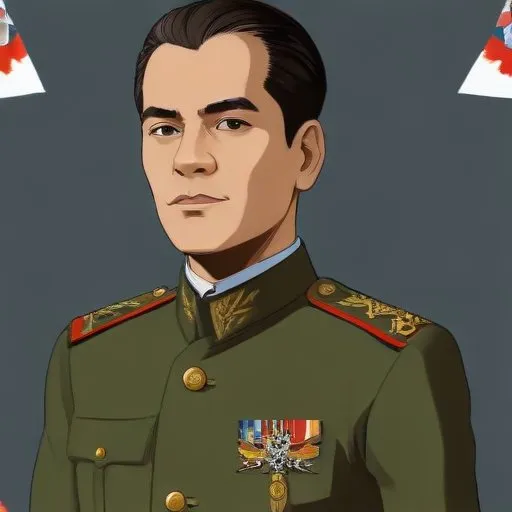
The 2nd President of the Philippines, a key figure in the country's fight for independence from the US, known for his leadership during World War II and establishing a government-in-exile.
Manuel Luis Quezon y Molina, also known by his initials MLQ, is renowned as the first Filipino to head a government of the entire Philippines. He served as the president of the Commonwealth of the Philippines from 1935 until his death in 1944, leaving an indelible mark on the country's history.
During his presidency, Quezon tackled several pressing issues, including the problem of landless peasants. He implemented reforms to address this concern, which greatly benefited the agricultural sector. Additionally, he oversaw the reorganization of the islands' military defense, approved recommendations for government reorganization, and promoted settlement and development in Mindanao.
Quezon was determined to free the Philippines from the foreign stranglehold on trade and commerce. He proposed land reform measures and worked tirelessly to reduce graft and corruption within the government. His efforts led to significant economic growth and development, paving the way for a more independent Philippines.
When World War II broke out, Quezon established a government in exile in the United States, ensuring the continuity of the Philippine government despite the threat of Japanese invasion. This bold move demonstrated his commitment to protecting his country and its people.
Scholars have described Quezon's leadership as a de facto dictatorship, with some criticism surrounding his decision to remove term limits as president and turn the Senate into an extension of the executive through constitutional amendments. However, his vision and leadership played a crucial role in shaping the Philippines into the nation it is today.
In 2015, the Board of the International Raoul Wallenberg Foundation bestowed a posthumous Wallenberg Medal on Quezon and the people of the Philippines for their efforts in reaching out to victims of the Holocaust from 1937 to 1941.
Manuel L. Quezon's legacy extends beyond his presidency. He is remembered as a visionary leader who fought for the independence and sovereignty of the Philippines. His accomplishments continue to inspire Filipinos to this day, making him an enduring figure in Philippine history.
Born in 1869
Led the Philippine Revolution against Spanish colonial rule and later established the First Philippine Republic, becoming its first president. He's revered as a national hero for his fight for independence.
Born in 1878
The 4th President of the Philippines, a lawyer and politician who played a key role in the country's transition from American colonial rule to independence. He's most known for his efforts in rebuilding the war-torn nation after World War II.
Born in 1892
This Filipino leader served as the 5th President of the Philippines, playing a key role in rebuilding the country after World War II and shaping its post-war economy. He's remembered for his efforts to restore national sovereignty and promote economic growth.
Born in 1890
The 6th President of the Philippines was a leader who played a crucial role in rebuilding the country after World War II, and is known for his efforts to restore the economy and promote national unity.
Born in 1907
A Filipino leader who served as president from 1953 to 1957, known for his anti-corruption and social reform efforts, as well as his tragic death in a plane crash.
Born in 1896
The 8th President of the Philippines, a lawyer and politician, led the country towards economic growth and independence, implementing the Filipino First Policy to promote national development.
Born in 1910
A Filipino lawyer and politician who served as the 9th President of the Philippines, known for his efforts to reform the country's economy and introduce the Filipino language as the national language.
Born in 1917
A Filipino leader who ruled with an iron fist, implementing martial law and amassing wealth, leaving a legacy of controversy and economic turmoil.
