


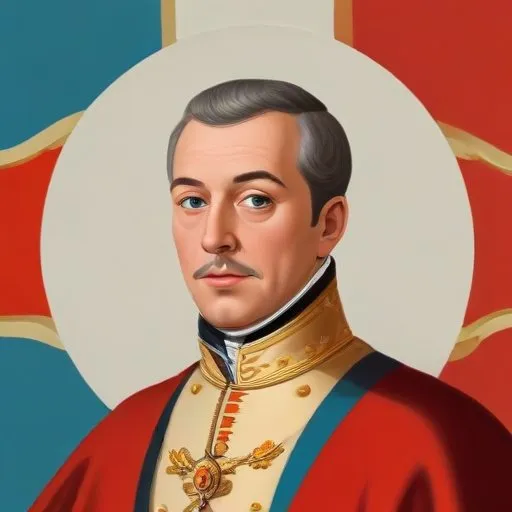
The last Duke of Lorraine, he relinquished his title to become the Holy Roman Emperor, playing a crucial role in European politics during the 18th century. He's known for his diplomatic efforts to maintain peace amidst rising tensions.
Francis II, Duke of Lorraine, is best known for his brief yet tumultuous reign as the Duke of Lorraine in 1625, as well as his intense rivalry with his brother, Henry II. His life was marked by controversy, power struggles, and a series of complicated relationships that shaped the fate of Lorraine.
Born on February 27, 1572, Francis was the youngest son of Charles III, Duke of Lorraine, and Claude of Valois. During his father's reign, he was styled the Count of Vaudmont and later became the Lieutenant General of Lorraine. Francis's early life was marked by a series of diplomatic missions, including a trip to England in 1606, where he danced at Hampton Court in the presence of Anne of Denmark.
Francis's relationship with his brother, Henry II, was tumultuous, to say the least. The two brothers clashed over the issue of succession, with Francis opposing Henry's plan to leave Lorraine to his daughter, Nicolette. This led to Francis fleeing to Germany, where he fought on behalf of the Emperor against the Protestants. The issue was eventually resolved, but not before causing a rift between the two brothers that would last a lifetime.
After Henry II's death in 1624, Francis became the Duke of Lorraine, but his reign was short-lived. He abdicated in favor of his son, Charles, in November 1625. This sudden abdication was likely due to the complicated succession rules that would have seen Lorraine pass to his brother's daughter, Nicolette, had Francis not stepped down.
Despite his tumultuous life, Francis was known for his strong sense of duty and loyalty to his family and his people. He was a devout Catholic and played a significant role in promoting the Counter-Reformation in Lorraine. Francis's actions were often guided by a strong sense of justice and a desire to protect the interests of his family and his people.
Francis II, Duke of Lorraine, may have had a brief and tumultuous reign, but his impact on Lorraine's history cannot be overstated. His rivalry with his brother, Henry II, shaped the fate of the duchy, and his abdication paved the way for his son, Charles, to become the Duke of Lorraine. Despite his flaws, Francis remains an important figure in Lorraine's history, a testament to the complex and often treacherous world of royal politics.
Born in 1500
Ruling over a vast empire from 1519 to 1556, he was a powerful and influential leader who played a crucial role in shaping European politics and religion. He is most known for his efforts to unify Christian Europe and defend it against the Ottoman Empire.
Born in 1768
The last Holy Roman Emperor, who ruled from 1792 to 1806, oversaw the dissolution of the Holy Roman Empire and was a key figure in European politics during the Napoleonic Wars.
Born in 1515
The Queen of Scots who ruled Scotland from 1542 to 1560 and played a key role in the country's tumultuous history, including the Scottish Reformation and the Wars of the Scottish Succession.
Born in 1519
King of France from 1547 to 1559, known for his cultural and artistic patronage, and his role in the Italian Wars.
Born in 1519
The Italian-French queen who married into the French monarchy and wielded significant power behind the scenes, known for her cunning politics and lavish court festivities. She sponsored the arts and architecture, leaving a lasting legacy on French culture.
Born in 1451
A 15th-century French nobleman who ruled Lorraine and was a key figure in the Burgundian Wars, known for his military prowess and strategic alliances. He played a significant role in shaping the region's history.
