


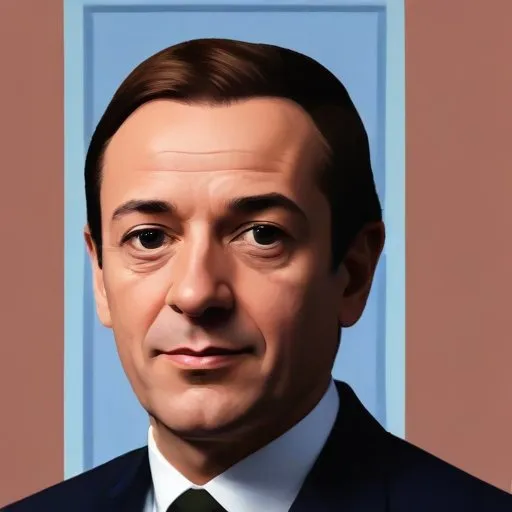
A French Minister of the Interior who reformed education, infrastructure, and administration during the French Revolution, leaving a lasting impact on modern France.
François de Neufchâteau was a French poet, politician, and diplomat who played a pivotal role in shaping the country's literary and political landscape during the French Revolution. Best known as the founder of the Decade Philosophy, a weekly literary and philosophical journal, Neufchâteau's contributions extended far beyond the realm of literature, influencing the very fabric of modern French society.
Born on April 17, 1750, in Saffais, Lorraine, France, Neufchâteau was educated in law and literature at the University of Nancy. His early involvement in the Enlightenment movement and his association with influential philosophers like Jean-Jacques Rousseau and Denis Diderot laid the foundation for his future endeavors.
Neufchâteau's entry into politics began in 1791, when he was elected as a deputy to the Legislative Assembly. He later served as Minister of the Interior under the Directory, where he played a crucial role in shaping the country's administrative and educational systems.
In 1794, Neufchâteau founded the Decade Philosophy, a weekly journal that aimed to promote the values of the Enlightenment and provide a platform for intellectual discussion. The journal's influence extended beyond literary circles, shaping public opinion and influencing the country's cultural and political discourse.
Neufchâteau's own literary contributions include poetry, plays, and essays that reflected his commitment to the principles of liberty, equality, and fraternity. His most notable work, Poesies patriotiques et civiques, showcased his mastery of lyrical poetry and cemented his reputation as a leading literary figure of the Revolution.
Neufchâteau's impact on modern French society extends beyond the realm of literature. His commitment to education and his role in shaping the country's administrative systems have left a lasting legacy. The Decade Philosophy, which ceased publication in 1799, remains an important milestone in the development of French thought and culture.
Today, Neufchâteau is remembered as a visionary who embodied the values of the Enlightenment and the French Revolution. His contributions serve as a testament to the enduring power of ideas and the importance of intellectual curiosity in shaping human progress.
Neufchâteau's philosophical contributions were deeply rooted in the values of the Enlightenment, emphasizing the importance of reason, equality, and individual liberty. His commitment to the principles of the French Revolution guided his actions and writings, earning him the respect of his contemporaries and posterity.
Through his writings and actions, Neufchâteau demonstrated a profound understanding of the human condition, advocating for the empowerment of individuals and the promotion of social justice.
Born in 1769
A French military leader who rose to prominence during the French Revolution and became Emperor of France, known for his military conquests and reorganization of Europe. He is also famous for his Napoleonic Code, which remains a foundation of modern law.
Born in 1759
A French lawyer and politician who served as Minister of Police under Napoleon, notorious for his ruthless suppression of dissent and creation of a vast network of spies and informants.
Born in 1749
Developed nebular hypothesis of the origin of the solar system and formulated Laplace's equation, a fundamental concept in mathematics and physics. He's considered the founder of celestial mechanics.
Born in 1767
A French economist and academic who developed the concept of entrepreneurship and is credited with coining the term "economist," making significant contributions to classical economics. He is also known for Say's Law, which states that "supply creates its own demand."
Born in 1754
French Enlightenment philosopher who developed the concept of "ideology" and sought to establish a scientific approach to the study of human thought and behavior. His work influenced many prominent thinkers, including Napoleon Bonaparte.
Born in 1763
A French philosopher and academic who developed the philosophical school of Eclecticism, which sought to reconcile different philosophical systems, and was a prominent figure in the development of French liberalism.
Born in 1787
A 19th-century French historian and politician who served as Prime Minister, known for his role in shaping France's modern democracy and educational system.
