


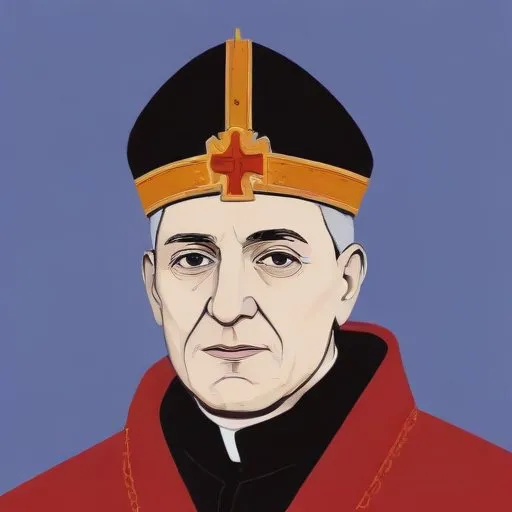
A 17th-century Catholic archbishop who played a significant role in French naval and colonial development, particularly in the establishment of the French West India Company.
François de Sourdis, a name synonymous with bravery, cunning, and strategic genius, left an indelible mark on the annals of French history. As a renowned Admiral, he charted a course through the treacherous waters of 17th-century politics, securing his place as one of the most influential figures of his time.
Born in 1578, de Sourdis' early life was marked by a series of fortunate events that propelled him towards greatness. His family's aristocratic connections and his own natural aptitude for naval warfare soon caught the attention of King Henry IV, who appointed him as the Lieutenant-General of the Navy in 1601.
De Sourdis' diplomatic prowess was matched only by his military acumen. He negotiated crucial alliances with European powers, securing vital trade agreements and strengthening France's position on the global stage. His clever manipulation of rival factions and his mastery of propaganda earned him the respect and admiration of his peers.
The defining moment of de Sourdis' career arrived in 1627, when he led the siege of La Rochelle, a Protestant stronghold that had defied royal authority for decades. Through a combination of brilliant tactics and cunning diplomacy, de Sourdis successfully breached the city's defenses, capturing the rebellious Huguenot stronghold and cementing his reputation as a military genius.
Despite his many accomplishments, de Sourdis' life was not without controversy. His ruthless suppression of Protestant rebels and his involvement in the infamous Day of the Dupes, a failed coup against Cardinal Richelieu, left a lasting stain on his reputation. Yet, his unwavering loyalty to the French crown and his unshakeable commitment to his duty earned him the admiration of his contemporaries.
François de Sourdis' influence extended far beyond the realms of naval warfare and politics. His architectural legacy can be seen in the prestigious buildings and monuments he commissioned, including the majestic Château de Cadillac. His patronage of the arts and his support for renowned artists and writers fostered a cultural renaissance in 17th-century France.
As the curtains closed on de Sourdis' life in 1628, France mourned the loss of a true patriot and a visionary leader. His tumultuous life, marked by both triumph and tragedy, served as a testament to the complexities of human nature. Today, his name remains etched in the annals of history, a reminder of the indomitable spirit of a man who defied convention and forged his own destiny.
Born in 1417
A 15th-century pope who played a significant role in the fall of the Western Schism, ending the division in the Catholic Church. He's also known for his lavish spending and nepotism.
Born in 1487
A 16th-century Pope who commissioned Michelangelo to paint the Sistine Chapel's frescoes and was a patron of the arts, leaving a lasting impact on Renaissance art and architecture.
Born in 1504
Leader of the Catholic Church during the Counter-Reformation, he excommunicated Queen Elizabeth I and played a key role in the Council of Trent.
Born in 1502
Introduced the Gregorian calendar, a solar-based calendar that's widely used today, reforming the Julian calendar's inaccuracies.
Born in 1414
Established the Vatican Archives and commissioned the Sistine Chapel's ceiling, which was famously painted by Michelangelo. He also played a significant role in the Renaissance.
Born in 1568
The 17th-century Catholic leader who reigned for 21 years, known for his strong stance against Galileo Galilei and his scientific discoveries, as well as his extensive patronage of the arts.
Born in 1519
The 151st Pope of the Catholic Church, serving for only two months in 1591, he is mostly remembered for his brief and uneventful papacy.
Born in 1536
Led the Catholic Church during a tumultuous period, issuing papal bulls and playing a key role in the Counter-Reformation. He's also famous for his coffee habit, being the first Pope to try and approve of it.
