


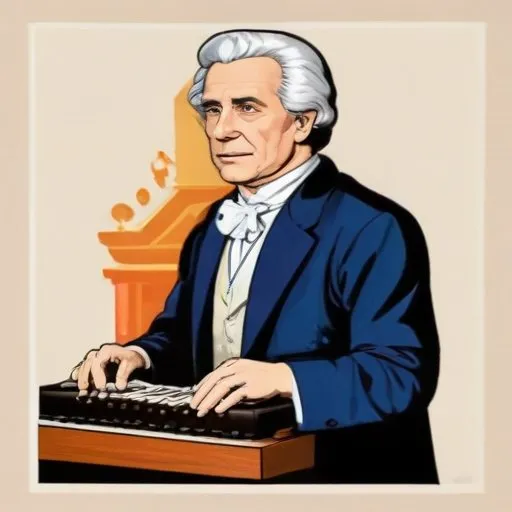
Austrian organist and composer renowned for his contributions to the classical music scene, particularly in the development of sacred music and operas.
Franz Teyber was a renowned Austrian Kapellmeister, organist, and composer of orchestral and chamber music. Born in Vienna in 1758, Teyber made significant contributions to the classical music scene, leaving behind a legacy that still echoes today.
Teyber received his musical training from the esteemed Georg Christoph Wagenseil, a prominent composer and musician of the time. This mentorship laid the foundation for Teyber's future success, as he went on to excel in various musical capacities.
In 1786, Teyber became the director of the Schikaneder theatre company, a prestigious position that allowed him to showcase his musical talents. Later, in 1801, he took on the role of composer and musical director at the Theater an der Wien, further cementing his reputation as a master of his craft.
Teyber came from a musically inclined family, with his sisters Elisabeth and Therese both being opera singers. His brother, Anton, was also a composer who worked with prominent institutions such as the Dresden opera and Vienna court. Teyber's niece, Elena, continued the family legacy, becoming a professor at the Iasi Conservatory and earning recognition as a pianist and composer in her own right.
Teyber's compositional output includes a range of orchestral and chamber music pieces, showcasing his mastery of various genres. Although his works may not be as widely recognized as those of his contemporaries, they remain an important part of Austria's cultural heritage.
Franz Teyber's contributions to classical music are undeniable, and his influence can be seen in the works of subsequent generations of composers. Despite not being a household name, Teyber's legacy continues to inspire and educate music enthusiasts to this day.
Teyber's life was marked by significant milestones, including his baptism in 1758 and his eventual death in 1810. Despite the passage of time, his music remains a testament to his talent and dedication to his craft.
When compared to his contemporaries, Teyber's style was characterized by its unique blend of classical and early Romantic elements. While he may not have achieved the same level of fame as some of his peers, his music retains a distinct charm and elegance that continues to captivate audiences.
Franz Teyber's life and works serve as a testament to the rich cultural heritage of Austria. Although he may not be a widely recognized figure, his contributions to classical music are undeniable, and his legacy continues to inspire and educate musicians and music enthusiasts alike.
Born in 1732
A renowned composer and pianist of the Classical period, known for his symphonies, operas, and chamber music that showcased his innovative and expressive style. He played a significant role in shaping the Classical music era.
Born in 1756
A child prodigy and master of classical music, he composed over 600 works, including symphonies, operas, and chamber music, that continue to inspire and influence musicians today.
Born in 1770
A musical genius who expanded the possibilities of classical music, creating iconic symphonies and piano sonatas that continue to inspire and influence generations of artists.
Born in 1797
A renowned composer of symphonies, operas, and chamber music, particularly famous for his emotional and expressive lieder (art songs) that showcased his mastery of melody and harmony.
Born in 1678
A virtuosic violinist and prolific composer, he crafted over 400 concertos, including "The Four Seasons," which remains a beloved and iconic masterpiece of classical music.
Born in 1685
A master of Baroque music, he composed over 1,000 works, including orchestral suites, cantatas, and passions, that still inspire and influence musicians today. His innovative use of counterpoint and harmony raised the bar for classical music.
Born in 1685
A renowned Baroque composer and organist, famous for creating majestic orchestral suites, operas, and oratorios, including the iconic "Messiah" masterpiece.
Born in 1714
A pioneering opera composer who revolutionized the art form with his innovative and expressive works, blending music and drama in a way that captivated audiences.
