


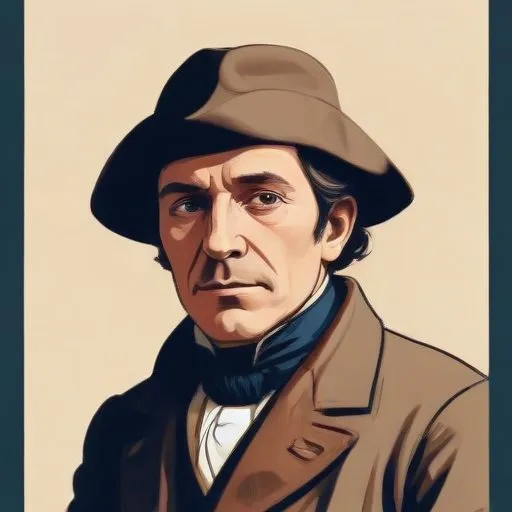
An American physician and explorer who led an expedition to the North Pole in 1908, claiming to be the first person to reach the pole, although his achievement was later disputed. He was a pioneer in Arctic exploration and wrote several books about his adventures.
Frederick Albert Cook, a physician, ethnographer, and explorer extraordinaire, is best known for his audacious claim of being the first person to reach the North Pole on April 21, 1908. Though his accomplishment was later disputed, Cook's unrelenting spirit of adventure and thirst for discovery left an indelible mark on the world of exploration.
Born on June 10, 1865, in Hortonville, New York, Cook grew up with an insatiable curiosity about the unknown. He attended local schools before enrolling in Columbia University, where he studied medicine. He later earned his doctorate from what is now NYU's Grossman School of Medicine in 1890.
Cook's thirst for adventure led him to join Robert Peary's Arctic expedition of 1891-1892 as a surgeon. He later participated in the Belgian Antarctic Expedition of 1897-1899, where he played a crucial role in saving the lives of crew members when their ship, the Belgica, was icebound during the winter. This experience would lay the foundation for his future expeditions.
In 1907, Cook embarked on his most ambitious expedition yet – to reach the North Pole. He returned in 1908, claiming to have reached the pole on April 21. However, his achievement was soon disputed by Robert Peary, who made a similar claim a year later. Despite the controversy, Cook published a memoir of his expedition in 1911, maintaining the veracity of his assertions.
Cook also claimed to have reached the summit of Denali (then known as Mount McKinley), the highest mountain in North America. Although this claim was later discredited, Cook's expeditions left a lasting impact on the world of exploration. After his expeditions, Cook continued to work as a physician and wrote several books about his experiences. He passed away on August 5, 1940.
Frederick Cook's contributions to exploration, though disputed, paved the way for future generations of adventurers. His expeditions sparked public interest in Arctic exploration, inspiring many to follow in his footsteps. Despite the controversy surrounding his claims, Cook's spirit of adventure and his groundbreaking expeditions continue to inspire and captivate people to this day.
In conclusion, Frederick Cook's life was a testament to his unwavering passion for exploration and discovery. Though his claims may have been disputed, his legacy as a trailblazing adventurer continues to inspire and captivate people around the world.
Born in 1856
Led the first expedition to reach the North Pole, claiming its discovery in 1909. He's remembered for his bravery and perseverance in the face of extreme Arctic conditions.
Born in 1872
First person to reach the South Pole, leading a Norwegian expedition in 1911, and a pioneer in Arctic and Antarctic exploration.
Born in 1888
Led the first flights over the North and South Poles, and explored Antarctica, expanding our knowledge of the world's most remote regions.
Born in 1874
Led expeditions to the Antarctic, famously surviving a disastrous shipwreck and trekking to safety, earning a legendary reputation for bravery and leadership.
Born in 1868
Led a British expedition to the South Pole, racing against a Norwegian team, and tragically perished on the return journey. He is remembered for his bravery and sacrifice in the pursuit of scientific discovery.
Born in 1866
First African American to reach the North Pole, part of Robert Peary's expedition, and a pioneer in Arctic exploration.
Born in 1861
A Norwegian pioneer who explored the Arctic, made groundbreaking scientific discoveries, and championed humanitarian causes, earning a Nobel Prize for his efforts. He's most famous for being the first to cross Greenland and his innovative sled designs.
