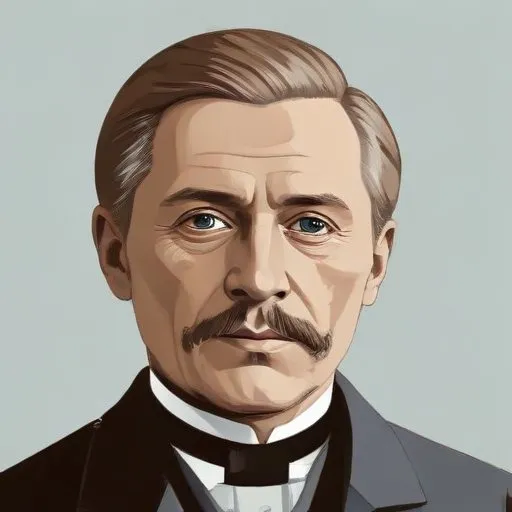
Friedrich Martens: The Diplomat Who Shaped International Law
A Legacy of Peace and Justice
Friedrich Martens is renowned for his instrumental role in shaping the science of international law, leaving an indelible mark on global diplomacy. As a distinguished diplomat and jurist in the service of the Russian Empire, Martens drafted the groundbreaking Martens Clause, a cornerstone of humanitarian law, and played a pivotal role in settling the first cases of international arbitration.
Early Life and Education
Born on August 27, 1845 (O.S. August 15), in Pärnu, Governorate of Livonia, Russian Empire, to ethnic Estonian parents, Martens was raised and educated as a German speaker. After losing both parents at the tender age of nine, he was sent to a Lutheran orphanage in St. Petersburg, where he completed his education at a German high school. In 1863, he enrolled in the law faculty of St. Petersburg University, laying the foundation for his future accomplishments.
A Career Dedicated to International Law
Martens' remarkable career spanned over four decades, during which he worked tirelessly to promote international cooperation and understanding. In 1868, he joined the Russian Ministry of Foreign Affairs, where he quickly rose through the ranks. He became a lecturer in international law at the University of St. Petersburg in 1871 and a professor of public law at the Imperial School of Law and the Imperial Alexander Lyceum in 1872.
The Martens Clause: A Landmark in Humanitarian Law
Martens' most significant contribution to international law is the Martens Clause, a provision that has been incorporated into numerous treaties and conventions, including the Hague Conventions and the Geneva Conventions. This clause, which emphasizes the importance of protecting civilians and prisoners of war, has had a profound impact on the conduct of warfare and the protection of human rights.
Editorial Contributions and Academic Achievements
Martens was a prolific scholar, and his editorial contributions to the field of international law are still revered today. He edited 15 volumes of Russian international treaties between 1874 and 1909, a monumental task that has provided valuable insights into the development of international law. His publications, including "The Right of Private Property in War" (1869) and "The Office of Consul and Consular Jurisdiction in the East" (1873), have been translated into multiple languages and remain influential in the field.
Representation and Arbitration
As a seasoned diplomat, Martens represented Russia at the Hague Peace Conferences, where he played a key role in settling the first cases of international arbitration. He helped to resolve the dispute between France and the United Kingdom over Newfoundland, showcasing his exceptional negotiation skills and dedication to peaceful conflict resolution.
Legacy and Impact
Friedrich Martens' legacy extends far beyond his own lifetime. His contributions to international law have had a lasting impact on global diplomacy, shaping the course of international relations and human rights. His work continues to inspire generations of scholars, diplomats, and policymakers, reminding us of the importance of promoting peace, justice, and cooperation in an increasingly interconnected world.
Timeline of Major Milestones
- 1845: Born on August 27 in Pärnu, Governorate of Livonia, Russian Empire
- 1863: Enrolled in the law faculty of St. Petersburg University
- 1868: Joined the Russian Ministry of Foreign Affairs
- 1871: Became a lecturer in international law at the University of St. Petersburg
- 1872: Became a professor of public law at the Imperial School of Law and the Imperial Alexander Lyceum
- 1874: Edited the first volume of Russian international treaties
- 1899: Represented Russia at the Hague Peace Conference
- 1909: Passed away on June 19 in St. Petersburg, Russian Empire
FAQ
What were Friedrich Martens contributions to the field of history?
Friedrich Martens was a prominent historian who made significant contributions to the field of history, particularly in the areas of Estonian and Russian history. He was a prolific writer and researcher, and his work helped to shape our understanding of these regions.
How did Friedrich Martens experiences as a lawyer shape his historical research?
Friedrich Martens experiences as a lawyer gave him a strong understanding of the importance of evidence and documentation, which he applied to his historical research. He was meticulous in his approach and attention to detail, which helped to establish his credibility as a historian.
What was Friedrich Martens stance on the role of nationalism in history?
Friedrich Martens was a strong advocate for the importance of understanding nationalism in historical context. He saw nationalism as a key driver of historical events and believed that it was essential to consider the role of nationalism in shaping the course of human history.
How did Friedrich Martens diplomatic work inform his historical research?
Friedrich Martens diplomatic work gave him a unique perspective on international relations and the conduct of diplomacy. He applied this insight to his historical research, helping to shape our understanding of the complex interactions between nations and empires.
What legacy did Friedrich Martens leave behind?
Friedrich Martens left behind a legacy as a meticulous and thorough historian, whose contributions to the field of history continue to shape our understanding of the world today.