


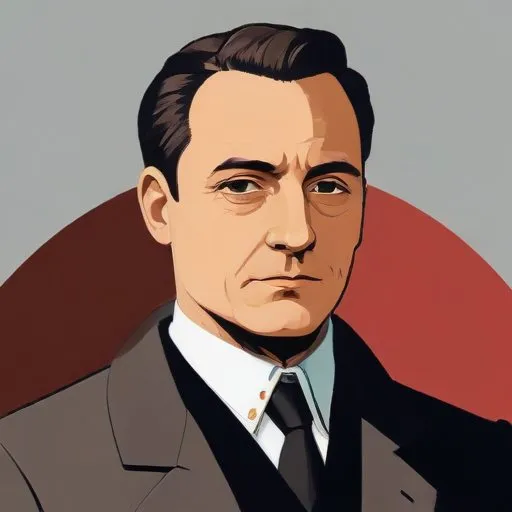
Fritz Gause, a renowned German historian, archivist, and curator, left an indelible mark on the city of Königsberg (now Kaliningrad, East Prussia) through his tireless efforts to document and preserve its rich history. His magnum opus, the three-volume "Die Geschichte der Stadt Königsberg in Preußen" (1965, 1968, and 1971), remains a testament to his dedication and expertise.
Gause was born on August 4, 1893, in Königsberg, where he attended the prestigious Collegium Fridericianum. He then went on to study history and German philology at the University of Königsberg, under the guidance of nationalist historian Albert Brackmann.
During World War I, Gause volunteered for service in the frontline artillery. After receiving his doctorate in 1921, he began lecturing at the Goethe-Oberlyzeum in Königsberg. Tragically, his efforts to preserve the city's cultural heritage were hindered by the war. In 1944, the Königsberg City Museum, City Archive, and Public Library, which were under his care, were destroyed during the bombing and subsequent battle of Königsberg.
After the war, Gause was held as a prisoner of war by Poland until 1947. Upon his release, he taught at a girls' school in Essen and was eventually pensioned in 1959 as a senior lecturer. Despite the challenges he faced, Gause continued to contribute to the preservation of Königsberg's history, serving as chairman of the Stadtgemeinschaft Königsberg Pr, a cultural organization for expelled former residents of Königsberg. Under his leadership, the Haus Königsberg, a historical and cultural museum, was established in Duisburg in 1968.
Gause's work was deeply rooted in the nationalist historic movement known as Ostforschung, which focused on the study of Eastern European history and culture. His writings and teachings reflected his commitment to preserving the cultural heritage of Königsberg and promoting a deeper understanding of its history.
Gause's contributions to the field of history and cultural preservation were recognized through his membership in the Stadtgemeinschaft Königsberg Pr and his role as chairman of the organization.
Fritz Gause's dedication to preserving the cultural heritage of Königsberg has left a lasting legacy, inspiring generations of historians and cultural preservationists. His work continues to serve as a testament to the importance of documenting and preserving our collective cultural history.
In conclusion, Fritz Gause's remarkable life and achievements serve as a reminder of the power of dedication and perseverance in the pursuit of preserving our cultural heritage. His legacy continues to inspire and educate, ensuring that the rich history of Königsberg will never be forgotten.
Born in 1817
A renowned historian and scholar who wrote extensively on ancient Rome, earning a Nobel Prize in Literature for his monumental work "The History of Rome".
Born in 1795
A pioneering historian who revolutionized the field by emphasizing empirical research and primary sources, known for his meticulous and objective approach to historical writing.
Born in 1770
A German philosopher and academic who developed a comprehensive and systematic philosophy that emphasized the unity of all things and the dialectical process of thesis, antithesis, and synthesis. His ideas have had a profound impact on modern thought, influencing fields such as philosophy, politics, and art.
Born in 1820
A 19th-century philosopher and economist who co-authored "The Communist Manifesto" with Karl Marx, shaping modern socialist and communist thought. He also wrote extensively on economics, history, and politics.
Born in 1818
A 19th-century philosopher who developed the theory of communism, arguing that capitalism would eventually be replaced by a socialist society. He's known for his critique of capitalism and the concept of class struggle.
Born in 1879
A pioneering nuclear chemist who discovered nuclear fission, a process that releases massive energy from atomic nuclei, and was awarded the Nobel Prize in Chemistry in 1944.
Born in 1896
A renowned Italian poet and translator, celebrated for his unique and expressive style that explores the human condition, earning him the Nobel Prize in Literature.
Born in 1909
A renowned German historian and author, known for his in-depth analyses of European history, particularly the rise of fascism and National Socialism in Germany. His works are considered essential reading for understanding the complexities of modern European history.
