


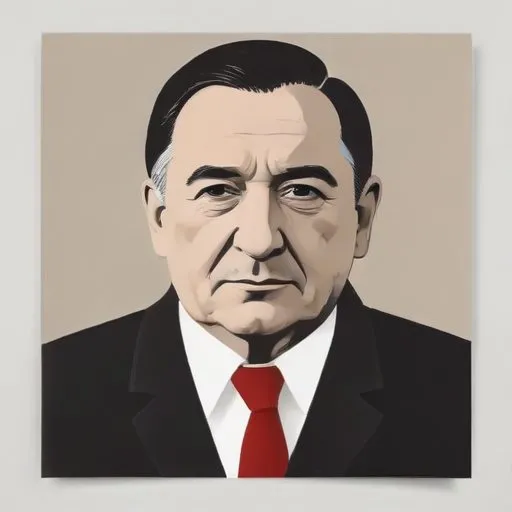
A pioneering engineer and politician who played a crucial role in developing Germany's infrastructure, particularly the autobahn network, and later became a key figure in the Nazi regime.
Fritz Todt was a German construction engineer and senior figure of the Nazi Party, best known for founding Organisation Todt, a military-engineering organisation that supplied German industry with forced labour, and serving as Reich Minister for Armaments and Ammunition during World War II.
Todt was born on September 4, 1891, in Pforzheim, Grand Duchy of Baden (now Baden-Württemberg), to Emil Todt, a small ring factory owner, and his wife, Elise (née Unterecker). He volunteered for one-year military service in 1910 and later studied engineering at Technical Hochschule of Munich and Karlsruhe, graduating with a Diplom degree in construction engineering from the latter in 1914.
During World War I, Todt served initially with the infantry and then as a front-line reconnaissance observer within the Luftstreitkräfte (German Air Force). After the war, he joined the Nazi Party in 1922 and the Sturmabteilung (SA) in 1931, steadily rising through the ranks. In 1933, he became Inspector General for German Roadways, responsible for the construction of the German autobahns under Adolf Hitler's regime.
In 1938, Todt founded Organisation Todt, a military-engineering organisation that supplied German industry with forced labour. He directed large-scale engineering projects such as the Westwall (Siegfried Line) and the Atlantic Wall. In 1940, he was appointed Reich Minister of Armaments and War Production, directing the entire German wartime military economy.
During World War II, Todt made extensive use of forced labour, with as many as 800,000 labourers from German-occupied territories in the service of his organisation. This labour force was instrumental in completing vital war projects, including the construction of roads, bridges, and fortifications.
Fritz Todt's legacy is marked by controversy, with his organisation's use of forced labour and his role in the Nazi war effort being widely criticised. However, his engineering prowess and administrative skills played a significant role in shaping Nazi Germany's infrastructure and war efforts.
Fritz Todt's life and legacy serve as a testament to the complex and often contradictory nature of human endeavour, where remarkable achievements in engineering and administration are tainted by association with one of humanity's darkest periods.
Born in 1905
A prominent figure in Nazi Germany, serving as Minister of Armaments and War Production, known for his architectural designs and role in the war effort.
Born in 1893
A high-ranking Nazi official, he was a decorated World War I fighter pilot and later became a prominent politician, serving as Minister President of Prussia. He's infamous for his role in the Nazi regime and war crimes trials.
Born in 1897
A mastermind of Nazi propaganda, he crafted a persuasive narrative that fueled the Third Reich's rise to power, leaving a lasting impact on the world.
Born in 1900
Leading the SS and Gestapo, he oversaw the Nazi regime's brutal security apparatus and implemented the "Final Solution," orchestrating the genocide of six million Jews during World War II.
Born in 1894
A high-ranking Nazi official who flew to Scotland on a solo mission to negotiate peace with the UK, but was instead arrested and imprisoned.
Born in 1893
A German diplomat who served as the Nazi regime's Foreign Minister, orchestrating key alliances and treaties that led to World War II. He was a close associate of Adolf Hitler and played a crucial role in shaping Nazi foreign policy.
Born in 1882
A high-ranking Nazi officer who served as the Chief of the OKW, the German High Command, during World War II, and was known for his unwavering loyalty to Hitler. He was tried and executed for war crimes after the war.
Born in 1891
A German naval commander who led the U-boat fleet during World War II and briefly served as President of Germany after Hitler's death, known for his role in the war and its aftermath.
