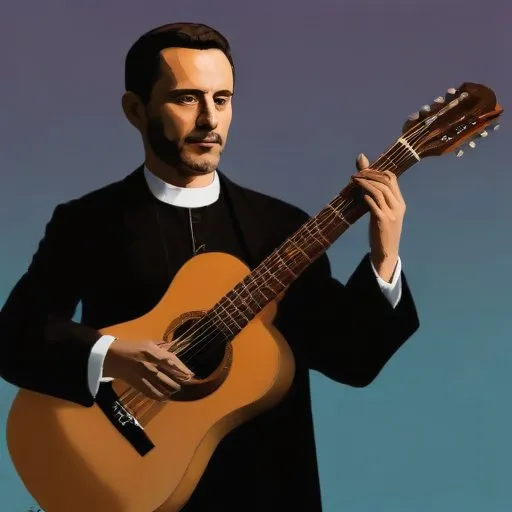
Gaspar Sanz: The Spanish Master of Baroque Guitar
A Legacy of Musical Innovation
Gaspar Sanz is renowned for his extraordinary contributions to the world of classical guitar, leaving an indelible mark on the music landscape. As a composer, guitarist, and priest, Sanz's groundbreaking works continue to inspire and influence generations of musicians, shaping the course of musical history.
Early Life and Education
Born in Calanda, Spain in 1640, Sanz was baptized as Francisco Bartolom Sanz Celma, later adopting the first name Gaspar. He hailed from a wealthy family and was privileged to receive a comprehensive education in music, theology, and philosophy at the University of Salamanca. This rigorous academic background laid the foundation for his future success as a composer and musician.
Italian Influences and Guitar Mastery
Sanz's thirst for musical knowledge led him to travel to Naples, Rome, and possibly Venice, where he studied under the tutelage of prominent musicians, including Orazio Benevoli and Cristofaro Caresana. During this period, he was introduced to the guitar, an instrument that would become his lifelong passion. Sanz's skillful guitar playing was heavily influenced by Italian masters such as Foscarini, Granata, and Corbetta, whose techniques he would later incorporate into his own compositions.
A Pinnacle of Musical Achievement: The Instruccin de Msica
In 1674, Sanz penned his magnum opus, the
Instruccin de Msica sobre la Guitarra Espaola, a comprehensive pedagogical work that would revolutionize the art of baroque guitar playing. This seminal publication, dedicated to Don Juan of Austria, consists of three volumes of intricate pieces that have become an integral part of the classical guitar repertoire. The
Instruccin de Msica has undergone eight editions, a testament to its enduring relevance and influence.
A Lasting Legacy
Gaspar Sanz's contributions to music extend far beyond his compositions. As a professor of music at the University of Salamanca, he played a crucial role in shaping the musical landscape of his time. His influence can be seen in the works of subsequent composers, such as
Domenico Scarlatti and Fernando Sor, who drew inspiration from his pioneering spirit and innovative techniques.
Today's Impact and Influence
Sanz's music continues to captivate audiences and inspire musicians worldwide. His compositions remain an essential part of the classical guitar curriculum, with many modern scholars and performers regarding him as a foundational figure in the history of the instrument. As a testament to his enduring legacy, Sanz's music has been featured in numerous concerts, recordings, and festivals, ensuring his artistic vision remains vibrant and relevant in the modern era.
- Instruccin de Msica sobre la Guitarra Espaola (1674)
- Libro Segundo de cifras sobre la guitarra espaola (1675)
- Libro tercero de msica de cifras sobre la guitarra espaola (1697)
A Legacy of Excellence
Gaspar Sanz's remarkable life and career serve as a powerful reminder of the transformative power of music. Through his innovative compositions and tireless dedication to his craft, he has left an indelible mark on the world of classical music, cementing his status as one of the most influential figures in the history of the guitar.
FAQ
What is Gaspar Sanz known for in music?
Gaspar Sanz is renowned for his contributions to the development of the guitar, particularly with his influential book Instrucción de música sobre la guitarra española.
What was Gaspar Sanz role in the history of the guitar?
Sanz was a pioneering guitarist and composer who helped establish the guitar as a respected instrument in classical music, and his compositions remain an essential part of the classical guitar repertoire.
How did Gaspar Sanz influence the evolution of classical music?
Sanz compositions, which blended Spanish folk music with classical techniques, had a significant impact on the development of classical music, particularly in the Baroque period.
What are some of Gaspar Sanz most famous compositions?
Some of Sanz most celebrated works include Canarios and Preludio for solo guitar, which showcase his mastery of the instrument and his innovative approach to composition.
What is Gaspar Sanz legacy in music education?
Sanz instructional book remains an important resource for guitar students and teachers, offering insights into Baroque-era performance practices and helping to shape the development of classical guitar pedagogy.