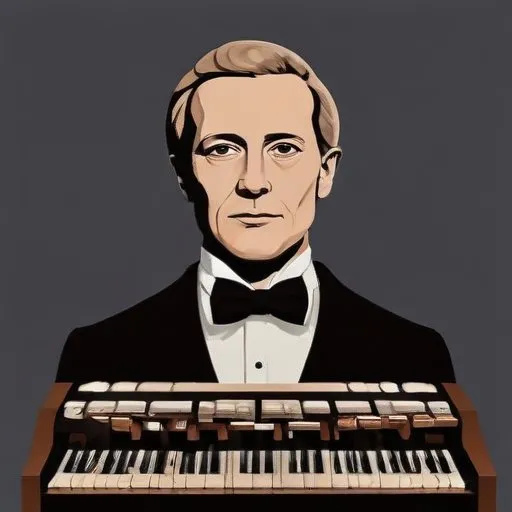
Georg Matthias Monn: The Unsung Pioneer of the Symphony
A Bridge Between Baroque and Classical
Georg Matthias Monn, an Austrian composer, organist, and music teacher, is renowned for his instrumental role in shaping the symphonic form during the transition from the Baroque to Classical period in music. His innovative introduction of the secondary theme in symphonies paved the way for the First Viennese School, comprising legendary composers such as Haydn, Mozart, Beethoven, and Schubert.
Life and Career
Born Johann Georg Mann on April 9, 1717, in Vienna, Monn's life remains somewhat of an enigma. What is known is that he held appointments as an organist in Klosterneuburg, Melk, and at the Karlskirche in Vienna's Wieden district. His untimely death at the age of 33 due to tuberculosis on October 3, 1750, cut short a promising career.
The Viennese Pre-Classical Movement
Monn, along with
Georg Christoph Wagenseil and Josef Starzer, formed the core of the Viennese Pre-Classical movement, also known as the Wiener Vorklassik. Although their names are not as widely recognized today, their collective contribution to the development of classical music is undeniable.
Innovations and Contributions
Monn's symphonies, characterized by their use of secondary themes, marked a significant departure from the dominant Baroque style. This innovation not only enriched the symphonic form but also influenced the works of future masters. His compositions, although fewer in number, demonstrate a mastery of counterpoint and a keen sense of melody.
The Question of Identity
A fascinating aspect of Monn's life is the mystery surrounding his brother, Johann Christoph Mann, who was also a composer. Some of Monn's compositions, surviving only in copies from the 1780s, have been attributed to his brother, leading to ongoing scholarly debates about the reliability of these attributions.
Legacy and Impact
Monn's pioneering work in the symphony has earned him recognition as a precursor to the First Viennese School. His music, although not as widely performed as that of his successors, remains an essential part of the classical music heritage. A reevaluation of his role in music history is long overdue, and a closer examination of his compositions can shed new light on the development of classical music.
Key Works and Compositions
- Symphonies in D major and G major
- Concertos for harpsichord and orchestra
- Church music, including masses and motets
A Life Cut Short, A Legacy Enduring
Georg Matthias Monn's untimely passing robbed the music world of a talented and innovative composer. Nevertheless, his contributions to the symphony and classical music continue to inspire and enrich our understanding of the complex tapestry that is music history.
FAQ
Who was Georg Matthias Monn and what was his role in Austrian music?
Georg Matthias Monn was an Austrian organist, composer, and educator who played a significant role in the development of Austrian music during the 18th century.
What were Georg Matthias Monns contributions to the development of the piano?
Georg Matthias Monn was one of the first composers to write music specifically for the piano, which was a relatively new instrument at the time. He was known for his innovative use of the piano and his compositions helped to establish it as a major instrument.
What was Georg Matthias Monns role in the Viennese classical music scene?
Georg Matthias Monn was a prominent figure in the Viennese classical music scene, which was a hub of musical activity during the 18th century. He was friends with prominent composers, including Joseph Haydn and Wolfgang Amadeus Mozart.
What were Georg Matthias Monns educational contributions?
Georg Matthias Monn was a dedicated educator who taught several prominent students, including Johann Baptist Wanhal and Anton Ferdinand Titz. He was known for his innovative teaching methods and his emphasis on music theory.
What is Georg Matthias Monns legacy in Austrian music?
Georg Matthias Monns legacy in Austrian music is that of a pioneering composer and educator who helped to shape the development of the piano and Austrian classical music. His contributions to music theory and education continue to be valued today.