


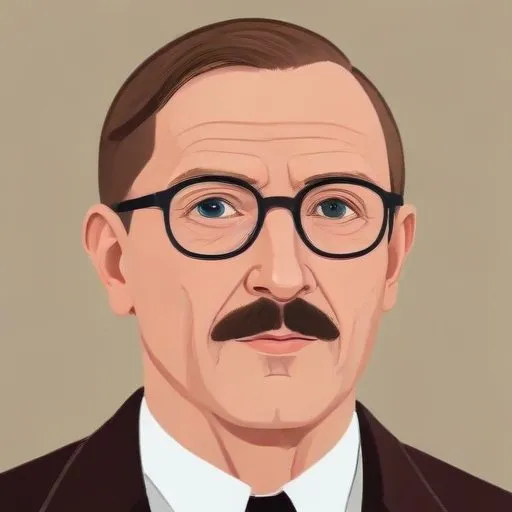
Developed the first vaccine against bacterium Francisella tularensis, and made significant contributions to the field of bacteriology.
George Henry Falkiner Nuttall, a renowned American-British bacteriologist, left an indelible mark on the fields of parasitology, immunology, and epidemiology. Through his groundbreaking research, he significantly advanced our understanding of parasites, insect-borne diseases, and the importance of aseptic conditions in medical practices.
Born on July 5, 1862, in San Francisco, California, Nuttall was the second of three sons and two daughters to Robert Kennedy Nuttall, a British doctor who had migrated to the United States in 1850, and Magdalena, daughter of John Parrott of San Francisco. His family moved to Europe in 1865, where Nuttall received a cosmopolitan education in England, France, Germany, and Switzerland, becoming proficient in multiple languages, including German, French, Italian, and Spanish.
Nuttall returned to the United States in 1878 and earned his M.D. degree from the University of California, Berkeley in 1884. He then spent a year in Mexico with his family, where his sister, Zelia, developed an interest in archaeology and anthropology, focusing on early Mexican cultures. In 1886, Nuttall traveled to Gttingen, Germany, to work with Carl Flgge and other prominent researchers, where he delved into the mechanisms of immunity. He received his PhD in zoology in 1890.
After a year of travel, Nuttall returned to Baltimore, Maryland, and worked under William H. Welch, becoming an associate in hygiene in 1892. During this period, he investigated the tubercle bacillus and identified the bacterium responsible for gas gangrene, now known as Clostridium perfringens. From 1892 to 1899, Nuttall spent time in Germany, first in Gttingen and then in Berlin, where he worked at the Hygienic Institute.
George Nuttall's pioneering work in bacteriology, parasitology, and immunology has left a lasting legacy in the scientific community. His contributions have had a profound impact on our understanding of diseases, their transmission, and prevention. Through his research, he has inspired generations of scientists, epidemiologists, and medical professionals, shaping the course of modern medicine.
Nuttall's dedication to his work and his passion for discovery have earned him a place among the most notable scientists of his time. His remarkable achievements continue to influence modern scientific inquiry, ensuring that his legacy will endure for generations to come.
Born in 1822
Developed vaccines for rabies and anthrax, and pioneered the germ theory of disease, revolutionizing our understanding of microbiology and disease prevention.
Born in 1843
A pioneering microbiologist and physician who discovered the bacteria that cause tuberculosis, cholera, and anthrax, revolutionizing the field of microbiology and saving countless lives.
Born in 1881
Discovered penicillin, a revolutionary antibiotic, and pioneered its use in medicine. This breakthrough has saved countless lives and transformed the field of healthcare.
Born in 1749
Developed the smallpox vaccine, revolutionizing disease prevention and saving countless lives.
Born in 1914
Developed the first inactivated poliovirus vaccine, leading to the near eradication of polio, and founded the Salk Institute for Biological Studies.
Born in 1888
A pioneering biochemist and microbiologist who discovered numerous antibiotics, including streptomycin, and developed a method for producing them on a large scale. Their work revolutionized the treatment of bacterial infections.
Born in 1854
Developed the first vaccine against diphtheria and tetanus, revolutionizing the treatment of bacterial infections. Pioneered the field of immunology and saved countless lives.
