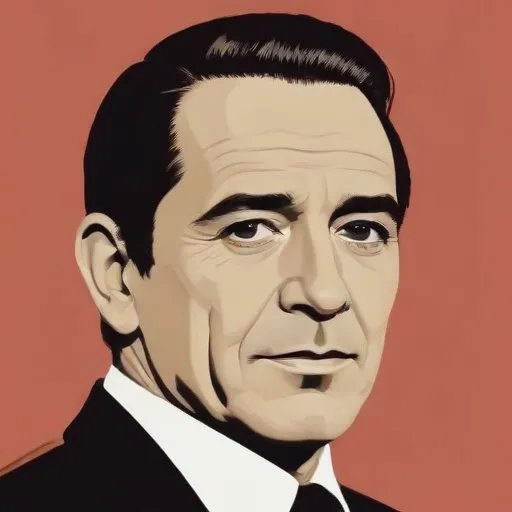
George Waggner: The Unsung Hero of Horror Cinema
The Mastermind Behind The Wolf Man
George Waggner, an American actor, director, producer, and writer, is best known for producing and directing the 1941 film
The Wolf Man, a horror classic that has stood the test of time. Waggner's work on this iconic film solidified his reputation as a master of the horror genre, and his influence can still be felt in the industry today.
Early Life and Career
Born on September 7, 1894, in New York City, Waggner trained as a chemist before serving in World War I. After the war, he pursued a career in acting, making his film debut in 1921 with a role as Yousayef in
The Sheik. He went on to act in several Western films, eventually transitioning to directing with his first film,
Western Trails, in 1938.
Waggner's directorial career spanned multiple genres, including horror, Westerns, action films, and war films. He worked with notable actors such as John Wayne, Lon Chaney Jr., Brian Donlevy, Broderick Crawford, Randolph Scott, and Boris Karloff. One of his most notable collaborations was with Lon Chaney Jr. on Man Made Monster, a film that showcased Waggner's ability to blend horror and science fiction.
The Wolf Man: A Horror Icon
The Wolf Man, Waggner's most famous film, was released in 1941 and starred Lon Chaney Jr. as the titular character. The film's success can be attributed to Waggner's direction, which brought a sense of atmosphere and tension to the film. The Wolf Man has since become an icon of horror cinema, influencing countless films and filmmakers.
Television and Later Career
In the 1960s, Waggner transitioned to television, directing episodes of popular series such as Maverick, Batman, The Green Hornet, 77 Sunset Strip, and The Man from U.N.C.L.E.. He also continued to write songs, which appeared in various films and television shows.
Personal Life and Legacy
Waggner passed away on December 11, 1984, at the age of 90, leaving behind a legacy of horror classics and a body of work that continues to inspire filmmakers. Despite his significant contributions to the genre, Waggner remains somewhat underappreciated, making him the unsung hero of horror cinema.
Filmography
- Western Trails (1938)
- Prairie Justice (1938)
- Mystery Plane (1939)
- Stunt Pilot (1939)
- Wolf Call (1939)
- The Phantom Stage (1939)
- Drums of the Desert (1940)
- Man Made Monster (1941)
- Horror Island (1941)
- The Wolf Man (1941)
- South of Tahiti (1941)
Conclusion
George Waggner's contributions to horror cinema are undeniable, and his work on The Wolf Man remains a testament to his skill as a director. While he may not be as well-known as some of his contemporaries, Waggner's influence can be seen in the many horror films that have followed in his footsteps. As a result, he remains an important figure in the history of horror cinema.
FAQ
What is George Waggners film career?
George Waggner was an American actor, director, and producer who worked in Hollywood during the 1930s and 1940s.
What is George Waggners most famous film?
George Waggners most famous film is arguably The Wolf Man, a classic horror movie released in 1941.
What awards did George Waggner win?
George Waggner won several awards for his contributions to film, including a special award from the Academy of Motion Picture Arts and Sciences.
What is George Waggners biography?
George Waggner was born in 1894 in New York City. He pursued a career in film, working as an actor, director, and producer.
What is George Waggners legacy?
George Waggners legacy is that of a pioneering filmmaker who made significant contributions to the horror genre.