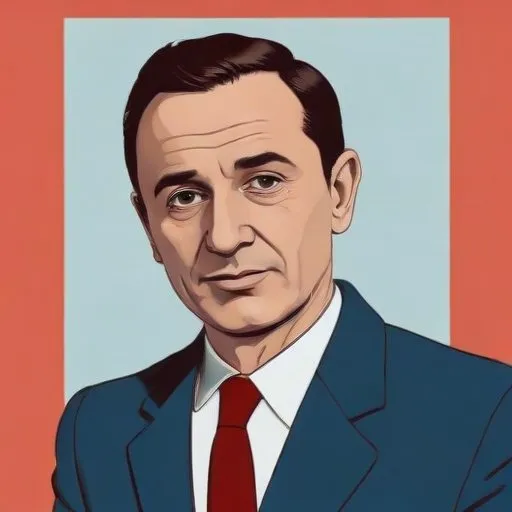
Georges Marchais: A Life of Politics and Controversy
A Leading Figure in French Politics
Georges Marchais was a French politician who served as the head of the French Communist Party (PCF) from 1972 to 1994, making him one of the most prominent figures in French politics during the latter half of the 20th century. He was also a candidate in the 1981 French presidential election, further cementing his position as a leader in the country's political landscape.
Early Life and Career
Born on June 7, 1920, in La Hoguette, Marchais grew up in a Roman Catholic family. He became a mechanic before World War II, working with the Société Nationale d'étude et de Construction de Moteurs d'Aviation. During the war, he went to Nazi Germany to work in the Messerschmitt aircraft manufacturing plant, where he was exposed to the harsh realities of war and labor exploitation. Returning to France in 1943 with forged documents, Marchais became active in the trade union movement, serving as secretary of the metalworkers trade union in Issy-les-Moulineaux.
Rise to Prominence
Marchais joined the French Communist Party in 1947 and quickly rose through the ranks. By 1956, he was a member of the extended Central Committee and led the South-Seine PCF local federation, a bastion of Maurice Thorez, the historical leader of the Party. His rapid promotion was attributed to his professional origins and devotion to Thorez. Marchais became a full member of the Central Committee and Politburo in 1959, solidifying his position as a key figure in the Party.
Controversy and Criticism
Marchais was not without controversy. In 1968, he published an article in the Party's paper, L'Humanité, in which he showed contempt for
Daniel Cohn-Bendit, a student leader during the May 1968 riots, calling him a "German anarchist." This move was seen as an attempt to discredit the student movement and maintain the Party's control.
Philosophical Contributions and Beliefs
As a devout communist, Marchais was deeply committed to the principles of Marxism-Leninism. He believed in the importance of class struggle and the need for a proletariat revolution to overthrow the bourgeoisie. Throughout his career, Marchais remained loyal to the Party's ideals, even as he navigated the complexities of French politics.
Legacy and Impact
Marchais' legacy is complex and multifaceted. While he was a powerful figure in French politics, his critics accused him of being authoritarian and dogmatic. Nevertheless, he played a significant role in shaping the French left and influencing the country's political landscape. His commitment to communism and the working class remains an important part of his legacy.
Personal Life and Milestones
Marchais was born into a Roman Catholic family and remained devoted to his faith throughout his life. He was known for his pragmatic approach to politics and his ability to navigate the complexities of the Party's internal workings.
Trivia and Fun Facts
- Marchais was known for his modest lifestyle, often wearing a simple suit and tie, even as he rose to prominence in French politics.
- He was a skilled orator, able to rally crowds with his passionate speeches.
- Marchais was a strong supporter of the Soviet Union and its role in international politics.
Conclusion
Georges Marchais was a complex figure, driven by his commitment to communism and the working class. While his legacy is marked by controversy and criticism, he remains an important figure in French politics, shaping the country's left and influencing its political landscape.
FAQ
What was Georges Marchais occupation?
Georges Marchais was a French mechanic and politician who served as the General Secretary of the French Communist Party from 1972 to 1994.
What were Georges Marchais political views?
Marchais was a staunch communist who advocated for workers rights, social justice, and closer ties between France and the Soviet Union.
What was Georges Marchais role in French politics?
Marchais played a significant role in French politics, serving as a Member of Parliament and leader of the French Communist Party, and was a prominent figure on the French left.
What were Georges Marchais views on European integration?
Marchais was critical of European integration, believing it would lead to the erosion of French sovereignty and the exploitation of workers.
What was Georges Marchais relationship with the Soviet Union?
Marchais maintained close ties with the Soviet Union, often visiting the country and receiving support from Soviet leaders, which led to criticism of his partys stance on human rights and democratic freedoms.