


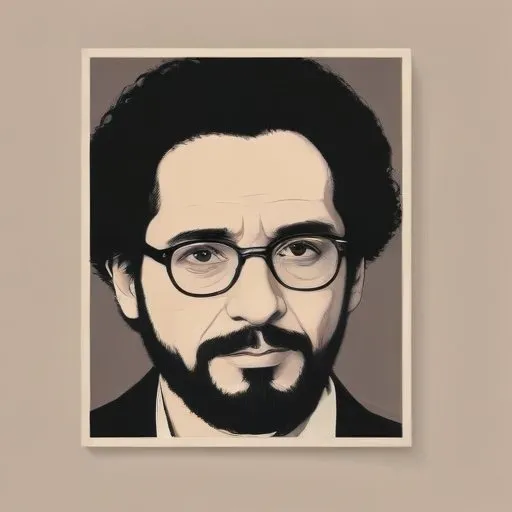
A French author and screenwriter renowned for his experimental and playful approach to storytelling, blending genres and pushing literary boundaries. He's most famous for writing a 300-page novel without using the letter "e".
Georges Perec, a French novelist, filmmaker, documentalist, and essayist, is best known for his pioneering work in the realm of experimental literature, pushing the boundaries of language and storytelling. As a member of the Oulipo group, a gathering of avant-garde writers and mathematicians, Perec's work revolutionized the literary landscape, leaving an indelible mark on modern literature.
Born in a working-class district of Paris on March 7, 1936, Perec's life was marked by tragedy and loss. His father, Icek Judko Peretz, died as a soldier early in World War II, and his mother, Cyrla Schulewicz Peretz, was killed in the Holocaust, likely in Auschwitz. This traumatic start to life had a profound impact on Perec's writing, which often grappled with themes of absence, loss, and identity.
Perec's writing career began while studying history and sociology at the Sorbonne. He wrote reviews and essays for prominent literary publications, such as La Nouvelle Revue française and Les Lettres nouvelles. In the 1950s, he served in the army as a paratrooper and later worked as an archivist at the Neurophysiological Research Laboratory, experiences that would later inform his writing.
Perec's work was deeply influenced by his experiences of loss and absence, which led him to explore the relationships between language, memory, and identity. He believed that language was not a fixed entity, but rather a dynamic, ever-changing tool that could be manipulated and subverted to reveal new truths.
Perec's innovative approach to literature has inspired generations of writers, including Italo Calvino, Umberto Eco, and Georges Bataille. His work has also influenced fields beyond literature, such as art, music, and film. Perec's legacy continues to thrive, with his writings remaining a testament to the power of experimentation and creativity.
"I write to find out what I think, what I want, what I'm capable of."
Georges Perec's life and work serve as a tribute to the human spirit's ability to transcend adversity and create something truly remarkable. As we remember this master of experimental literature, we are reminded of the importance of pushing boundaries, challenging conventions, and embracing the unknown.
Born in 1923
A renowned Italian writer, celebrated for his imaginative and philosophical fiction, often blending fantasy and reality, leaving a lasting impact on modern literature.
94 Years Old
A renowned Italian intellectual who wrote bestselling novels like "The Name of the Rose" and "Foucault's Pendulum", blending mystery, history, and philosophy, while also being a prominent literary critic and philosopher.
Born in 1899
A visionary writer who crafted intricate, philosophical tales that blurred reality and fantasy, influencing generations of authors and thinkers. 82
Born in 1903
A French poet and author who experimented with language and form, creating innovative and playful works that blended poetry and prose. He's most known for his novel "Zazie in the Metro", a classic of 20th-century French literature.
Born in 1926
A French author and critic who pioneered the nouveau roman movement, experimenting with narrative structures and blending genres. Known for his innovative and influential literary works.
Born in 1913
A Malagasy-French novelist and critic, known for experimental and introspective works that blend fiction and autobiography, earning him the Nobel Prize in Literature in 1985.
Born in 1922
French New Wave pioneer behind avant-garde films and novels that blurred lines between reality and fiction, exploring themes of identity, memory, and human psyche. Known for his unconventional narrative styles and philosophical depth.
Born in 1905
Existentialist philosopher and playwright who argued that humans have complete freedom to choose their actions and create their own meaning in life, influencing modern thought on morality and individual responsibility.
