


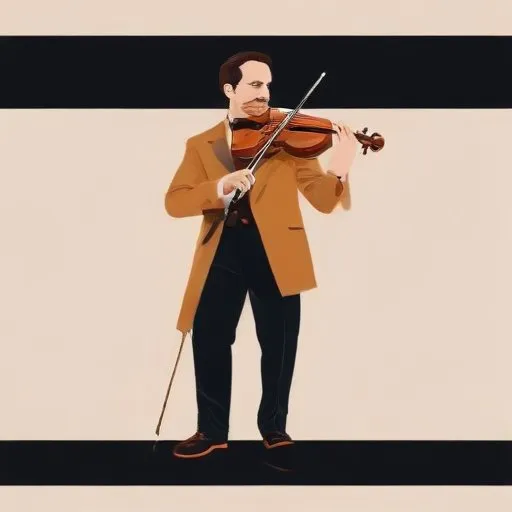
A renowned 17th-century violinist and composer, known for his virtuosic performances and innovative compositions that blended Italian and German styles. He was a prominent figure in the development of the violin concerto.
Giovanni Buonaventura Viviani, an Italian composer and violinist, is renowned for his mesmerizing operas and solo cantatas that reflect the style of Antonio Cesti, a renowned composer of his time. Born on July 15, 1638, in Florence, Viviani's musical journey took him to various courts and cities, where he left an indelible mark on the world of music.
Viviani's musical career began as a violinist at the court in Innsbruck, where he worked from 1656 to 1660. He later became the director of court music at Innsbruck between 1672 and 1676, a position that catapulted him to prominence in the musical circles of Europe.
During his time in Venice, Viviani arranged Francesco Cavalli's Scipione affricano and composed his own opera, Astiage, both of which were performed in 1678. He also directed an oratorio at the Oratorio di San Marcello in Rome, collaborating with esteemed musicians Arcangelo Corelli and Bernardo Pasquini.
In 1678, Viviani was elevated to the nobility, henceforth referring to himself as Nobile del Sacro Romano Imperio. This recognition of his artistic prowess allowed him to spread his musical wings further, as he went on to direct a troupe of opera singers in Naples between 1678 and 1679, and again from 1681 to 1682.
During his time in Naples, Viviani performed some of his own operas and oratorios, solidifying his reputation as a master of his craft. He later served as maestro di cappella to the Prince of Bisignano in 1686, and from 1687 to 1692, he held the same position at Pistoia Cathedral.
Viviani's compositional style is characterized by his operas and solo cantatas, which mirror the style of Antonio Cesti. His instrumental works, predominantly in the Italian style, also reflect the influences of south German and Austrian music. Notable among these are the instrumental recitatives in his Sinfonia cantabile, Op. 4, which imitate solo cantatas.
Two sonatas in Op. 4, written for trumpet and continuo, are also worthy of mention. Viviani's Solfeggiamenti, textless vocal pieces intended for teaching purposes, are unusual examples of this genre.
Giovanni Buonaventura Viviani's legacy is one of harmony and beauty, with his music continuing to enchant audiences to this day. Through his operas, cantatas, and instrumental works, he has left an indelible mark on the world of music, inspiring generations of composers and musicians.
Born in 1678
A virtuosic violinist and prolific composer, he crafted over 400 concertos, including "The Four Seasons," which remains a beloved and iconic masterpiece of classical music.
Born in 1685
A master of Baroque music, he composed over 1,000 works, including orchestral suites, cantatas, and passions, that still inspire and influence musicians today. His innovative use of counterpoint and harmony raised the bar for classical music.
Born in 1685
A renowned Baroque composer and organist, famous for creating majestic orchestral suites, operas, and oratorios, including the iconic "Messiah" masterpiece.
Born in 1653
A virtuosic violinist and composer who revolutionized the concerto grosso form, creating a new era of classical music. His influential works elevated the violin to a solo instrument, shaping the course of Western classical music.
Born in 1692
A virtuosic violinist and composer who wrote over 150 concertos and sonatas, known for his technically demanding and expressive works that showcased his mastery of the instrument.
Born in 1782
A virtuosic violinist and composer who revolutionized the instrument's technical possibilities, leaving an indelible mark on classical music.
Born in 1770
A musical genius who expanded the possibilities of classical music, creating iconic symphonies and piano sonatas that continue to inspire and influence generations of artists.
Born in 1756
A child prodigy and master of classical music, he composed over 600 works, including symphonies, operas, and chamber music, that continue to inspire and influence musicians today.
