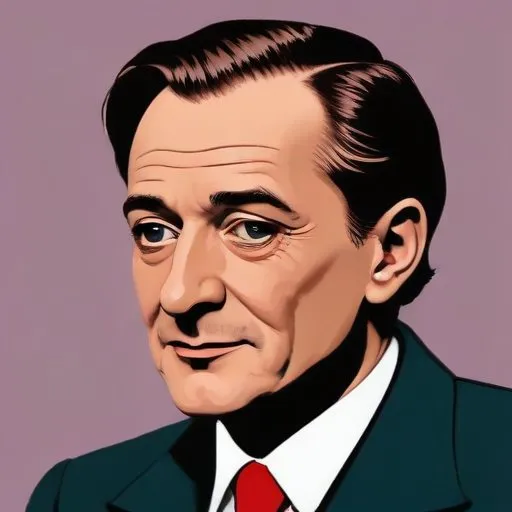
Gottfried Benn

Gottfried Benn

Gottfried Benn was born on May 2nd, 1886

Full Name: Gottfried Benn
Nationality: German
Occupation: Author and Poet
Birth Place: Free City of Danzig
Birth Date: May 2, 1886
Death Date: July 7, 1956
Notable Work: Morgue and Other Poems
Literary Movement: Expressionism

A leading figure of Expressionism, this poet and essayist explored the human condition through provocative and innovative works, blending philosophy and art.

Written by: Emma Thompson Emma Thompson

Gottfried Benn: The Provocative German Poet and Essayist

A Master of Dark and Unsettling Verse

Gottfried Benn was a German poet, essayist, and physician who left an indelible mark on the literary world with his provocative and often unsettling works. Nominated for the Nobel Prize in Literature five times, Benn's poetry and essays continue to fascinate readers with their dark, introspective, and often unflinching exploration of human existence.

Early Life and Education

Born on May 2, 1886, in Mansfeld, Germany, Benn was the son and grandson of Lutheran pastors. He was educated in Sellin and Frankfurt an der Oder, before studying theology at the University of Marburg and military medicine at the Kaiser Wilhelm Academy in Berlin. However, it was his time as a pathologist that would greatly influence his literary work, as he dissected over 200 bodies between 1912 and 1913 in Berlin.

Literary Career and Style

Benn's literary career began with the publication of his poetry collection, _Morgue and Other Poems_, in 1912. This collection of expressionist poems shocked critics and the public with its graphic and unflinching depiction of death, decay, and the human body. His poetry often explored themes of mortality, nihilism, and the search for meaning in a seemingly meaningless world.

One of his most famous poems, "No III. Cycle," is a stark example of his unique style:

Der einsame Backzahn einer Dirne,
die unbekannt verstorben war,
trug eine Goldplombe.
Die brigen waren wie auf stille Verabredung
ausgegangen.
Den schlug der Leichendiener sich heraus,
versetzte ihn und ging fr tanzen.
Denn, sagte er,
nur Erde solle zur Erde werden.

Awards and Recognition

Despite the controversy surrounding his work, Benn received numerous awards and accolades, including the Georg Bchner Prize in 1951.

Personal Life and Relationships

Benn's personal life was marked by a tumultuous romance with the Jewish poet Else Lasker-Schler, whom he met in 1912. This relationship had a profound influence on his work, and he often explored themes of love, loss, and longing in his poetry.

Legacy and Impact

Gottfried Benn's work continues to fascinate readers with its dark beauty and unflinching portrayal of human existence. His poetry and essays have inspired generations of writers, and his influence can be seen in the works of poets such as Sylvia Plath and Ingeborg Bachmann.

Quotes and Memorable Sayings

Only earth should return to earth. The poet is not a creator, but a receiver, a messenger. Gottfried Benn's provocative and often unsettling works continue to fascinate readers with their dark beauty and unflinching portrayal of human existence. As a master of dark and introspective verse, Benn's legacy as one of Germany's most important poets remains unchallenged.
Timeline
1886
Birth in Mansfeld, Germany
Gottfried Benn was born on May 2, 1886, in Mansfeld, Germany, and would go on to become a prominent German author and poet.
1909
Studied Medicine
Benn studied medicine at the University of Berlin, eventually becoming a doctor and serving in World War I.
1912
Published First Poetry Collection
Benn published his first collection of poetry, Morgue, which received critical acclaim.
1932
Praised by Nazi Regime
Benns work was praised by the Nazi regime, although he would later distance himself from their ideology.
1956
Death in West Berlin
Gottfried Benn died on July 7, 1956, in West Berlin, Germany, at the age of 70, leaving behind a complex and controversial legacy.
Gottfried Benn

Gottfried Benn Quiz

Gottfried Benn's literary movement was characterized by

Score: 0/5
FAQ
What were Gottfried Benns major literary contributions?
Gottfried Benn was a prominent German author and poet, known for his avant-garde style and exploration of themes such as existence, morality, and the human condition.
What was Gottfried Benns role in the Expressionist movement?
Gottfried Benn was a key figure in the Expressionist movement, a literary and artistic movement that sought to challenge traditional forms and explore new modes of expression.
How did Gottfried Benns experiences in World War I influence his writing?
Gottfried Benns experiences in World War I had a profound impact on his writing, leading him to explore themes of trauma, disillusionment, and the search for meaning in a chaotic world.
What were Gottfried Benns views on art and literature?
Gottfried Benn believed that art and literature had the power to transcend the mundane and tap into the deeper aspects of human existence, revealing new insights and perspectives.
What is Gottfried Benns legacy in German literature?
Gottfried Benns legacy in German literature is that of a bold and innovative writer, who pushed the boundaries of language and form to explore the complexities of the human experience.

Related People:

Arthur Schopenhauer

Born in 1788

A pessimistic philosopher who wrote about the human condition, emphasizing the struggles and sufferings of life, and is famous for his concept of the "will to life".

Ernst Jünger

Born in 1895

A German philosopher and author who wrote influential works on technology, politics, and war, exploring the intersection of humanity and modernity. Known for his provocative and poetic writings that challenged conventional thinking.

Martin Heidegger

Born in 1889

A German philosopher and academic who explored the meaning of existence, time, and human existence, influencing 20th-century philosophy with his concept of "Being-in-the-world".

Hermann Hesse

Born in 1877

A renowned poet, novelist, and painter, celebrated for his thought-provoking and introspective works that explore the human condition, spirituality, and the search for meaning. His writings often blended elements of psychology, philosophy, and mysticism.

Erich Maria Remarque

Born in 1898

A German-Swiss soldier and author, best known for writing the classic novel "All Quiet on the Western Front", a powerful anti-war tale that vividly depicts the horrors of World War I.

Bertolt Brecht

Born in 1898

A pioneering playwright and poet who revolutionized theater with his epic style, blending politics and art to create socially conscious works that continue to influence contemporary drama.

Theodor Adorno

Born in 1903

A critical theorist who critiqued modern society, culture, and capitalism, arguing that they perpetuate inequality and stifle individual freedom. His work influenced many fields, from sociology to musicology.