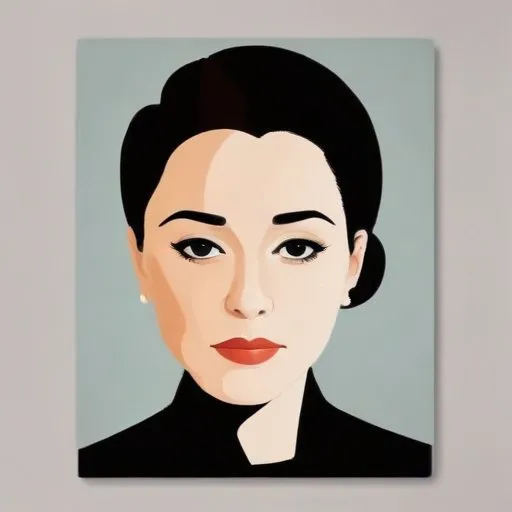
Grete Sultan: The Pianist Who Bridged Classical and Contemporary Music
A Life of Defiance and Dedication to Music
Grete Sultan was a renowned German-American pianist, celebrated for her fearless interpretation of classical and contemporary music. With a career spanning over seven decades, she was particularly known for her collaboration with
John Cage, introducing him to the I Ching and premiering his monumental piano cycle, Etudes Australes.
Early Life and Training
Born Johanna Margarete Sultan on June 21, 1906, in Berlin, Germany, into a musical family of Jewish heritage, Grete Sultan began her piano studies at a young age with American pianist Richard Buhlig. She later continued her training with Leonid Kreutzer and
Edwin Fischer. Sultan's early life was marked by a deep passion for music, which would eventually become her refuge during tumultuous times.
Flight from Nazi Germany and New Beginnings
In 1933, with the rise of the Nazi regime, Sultan's Jewish heritage led to her being banned from performing in public. She was only allowed to appear in concerts organized by the Jüdischer Kulturbund. With the help of Richard Buhlig, Sultan fled Germany in 1941, emigrating to the United States via Lisbon. She settled in New York City, where she began teaching piano at Vassar College and the 92nd Street Y, before joining the Masters School in Dobbs Ferry, New York.
A New Era of Music and Friendship
In the mid-1940s, Sultan met the composer John Cage, marking the beginning of a lifelong friendship. Sultan introduced Cage to one of her students,
Christian Wolff, who gifted Cage his first copy of the I Ching. This chance encounter would later influence Cage's musical thinking, and he went on to dedicate two pieces to Sultan. Their collaboration would yield some of the most groundbreaking works of the 20th century, including Music for Piano 53-68 and Etudes Australes.
A Pianist of Unwavering Devotion
Sultan's pianistic repertoire was vast, ranging from
Johann Sebastian Bach's Goldberg Variations to the works of
Ludwig van Beethoven,
Frédéric Chopin, and
Franz Schubert. She also championed contemporary composers, including
Alan Hovhaness and Tui
St. George Tucker. Her fearless approach to music and commitment to premiering new works earnt her a reputation as a pianist of unwavering devotion.
A Legacy of Innovation and Inspiration
Grete Sultan's impact on modern music is undeniable. She gave her last recital in 1996, aged 90, performing Bach's Goldberg Variations at New York's Merkin Concert Hall. Sultan's passing on June 26, 2005, marked the end of an era, but her legacy lives on through the countless musicians and composers she inspired.
- Notable Works: Etudes Australes, Music for Piano 53-68, Goldberg Variations
- Influences: John Cage, Christian Wolff, Alan Hovhaness, Tui St. George Tucker
- Awards and Honors: Schott Music publication of her biography (2012)
In conclusion, Grete Sultan's life was a testament to the power of music to overcome adversity and bridge cultural divides. Her fearless spirit and dedication to her craft continue to inspire generations of musicians and composers.
FAQ
What was Grete Sultans musical background?
Grete Sultan was a German-American pianist who studied at the Berlin Hochschule für Musik and later worked with renowned conductors such as Wilhelm Furtwängler and Otto Klemperer.
What was Grete Sultans relationship like with Arnold Schoenberg?
Grete Sultan was a close friend and confidante of Austrian composer Arnold Schoenberg, and was among the first pianists to perform his works in the United States.
How did Grete Sultan promote modern classical music?
Grete Sultan was a tireless advocate for modern classical music, performing and promoting the works of contemporary composers such as Schoenberg, Berg, and Webern.
What awards did Grete Sultan receive?
Grete Sultan received the Order of Merit of the Federal Republic of Germany in 1978, recognizing her contributions to music and cultural exchange.
How did Grete Sultans teaching career impact music education?
Grete Sultans teaching career at institutions such as the Juilliard School and the State University of New York at Stony Brook helped shape the next generation of pianists and music educators.