


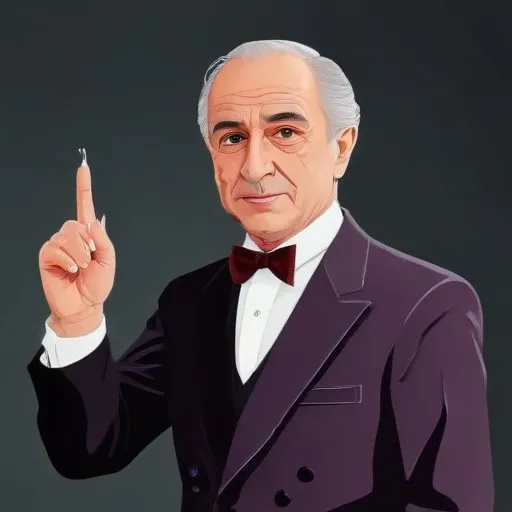
A renowned conductor and educator, he was instrumental in shaping the careers of many prominent musicians, and his teachings continue to influence classical music performance and pedagogy today.
Hans Swarowsky was a renowned Austrian conductor of Hungarian birth, celebrated for his exceptional teaching skills and mentorship of some of the most prominent conductors of the 20th century. His legacy extends far beyond his own impressive conducting career, as he played a significant role in shaping the future of orchestral direction through his guidance of iconic conductors such as Claudio Abbado, Mariss Jansons, and Zubin Mehta.
Swarowsky was born on September 16, 1899, in Budapest, Hungary, and began his musical journey under the tutelage of Felix Weingartner and Richard Strauss. He further honed his skills in musical theory with Arnold Schoenberg and Anton Webern, laying the foundation for his future success.
Swarowsky's talent and dedication earned him a permanent position as conductor of the Vienna State Opera, courtesy of Herbert von Karajan's invitation. He also became a professor of conducting at the Vienna Music Academy, where he mentored a plethora of future maestros. His students would go on to become some of the most influential conductors of their time, a testament to Swarowsky's exceptional teaching abilities.
Swarowsky's teachings and philosophies have had a profound impact on modern conducting. His emphasis on understanding the essence of a composer's work, rather than simply adhering to technicalities, allowed his students to develop a deeper connection with the music. This approach has influenced generations of conductors, shaping the course of orchestral direction and performance.
Swarowsky's conducting career was marked by several notable recordings, including Camille Saint-Saëns' Piano Concerto No. 2 and Piano Concerto No. 5, featuring Orazio Frugoni on piano, and Felix Mendelssohn's Violin Concerto, with Ivry Gitlis on violin. He also served as the chief conductor of the Scottish National Orchestra (now the Royal Scottish National Orchestra) from 1957 to 1959.
Hans Swarowsky's legacy extends far beyond his own accomplishments as a conductor. Through his teachings and mentorship, he has left an indelible mark on the world of classical music. His students, many of whom have become leading conductors, continue to carry his torch, ensuring that his influence will be felt for generations to come.
Swarowsky passed away on September 10, 1975, in Salzburg, Austria, just shy of his 76th birthday. His life was a testament to his dedication to music and his passion for nurturing the talents of others.
Swarowsky's teachings were compiled into the publication "Wahrung der Gestalt" (Keeping Shape), which serves as an encyclopedia for performance and conducting. This comprehensive guide is a testament to his commitment to preserving the essence of a composer's work and his dedication to sharing his knowledge with others.
Hans Swarowsky's life was a celebration of music, mentorship, and dedication. As we reflect on his accomplishments, we are reminded of the profound impact one person can have on the world of classical music.
Born in 1908
A renowned maestro who led the Berlin Philharmonic for over three decades, elevating its reputation through precise and dramatic performances. He's also famous for his numerous recordings and charismatic stage presence.
Born in 1912
A renowned maestro who led the Chicago Symphony Orchestra to international acclaim, known for his intense performances and numerous recordings of operas and symphonies.
Born in 1902
A renowned German conductor, he led prestigious orchestras, including the Berlin Philharmonic, and was particularly acclaimed for his interpretations of Bruckner, Wagner, and Strauss.
Born in 1894
A renowned opera conductor and director, celebrated for his interpretations of Mozart, Wagner, and Strauss, leading top orchestras and opera houses worldwide.
Born in 1885
A renowned composer and conductor, known for his interpretations of Beethoven and Bruckner, and his leadership of the Berlin State Opera and Los Angeles Philharmonic.
Born in 1890
A renowned opera conductor and director, known for his innovative productions and interpretations of Mozart and Verdi operas. He was a pioneer in the revival of Mozart's operas in the early 20th century.
