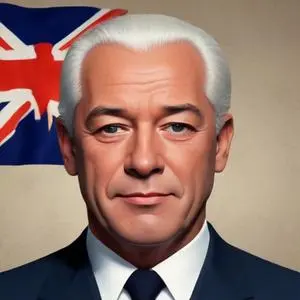
Harold Holt: The Australian Prime Minister Who Disappeared
A Legacy of Leadership and Mysterious Circumstances
Harold Holt is best known for being the 17th Prime Minister of Australia, serving from 1966 until his disappearance and presumed death in 1967. He is also remembered for his significant contributions to Australian politics, economy, and immigration policies.
A Childhood in Sydney and Melbourne
Born on August 5, 1908, in Sydney, Holt moved to Melbourne in his childhood. He pursued his higher education at the University of Melbourne, where he studied law. His early life and education laid the foundation for his future career in politics and law.
Rise to Prominence in Australian Politics
Holt's entry into politics began when he was elected to the House of Representatives at the age of 27, becoming a member of parliament (MP) for the division of Fawkner in 1935. He was a member of the United Australia Party (UAP) and quickly rose through the ranks, becoming a minister without portfolio in 1939. His mentor,
Robert Menzies, played a significant role in his early political career.
Wartime Efforts and Post-War Immigration Policies
During World War II, Holt briefly served in the Australian Army. Following his recall to cabinet after the Canberra air disaster, he played a crucial role in shaping Australia's post-war immigration policies. As Minister for Immigration from 1949 to 1956, he expanded the immigration scheme and relaxed the White Australia policy for the first time.
Economic Reforms and Leadership Roles
In 1949, Holt became a senior figure in the Liberal Party government. He held various leadership roles, including Minister for Labour and National Service from 1949 to 1958, where he handled several industrial relations disputes. He was also instrumental in the creation of the Reserve Bank of Australia and the introduction of the decimal Australian dollar. Holt's economic policies had a significant impact on Australia's economy, although he was blamed for a credit crunch that almost cost the Coalition the 1961 election.
Prime Ministership and Disappearance
Holt became the Prime Minister of Australia in January 1966, following the retirement of Robert Menzies. His tenure as Prime Minister was marked by significant reforms, including the introduction of the decimal currency. Tragically, his disappearance on December 17, 1967, while swimming at Cheviot Beach, Victoria, remains a mystery. Despite an extensive search, his body was never recovered, and he was officially presumed dead.
Legacy and Impact
Harold Holt's contributions to Australian politics, economy, and immigration policies continue to influence the country's development. His legacy serves as a testament to his leadership, vision, and commitment to his country. Despite the mysterious circumstances surrounding his disappearance, Holt's impact on Australian history remains unparalleled.
Personal Milestones and Key Life Events
- August 5, 1908: Born in Sydney, Australia
- 1935: Elected to the House of Representatives at the age of 27
- 1939: Became a minister without portfolio
- 1949-1956: Minister for Immigration
- 1949-1958: Minister for Labour and National Service
- 1956: Elected deputy leader of the Liberal Party
- 1958: Replaced Arthur Fadden as Treasurer
- January 1966: Became the 17th Prime Minister of Australia
- December 17, 1967: Disappeared while swimming at Cheviot Beach, Victoria
Quotes and Memorable Sayings
"The Australian people want to be certain that the Government is acting in their best interests. They want to be certain that the Government is not acting on some concealed motivation."
FAQ
What was Harold Holts role in Australian politics?
Harold Holt was the 17th Prime Minister of Australia, serving from 1966 to 1967. He was a prominent figure in Australian politics, known for his liberal policies and his commitment to social reform.
What were Harold Holts major policy initiatives?
Harold Holts major policy initiatives included the introduction of decimal currency, the expansion of higher education, and the establishment of the Australian Council for the Arts. He also played a key role in shaping Australias foreign policy during the Vietnam War.
How did Harold Holts leadership style differ from his predecessors?
Harold Holts leadership style was characterized by his pragmatism and his willingness to compromise. He was known for his ability to work with his opponents and to find common ground, which helped to improve the stability of the Australian government.
What was Harold Holts legacy in Australian politics?
Harold Holts legacy in Australian politics is one of reform and modernization. He helped to shape Australias role in the Asia-Pacific region and to promote economic growth and social progress.
What was the circumstances of Harold Holts death?
Harold Holt disappeared while swimming at Cheviot Beach, Victoria, on December 17, 1967. His body was never recovered, and the circumstances of his death remain a mystery to this day.