


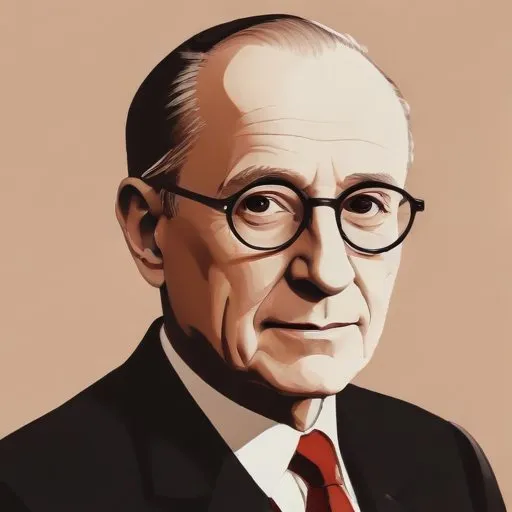
Developed the Kuhn-Tucker theorem, a fundamental concept in nonlinear programming, and made significant contributions to game theory and mathematical economics.
Harold William Kuhn, a renowned American mathematician, left an indelible mark on the world of game theory with his groundbreaking contributions. He is most notably recognized for his development of the Karush-Kuhn-Tucker conditions, Kuhn's theorem, and the creation of Kuhn poker, cementing his status as a titan in the field.
Kuhn was born on July 29, 1925, in Santa Monica, California. His fascination with mathematics began early, and he went on to pursue higher education at the California Institute of Technology, where he earned his bachelor's degree in 1947. He later moved to Princeton University, where he received his Ph.D. in mathematics in 1950.
Kuhn's academic journey took him to Princeton University, where he became a professor of mathematics and spent most of his career. He was a prolific researcher, and his work on game theory, linear programming, and optimization led to numerous landmark publications. In 1955, he introduced the Hungarian method for the assignment problem, which was later discovered to have been described by Carl Gustav Jacobi a century earlier.
One of Kuhn's most significant contributions is the Karush-Kuhn-Tucker conditions, a fundamental concept in nonlinear programming. This work was recognized with the 1980 John von Neumann Theory Prize, which he shared with David Gale and Albert W. Tucker.
Kuhn's impact on the field of mathematics extends beyond his own work. He was a close friend and colleague of John Forbes Nash, with whom he shared a lifelong association. Kuhn played a pivotal role in getting Nash the attention of the Nobel Prize committee, ultimately leading to Nash's 1994 Nobel Prize in Economics. Kuhn also co-edited The Essential John Nash and served as the mathematics consultant for the 2001 film adaptation of Nash's life, A Beautiful Mind.
Throughout his career, Kuhn maintained close ties with Albert W. Tucker, who was Nash's dissertation advisor. This trio of mathematicians collaborated on various projects, shaping the landscape of game theory and beyond.
Kuhn married Estelle Henkin in 1949, and they had three sons: Clifford, Nicholas, and Jonathan. Each of his sons pursued successful careers in their respective fields, with Clifford becoming an oral historian, Nicholas a professor of mathematics, and Jonathan the Director of Art and Antiquities for the New York City Department of Parks and Recreation.
Harold W. Kuhn's passing on July 2, 2014, marked the end of an era in mathematics. His pioneering work continues to inspire and influence generations of mathematicians, economists, and scholars across various disciplines.
"The game of poker provides an excellent opportunity for the study of a class of decision problems, which we can call 'games of strategy'."
Born in 1752
Designed grand, neoclassical buildings in England, including the Royal Pavilion and Buckingham Palace, revolutionizing British architecture with his Regency style.
Born in 1921
A Nobel Prize-winning economist who pioneered the theory of social choice and welfare economics, known for his work on the impossibility theorem, which challenges the idea of a perfectly fair voting system.
Born in 1924
A Nobel Prize-winning economist who developed a growth model that showed technological progress is the primary driver of economic growth, and is known for his work on the theory of economic growth.
Born in 1915
A renowned economist and academic who made significant contributions to the field of economics, particularly in the areas of macroeconomics and international trade. He was awarded the Nobel Prize in Economics in 1970.
Born in 1912
A Nobel Prize-winning economist who championed free market capitalism and limited government intervention, known for his advocacy of laissez-faire economics and influential writings on monetary policy.
95 Years Old
A pioneer in applying economic theory to social issues, he's most known for his work on human capital, crime and punishment, and the economics of the family.
87 Years Old
A Nobel Prize-winning economist and academic who developed the Efficient Market Hypothesis, which revolutionized our understanding of stock markets and investments.
85 Years Old
Developed the Black-Scholes model, a groundbreaking formula for pricing options and derivatives, revolutionizing financial markets and earning a Nobel Prize in Economics. This work has had a lasting impact on modern finance and investment strategies.
