


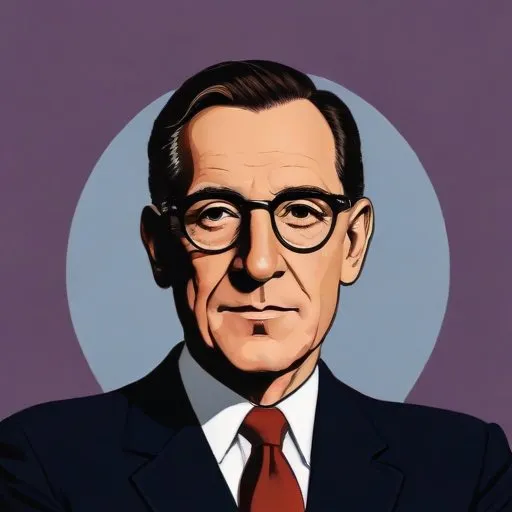
Co-founder of Newsday, a prominent Long Island newspaper, and a businessman with a passion for aviation and sailing. He was a prominent figure in American media and publishing.
Harry Frank Guggenheim, a scion of the wealthy Guggenheim family, is best known for his philanthropic efforts and passion for aviation, which led to the establishment of the Solomon R. Guggenheim Foundation and the development of the first practical helicopter.
Born on August 23, 1890, in West End, New Jersey, Harry Guggenheim was the son of Daniel Guggenheim and Florence Shloss Guggenheim. He was educated at Columbia University and later served in the United States Navy during World War I.
In 1930, Harry Guggenheim established the Solomon R. Guggenheim Foundation, a non-profit organization dedicated to promoting education and research in the fields of art, architecture, and engineering. The foundation would go on to support numerous projects, including the construction of the iconic Solomon R. Guggenheim Museum in New York City.
Harry Guggenheim's passion for aviation led him to invest in the development of the first practical helicopter. In 1933, he founded the Guggenheim Aeronautical Laboratory at Caltech (GALCIT), which became a hub for innovation in aerodynamics and aircraft design. The laboratory's research led to the creation of the first functional helicopter, designed by Igor Sikorsky.
Throughout his life, Harry Guggenheim was dedicated to philanthropic causes, particularly in the fields of education and aviation. He served as a trustee of the Daniel and Florence Guggenheim Foundation and supported various charitable organizations. In 1941, he married Caroline Morton, with whom he had two children, Daniel Guggenheim and Florence Guggenheim.
Harry Guggenheim's work in aviation and philanthropy has had a lasting impact on modern society. His support for innovative research and development helped pave the way for advances in aerospace technology, while his philanthropic efforts continue to benefit educational institutions and charitable organizations.
Harry Guggenheim's life and work are a testament to the power of innovation and philanthropy. His contributions to aviation and education continue to inspire new generations of researchers, engineers, and artists. Today, the Solomon R. Guggenheim Foundation remains a vital institution, supporting cutting-edge research and artistic expression.
"The progress of science and art depends on the freedom of the human spirit to explore and create."
Harry Frank Guggenheim's remarkable life and achievements serve as a reminder of the importance of innovation, philanthropy, and service to others. His legacy continues to inspire and empower individuals around the world.
Born in 1908
A wealthy businessman and politician who served as Vice President under Gerald Ford, known for his moderate Republican views and influential role in shaping US foreign policy.
Born in 1898
Co-founder of Time magazine, a pioneering weekly news publication that shaped modern journalism, known for its influential coverage of global events and iconic red-bordered cover design.
Born in 1889
Co-founder of The New Republic, a pioneering journalist and publisher who shaped American political discourse with his influential writings and opinions. He's most known for his insightful commentary on democracy, politics, and society.
Born in 1847
Founded a media empire and established the prestigious Pulitzer Prize, recognizing excellence in journalism and literature.
Born in 1863
Founded a massive media conglomerate, revolutionizing the newspaper industry and shaping public opinion through sensationalized journalism. Known for his extravagant lifestyle and grandiose architecture .
Born in 1858
Pioneering newspaper publisher who revolutionized journalism with his emphasis on objective reporting and in-depth coverage, transforming The New York Times into a respected national institution.
Born in 1891
Publisher of The New York Times from 1935 to 1961, known for his leadership during a pivotal period in American history, including World War II and the Cold War.
