


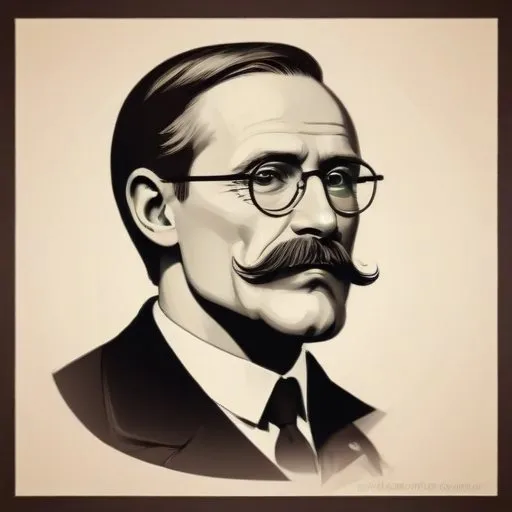
A pioneer in the fields of chemistry and physics, known for his groundbreaking work on electrochemistry, gas analysis, and the discovery of the Magnus effect, a phenomenon in fluid dynamics.
Heinrich Gustav Magnus, a renowned German experimental scientist, is best known for his groundbreaking research in physics and chemistry, as well as his exceptional laboratory teaching skills. His contributions to the field of science have had a lasting impact, shaping the understanding of various phenomena and inspiring future generations of scientists.
Born on May 2, 1802, in Berlin, Germany, Magnus was raised in a wealthy Jewish family. He received private instruction in mathematics and natural science in his early years, laying the foundation for his future academic pursuits.
Magnus went on to study chemistry and physics at the University of Berlin, where he earned his doctorate in 1827 with a dissertation on tellurium. Under the guidance of Eilhard Mitscherlich, a prominent German chemist, Magnus developed a strong foundation in experimental science.
Following his doctoral studies, Magnus spent a year as a visiting research fellow at the laboratory of Jöns Jakob Berzelius in Stockholm, Sweden, and another year at the laboratory of Joseph Louis Gay-Lussac and Louis Jacques Thénard in Paris, France. These experiences further refined his skills in experimental science and prepared him for his future academic career.
In 1831, Magnus was appointed lecturer in physics and technology at the University of Berlin, where he quickly gained recognition for his exceptional teaching skills and innovative approaches to laboratory instruction. He became an assistant professor in 1834 and was later appointed full professor, eventually serving as the dean of the faculty.
Magnus's teaching style was characterized by clarity, precision, and a passion for applied science. His lectures attracted a large following of enthusiastic students, who were inspired by his experimental demonstrations and emphasis on the practical applications of scientific principles.
In addition to his formal lectures, Magnus held weekly colloquies on physical questions at his home, providing a platform for young students to engage in discussions and debates on cutting-edge scientific topics. His laboratory, equipped with state-of-the-art facilities, offered students the opportunity to engage in hands-on research and experimentation.
Magnus's contributions to the field of science have been profound and far-reaching. His research and teachings have influenced generations of scientists, shaping the development of physics and chemistry as we know them today.
Through his emphasis on experimental science and laboratory instruction, Magnus paved the way for future scientific breakthroughs and innovations. His commitment to education and mentorship has had a lasting impact on the scientific community, inspiring countless students to pursue careers in science and research.
Magnus remained dedicated to his work throughout his life, continuing to teach and conduct research until his passing on April 4, 1870. Despite his many accomplishments, he remained humble and dedicated to his craft, leaving behind a legacy that continues to inspire and educate scientists to this day.
Born in 1803
Developed groundbreaking theories on organic chemistry and agriculture, revolutionizing farming practices and earning the title "Father of Fertilizers".
Born in 1800
German chemist and academic who synthesized urea, debunking the theory of vitalism, and made significant contributions to organic chemistry. He is considered one of the founders of modern organic chemistry.
Born in 1811
A pioneer in chemistry, known for inventing the Bunsen burner, a laboratory device still widely used today for heating and combustion experiments.
Born in 1822
Developed the theory of thermodynamics, introducing the concept of entropy, and made significant contributions to the fields of electricity and magnetism.
Born in 1818
Developed the theory of chemical structure and introduced the concept of synthetic chemistry, revolutionizing the field of organic chemistry.
Born in 1835
German chemist and Nobel laureate who synthesized barbituric acid and developed the theory of organic dyes, revolutionizing the textile industry. His work laid the foundation for modern dye chemistry.
