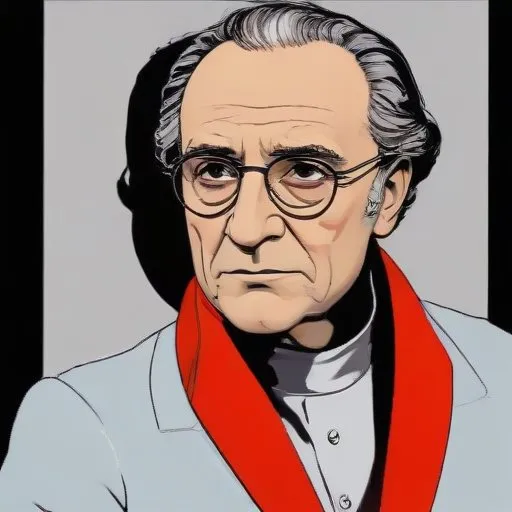
Henri Sauguet

Henri Sauguet

Henri Sauguet was born on May 18th, 1901

Full Name: Henri-Pierre Sauguet
Place of Birth: Bordeaux, France
Profession: Composer
Nationality: French
Musical Style: Neoclassicism, Chamber music
Notable Works: Les Forains, La Chansonnerie
Collaboration: Jean Cocteau
Teaching: École Normale de Musique

A French composer who blended neoclassicism with modernist elements, creating a unique sound that resonated in the mid-20th century. Known for his contributions to the French musical scene, particularly in the realm of opera and ballet.

Written by: Emma Thompson Emma Thompson

Henri Sauguet: The French Composer Who Defied Convention

A Legacy of Musical Innovation

Henri Sauguet, a French composer, is renowned for his eclectic and innovative approach to music. With a repertoire that spans operas, ballets, symphonies, concertos, chamber music, and film scores, Sauguet's contributions to the world of classical music are undeniable.

Early Life and Musical Beginnings

Born Henri Pierre Sauguet-Poupard on May 18, 1901, in Bordeaux, France, Sauguet adopted his mother's maiden name as his professional pseudonym. His musical journey began at the tender age of five, when he started learning piano at home. Later, he was taught by the organist of the church of Sainte-Eulalie de Bordeaux.

When his father was mobilized in 1914, Sauguet was forced to earn a living at a young age. During this period, he formed a lasting friendship with Joseph Canteloube, a former pupil of Vincent d'Indy, with whom he collected and harmonized traditional songs, including the famous Chants d'Auvergne (Songs of Auvergne).

The Rise to Prominence

Sauguet's musical education continued with local organists, and he even served as an organist at the small church of St-Vincent de Floirac. This early exposure to sacred music and organ arrangements would influence his work for the rest of his life.

In the early 1920s, Sauguet began writing to Darius Milhaud, a member of the famous Les Six group of composers. He also formed his own group, Les Trois, with two Bordeaux friends, Louis Emi and Jean-Marcel Lizotte. Their first concert took place on December 12, 1920, featuring works by Les Six.

Musical Style and Contributions

Sauguet's music defied convention, blending elements of tonality and modality with a focus on clarity, simplicity, and restraint. While he experimented with musique concrète and expanded tonality, he remained opposed to specific systems, instead opting for a more intuitive approach.

Legacy and Impact

Throughout his life, Sauguet remained committed to his artistic vision, refusing to be bound by conventions or trends. His music, while often overlooked in favor of more avant-garde composers, continues to inspire and delight audiences today.

His contributions to French musical heritage are undeniable, and his influence can be seen in the work of subsequent composers. Sauguet's music serves as a testament to the power of innovation, creativity, and artistic integrity.

Awards and Honors

Sauguet received numerous awards and honors for his contributions to music, including the Grand Prix de Rome (1927) and the Prix de la Ville de Paris (1954).

Despite facing criticism and controversy throughout his career, Sauguet remained dedicated to his craft, leaving behind a rich, diverse, and captivating body of work that continues to enchant and inspire generations of music lovers.

Timeline
1901
Birth in Saint-Etienne, France
Henri Sauguet was born on May 18, 1901, in Saint-Etienne, France, and began his music studies at a young age.
1915
Begins Composing
Sauguet began composing music, primarily focusing on chamber music and orchestral works.
1920
Moves to Paris
Sauguet moved to Paris, where he became associated with the avant-garde music scene and met composers such as Erik Satie.
1936
Co-Founders Les Six
Sauguet co-founded Les Six, a group of six French composers who sought to revive French music.
1989
Passing at Age 87
Henri Sauguet passed away on June 22, 1989, at the age of 87, leaving behind a legacy as a prominent French composer.
Henri Sauguet

Henri Sauguet Quiz

What style of music did Henri Sauguet blend to create a unique sound?

Score: 0/5
FAQ
What is Henri Sauguets most famous composition?
Henri Sauguets most famous composition is the ballet score Les Forains (The Strolling Players), which premiered in 1934 and showcases his neoclassical style.
What was Henri Sauguets role in French music?
Henri Sauguet was a prominent figure in French music, known for his contributions to the development of neoclassicism and his involvement with the French Resistance during World War II.
What is Henri Sauguets composing style?
Henri Sauguets composing style is characterized by neoclassicism, using elements of Baroque music and incorporating jazz and popular music influences in his work.
What collaborations did Henri Sauguet have with other artists?
Henri Sauguet collaborated with artists such as choreographer Serge Lifar and painter Henri Matisse, resulting in innovative and groundbreaking works in the realm of ballet and opera.
How did Henri Sauguets teaching career impact French music?
Henri Sauguets teaching career at the Paris Conservatory and other institutions helped shape the next generation of French composers and musicians, perpetuating his neoclassical style.

Related People:

Darius Milhaud

Born in 1892

A French composer and educator who blended jazz and classical music to create a unique sound, and is best known for his ballet scores and chamber music compositions.

Arthur Honegger

Born in 1892

A French composer and educator, he blended classical and modern styles, creating iconic works like "Pacific 231" that evoke powerful images and emotions.

Francis Poulenc

Born in 1899

A renowned French pianist and composer, celebrated for his eclectic and innovative works that blend jazz, classical, and sacred music, leaving a lasting impact on modern classical music.

Germaine Tailleferre

Born in 1892

A pioneering female composer and educator, she broke gender barriers in the classical music world, leaving a lasting legacy in the development of modern French music.

Georges Auric

Born in 1899

A French composer who wrote music for films, ballets, and orchestras, creating iconic scores for movies like "Roman Holiday" and "The Lavender Hill Mob".

Jean Cocteau

Born in 1889

A renowned French creative force, celebrated for his innovative and surreal works that blurred the lines between literature, art, and cinema, leaving an indelible mark on 20th-century culture.

Erik Satie

Born in 1866

A pioneering composer of minimalist and avant-garde music, known for his unconventional and humorous approach to classical music, creating a new kind of simplicity and clarity. His music often featured repetitive patterns and witty titles.

Claude Debussy

Born in 1862

A renowned French pianist and composer who revolutionized classical music with his unique, dreamy, and unconventional style, creating iconic works like "Clair de Lune" and "Prelude to the Afternoon of a Faun".