


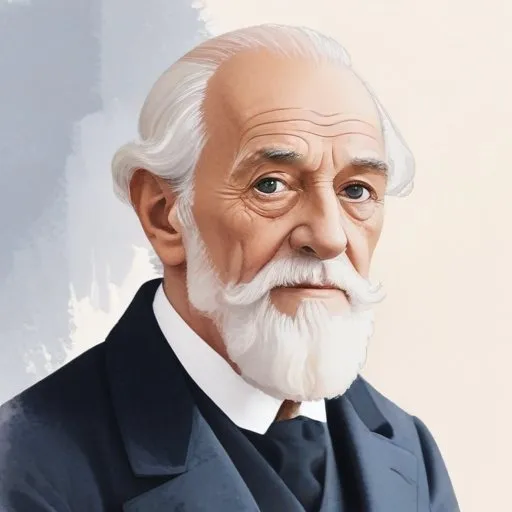
A renowned philosopher and academic who explored the intersection of mysticism, philosophy, and spirituality, particularly in Islamic and Iranian thought. His work bridges Eastern and Western intellectual traditions.
Henry Corbin was a French philosopher, theologian, and Iranologist who revolutionized the modern study of traditional Islamic philosophy. Through his groundbreaking works, he challenged the long-held European view that philosophy in the Islamic world declined after Averroes and Avicenna, instead, highlighting the significant contributions of mystical figures such as Suhrawardi, Ibn Arabi, and Mulla Sadra Shirazi.
Born on April 14, 1903, in Paris, Corbin was raised in a Protestant family and received a Catholic education. He obtained a certificate in Scholastic philosophy from the Catholic Institute of Paris at the age of 19, followed by a license de philosophie under the guidance of the renowned Thomist thinker, Étienne Gilson.
In 1928, Corbin's encounter with Suhrawardi, a 12th-century Persian Muslim thinker, marked a turning point in his spiritual and intellectual journey. This chance meeting with Louis Massignon, the director of Islamic studies at the Sorbonne, ignited a passion in Corbin to understand Iranian Islam, which he believed esoterically expressed older perennial insights related to Zoroastrianism and Platonism.
Corbin's dedication to understanding Islamic thought led him to spend extensive periods in Iran, where he collaborated with Shia thinkers such as Muhammad Husayn Tabatabai and Seyyed Hossein Nasr. He also became an integral part of the European Eranos circle of scholars, initiated by Carl Jung, whose theories on the collective unconscious and active imagination resonated deeply with him.
Corbin's seminal work, Histoire de la philosophie islamique (1964), challenged the conventional wisdom of European scholars, showcasing the richness and diversity of Islamic philosophy. He also wrote extensively on Christian mysticism, with a particular focus on Emanuel Swedenborg and the Holy Grail.
Corbin's philosophical contributions revolved around the concept of "imaginal" realms, where the boundaries between philosophy, mysticism, and spirituality blurred. He believed that Islamic philosophy, particularly the works of Suhrawardi and Ibn Arabi, offered a unique window into the perennial philosophy, which transcended the limitations of Western thought.
Corbin's work has had a profound impact on the study of Islamic philosophy, inspiring a new generation of scholars to explore the mystical and philosophical traditions of the Islamic world. His emphasis on the importance of understanding Islamic thought has fostered greater cultural exchange and dialogue between East and West.
Henry Corbin's life and work serve as a testament to the power of intercultural understanding and the importance of exploring the mystical and philosophical traditions of the Islamic world. His legacy continues to inspire scholars, philosophers, and spiritual seekers, ensuring that the doors of perception remain open to the wisdom of the East.
Born in 1889
A German philosopher and academic who explored the meaning of existence, time, and human existence, influencing 20th-century philosophy with his concept of "Being-in-the-world".
Born in 1905
Existentialist philosopher and playwright who argued that humans have complete freedom to choose their actions and create their own meaning in life, influencing modern thought on morality and individual responsibility.
Born in 1906
A Lithuanian-French philosopher who developed the concept of "ethics as first philosophy," emphasizing the importance of responsibility towards others and the face-to-face encounter. His work has influenced contemporary thought on morality, justice, and human rights.
Born in 1908
A French philosopher and academic who developed the concept of phenomenology, exploring the relationship between the self and the world, and is known for his work on perception, consciousness, and embodiment.
Born in 1883
A German-Swiss psychiatrist and philosopher who developed the concept of existentialism, emphasizing individual freedom and responsibility, and wrote extensively on philosophy, psychology, and politics. His work explored the human condition, morality, and the search for meaning.
Born in 1913
A French philosopher and academic who developed influential theories on hermeneutics, phenomenology, and existentialism, and is known for his work on the philosophy of language and narrative.
Born in 1908
A pioneering feminist philosopher who wrote extensively on ethics, politics, and gender, famously arguing that "one is not born, but rather becomes, a woman."
Born in 1897
A French philosopher, novelist, and poet who explored the relationships between eroticism, literature, and philosophy, and is known for his concept of "expenditure" and the idea that humans have an innate desire to waste and excess.
