


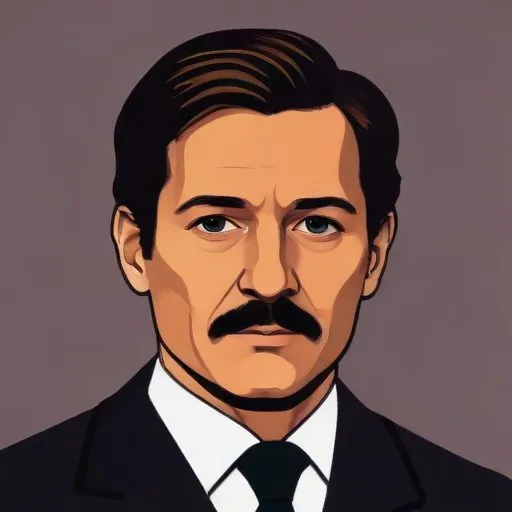
German physician and historian who researched and wrote extensively on the history of medicine, particularly on the lives and contributions of notable physicians. He is credited with uncovering and documenting the achievements of many forgotten medical pioneers.
Herbert Meinhard Mhlpfordt was a German internist, art historian, and cultural historian who left an indelible mark on the world of medicine, art, and history. Born on March 31, 1893, in Knigsberg, East Prussia, Mhlpfordt's life was a testament to his boundless energy, curiosity, and passion for learning.
Mhlpfordt was born to dentist Meinhard Mhlpfordt and Clara Mhlpfordt (née Adloff). He attended the prestigious Collegium Fridericianum, where he completed his Abitur. Mhlpfordt then pursued his higher education at the University of Freiburg, Munich, and the Albertina, where he studied medicine, literature, and art history.
After completing his medical studies, Mhlpfordt worked at the Charit in Berlin and later in Allenstein (now Olsztyn). During World War I, he served as a physician in the Wehrmacht from 1914 to 1918. After the war, he completed his Staatsexamen in 1920 and received his doctorate in medicine in 1921. Mhlpfordt went on to work as the chief of dermatology at St. Marien-Hospital in Allenstein from 1929 to 1937.
During World War II, Mhlpfordt served as a physician in the Wehrmacht from 1939 until his discharge for health reasons in 1944. In the midst of the war, he tended to refugees in Pillau (now Baltiysk) and the Vistula Spit during the evacuation of East Prussia. After the war, he settled in Lbeck, where he maintained his medical practice until 1959.
Aside from his medical practice, Mhlpfordt had a deep passion for art, history, and literature. He wrote extensively on the local history of East and West Prussia, especially his hometown of Knigsberg. Mhlpfordt contributed to various newspapers, journals, and reference works, showcasing his vast knowledge of the region.
Mhlpfordt's contributions to medicine, art, and history were recognized with several awards and honors, including:
Herbert Meinhard Mhlpfordt's life was a testament to his boundless energy, curiosity, and passion for learning. His contributions to medicine, art, and history continue to inspire generations, and his legacy remains a lasting tribute to the Renaissance man that he was.
Mhlpfordt passed away on October 9, 1982, in Lbeck, but his work and legacy continue to live on, a testament to his enduring impact on the world of medicine, art, and history.
Born in 1821
A pioneer in modern medicine, he founded the field of social medicine, emphasizing the importance of social and environmental factors on health, and made significant contributions to cellular pathology.
Born in 1843
A pioneering microbiologist and physician who discovered the bacteria that cause tuberculosis, cholera, and anthrax, revolutionizing the field of microbiology and saving countless lives.
Born in 1854
A German physician and biologist who discovered the first effective treatment for syphilis and developed the concept of chemotherapy, earning a Nobel Prize in Physiology or Medicine in 1908.
Born in 1857
A pioneer in the field of electromagnetism, he discovered radio waves and proved James Clerk Maxwell's theories, paving the way for modern wireless communication. His experiments led to the development of radio, television, and mobile phones.
Born in 1821
A 19th-century physician and physicist who made significant contributions to the fields of electromagnetism, thermodynamics, and the physiology of human perception, particularly in the study of vision and hearing.
Born in 1834
A German biologist, physician, and philosopher who coined the term "ecology" and made significant contributions to the field of evolutionary biology, including the recapitulation theory.
Born in 1810
Discovered the Schwann cells, a type of cell that provides support to neurons in the peripheral nervous system, and formulated the theory of cellular structure, which states that all living organisms are composed of cells.
