


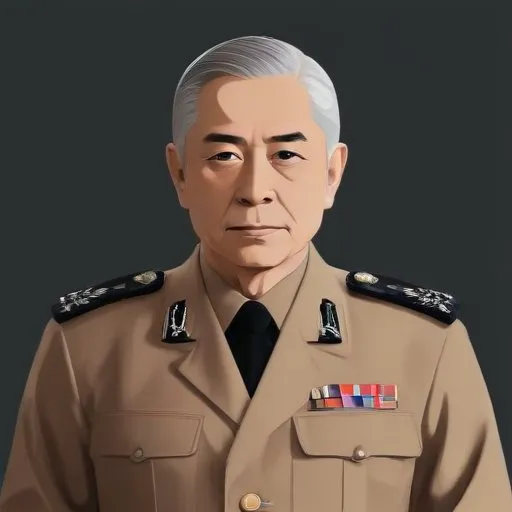
A Japanese general and politician who served as the 40th Prime Minister of Japan during World War II, known for his aggressive militaristic policies and role in the war. He was executed for war crimes in 1948.
Hideki Fujii, most commonly known as Hideki Tj, is a Japanese-Brazilian cartographer, and designer who revolutionized the world of cartography with his innovative and visually stunning maps. Tj's work has been instrumental in redefining the way we perceive and interact with maps, blending art, design, and geography to create captivating visual narratives.
Born on November 12, 1978, in São Paulo, Brazil, to a Japanese father and a Brazilian mother, Tj's multicultural upbringing laid the foundation for his unique perspective on design and cartography. He pursued his passion for design at the Faculdade de Belas Artes de São Paulo, graduating in 2002 with a degree in Graphic Design.
Tj's professional journey began as a graphic designer, but his fascination with cartography soon led him to merge the two fields. His breakthrough came with the creation of "Mapa Brasil," a series of maps showcasing Brazil's cultural and geographical diversity. This project catapulted him to international recognition, earning him the prestigious Design and Design Award in 2009.
One of his most notable works is the "World Atlas of Wine," a collaboration with wine expert, Jancis Robinson. This beautifully crafted atlas presents wine regions and their characteristics in an easily digestible format, appealing to both wine enthusiasts and cartography aficionados alike.
Tj's work is deeply rooted in the idea that cartography should not only provide information but also evoke emotions and spark curiosity. He believes that by marrying function and aesthetics, maps can become powerful tools for storytelling and cultural exchange. This approach has inspired a new wave of cartographers and designers to rethink the boundaries of their craft.
Tj's innovative approach has permeated various aspects of modern society, from education to advertising. His visually striking maps have been featured in prominent publications, such as The New York Times and National Geographic, exposing a broader audience to the possibilities of cartographic design.
In the realm of popular culture, Tj's work has inspired creative projects, including films, video games, and even music albums. His distinct style has become synonymous with imaginative and immersive storytelling.
Hideki Tj's contributions to the world of cartography have been profound, pushing the boundaries of traditional map-making and inspiring a new generation of cartographers and designers. His unique approach has not only redefined the way we interact with maps but also elevated the status of cartography as a powerful tool for storytelling and cultural expression.
As we navigate the complexities of our increasingly interconnected world, Hideki Tj's work serves as a testament to the transformative power of cartography, reminding us that even the most mundane information can be transformed into a work of art.
Born in 1901
The Japanese emperor who ruled from 1926 to 1989, leading the country through World War II and its post-war reconstruction, and is known for his symbolic role in Japanese politics and culture. He is also remembered for his rare public apology for Japan's wartime atrocities.
Born in 1884
Led the Imperial Japanese Navy during World War II, masterminding the surprise attack on Pearl Harbor, and later became a symbol of Japanese military power and strategy.
Born in 1868
A Japanese admiral-turned-politician who served as Prime Minister of Japan, known for his efforts to modernize the country's military and economy. He played a key role in Japan's early 20th-century development.
Born in 1848
A Japanese admiral who led the Imperial Japanese Navy to several victories during the Russo-Japanese War, including the Battle of Tsushima, which cemented Japan's rise as a naval power. He's known for his innovative tactics and strategies that revolutionized naval warfare.
Born in 1838
A prominent Japanese leader who served as Prime Minister twice, playing a key role in modernizing Japan's military and politics. He's known for his efforts to transform Japan into a major world power.
Born in 1891
A Japanese politician who served as Prime Minister during World War II, known for his role in leading Japan into the war and his attempts to negotiate a peace settlement. He is also infamous for his involvement in the Nanjing Massacre.
