


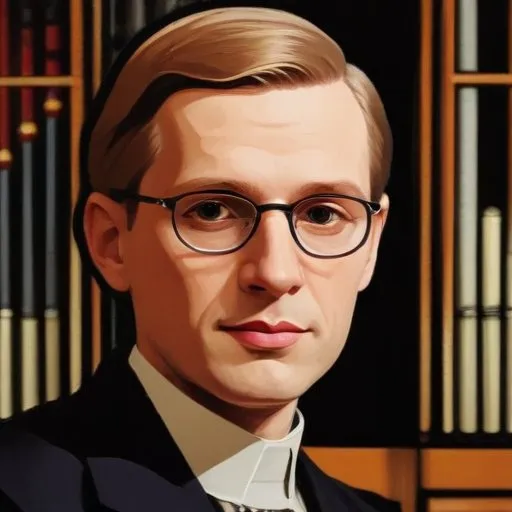
A renowned 17th-century German organist and composer, known for his innovative and influential contributions to the development of Protestant church music, particularly in the North German organ school.
Hieronymus Praetorius was a renowned Northern German composer and organist of the late Renaissance and early Baroque periods, celebrated for his intricate and vividly expressive polychoral motets in 8 to 20 voices. His remarkable works showcased his mastery of multiple choral groups, elevating the standards of sacred music in Northern Germany during the 16th and 17th centuries.
Hieronymus Praetorius was born on August 10, 1560, in Hamburg, Germany, to a family of talented musicians. His father, Jacob Praetorius the elder, was a composer and organist who taught Hieronymus the art of organ playing. After studying in Cologne, Hieronymus became the organist in Erfurt in 1580, but returned to Hamburg two years later to work alongside his father at Sankt Jacobi. Following his father's death in 1586, Hieronymus succeeded him as principal organist, a position he held for 43 years.
Hieronymus' sons, Jacob and Johann, followed in their father's footsteps, becoming composers and organists in their own right. This remarkable family legacy contributed significantly to the rich cultural heritage of Northern Germany during the Renaissance and Baroque periods.
Hieronymus Praetorius' music was characterized by its complexity and expressive depth, often featuring multiple choral groups of 8 to 20 voices. His polychoral motets, in particular, showcased his innovative approach to sacred music, blending the traditions of Northern Germany with the influences of the Venetian School.
In 1596, Hieronymus visited Grningen, where he met prominent composers Hans Leo Hassler and Michael Praetorius (no relation). This encounter likely exposed him to the latest musical trends and techniques, which he incorporated into his own compositions.
Hieronymus Praetorius' compositions demonstrate his mastery of complex vocal arrangements, showcasing the sophistication of his musicians and the depth of his artistic vision.
Hieronymus Praetorius' contributions to the development of sacred music in Northern Germany were profound, paving the way for future generations of composers. His innovative use of polychoral techniques and his meticulous attention to detail raised the bar for choral music in the region, influencing countless musicians and composers.
Today, Hieronymus Praetorius is recognized as one of the most important figures in the history of Northern German music, a testament to the enduring power of his artistic legacy.
Born in 1585
A renowned Baroque composer and organist, known for his contributions to the development of the oratorio and passion genres, creating over 500 works that showcased his mastery of choral music.
Born in 1587
A renowned Baroque-era musician and teacher, known for his influential compositions and contributions to the development of the organ concerto.
Born in 1685
A master of Baroque music, he composed over 1,000 works, including orchestral suites, cantatas, and passions, that still inspire and influence musicians today. His innovative use of counterpoint and harmony raised the bar for classical music.
Born in 1685
A renowned Baroque composer and organist, famous for creating majestic orchestral suites, operas, and oratorios, including the iconic "Messiah" masterpiece.
Born in 1659
A renowned Baroque composer, known for his iconic opera "Dido and Aeneas" and contributions to English classical music.
Born in 1632
A 17th-century mastermind who revolutionized French opera, creating lavish productions that captivated the royal court and beyond. He's credited with establishing the French opera tradition.
Born in 1668
A renowned Baroque composer and organist, known for his intricate and expressive harpsichord music that showcased his mastery of counterpoint and ornamentation. His works continue to inspire and influence classical music today.
