


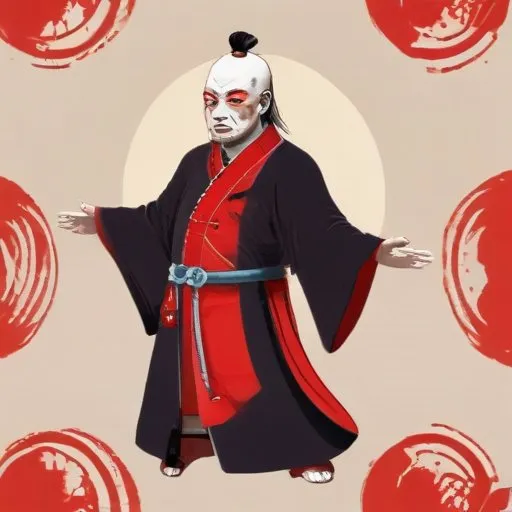
The second founder of the Qing dynasty, who unified various Mongol and Manchu tribes, and expanded the empire's borders through successful military campaigns. He is also known for creating a new administrative system and promoting Confucianism.
Hong Taiji, also known as the Emperor Taizong of Qing, was the second khan of the Later Jin dynasty and the founding emperor of the Qing dynasty. He is renowned for consolidating the empire founded by his father Nurhaci and laying the groundwork for the conquest of the Ming dynasty, paving the way for the Qing dynasty's reign over China for nearly three centuries.
Hong Taiji was born on November 28, 1592, during a time of great turmoil in Northeast Asia. His father, Nurhaci, was the founder of the Later Jin dynasty, and Hong Taiji was destined to play a crucial role in its expansion. He demonstrated exceptional leadership skills from an early age, participating in military campaigns alongside his father and quickly rising through the ranks.
Hong Taiji's strategic genius and military prowess enabled him to consolidate the Later Jin dynasty's territories and expand its borders. He unified the various Jurchen tribes, renamed them the Manchu people, and established the Eight Banners, a military system that would become the backbone of the Qing dynasty's army.
In 1635, Hong Taiji changed the name of the Jurchens to Manchu, and in 1636, he renamed the dynasty from Great Jin to Great Qing, laying the foundation for the Qing dynasty's rise to power.
Hong Taiji's military campaigns were marked by a series of victories, including the capture of the city of Shenyang in 1625, which became the capital of the Qing dynasty. He also launched successful campaigns against the Mongols, the Koreans, and the Ming dynasty, expanding the Qing empire's borders and securing its position as a dominant force in East Asia.
Hong Taiji implemented a range of administrative reforms, including the creation of a centralized government, a civil service examination system, and a code of laws. He also promoted cultural developments, such as the establishment of a imperial academy, the compilation of historical records, and the patronage of art and literature.
Hong Taiji's personal life was marked by a series of key relationships, including his marriage to Empress Xiaoduanwen, who played an important role in advising him on matters of state. He also had several sons, including Dorgon and Ajige, who would go on to play significant roles in the Qing dynasty's history.
Hong Taiji's legacy is complex and multifaceted. While he is remembered as a great military leader and statesman, his reign was also marked by violence and conflict. Nevertheless, his vision and leadership laid the foundations for the Qing dynasty's rise to power and its enduring legacy in Chinese history.
One of Hong Taiji's most famous quotes is: "The empire is a great enterprise, and it must be managed with great care." This quote reflects his pragmatic approach to governance and his commitment to building a strong and stable state.
Hong Taiji's reign marked a significant turning point in Chinese history, as the Qing dynasty would go on to shape the country's politics, culture, and identity for nearly three centuries. His legacy continues to be felt in modern China, where he is remembered as a great leader and a unifier of the Chinese people.
Hong Taiji's achievements can be compared to those of other great leaders of the time, including the Ming dynasty's Emperor Chongzhen and the Korean king, Injo. While these leaders faced similar challenges and opportunities, Hong Taiji's vision and strategic thinking set him apart as a true statesman and military genius.
Born in 1612
A powerful Chinese prince and regent who played a crucial role in establishing the Qing dynasty and shaping China's history. He's known for his military campaigns and effective governance.
Born in 1638
The first Qing dynasty emperor to rule from Beijing, he oversaw the transition from nomadic tribal leader to imperial ruler, establishing a strong foundation for the Qing dynasty.
Born in 1678
The fourth emperor of the Qing dynasty, who ruled China from 1722 to 1735, is known for his efficient administration, economic reforms, and military campaigns that expanded the empire's borders. He's also famous for his mysterious death, with rumors of assassination or poisoning.
Born in 1711
Ruling China from 1735 to 1796, this emperor oversaw a golden age of prosperity, territorial expansion, and cultural achievements, leaving a lasting legacy in Chinese history.
Born in 1507
Ruling China from 1521 to 1566, this emperor oversaw a period of cultural and economic growth, while also being known for his tyrannical behavior and persecution of officials.
Born in 1782
Ruling China from 1820 to 1850, this emperor oversaw a period of decline, marked by the Opium Wars and the cession of Hong Kong to Britain. He's also known for his efforts to reform the government and economy.
