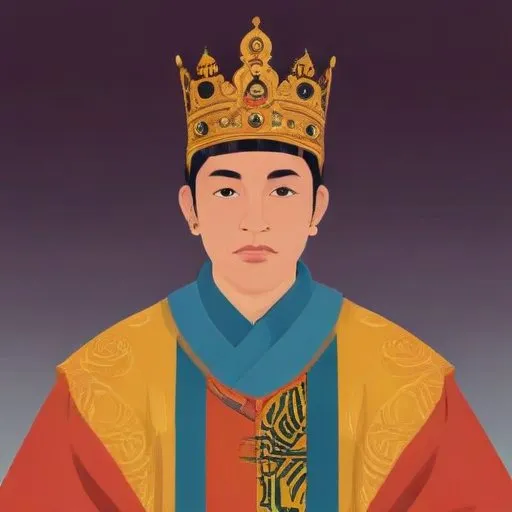
Dorgon: The Visionary Prince Regent of the Qing Dynasty
A Military Leader and Statesman
Dorgon, a Manchu prince and regent of the early Qing dynasty, is renowned for his military prowess and statesmanship, playing a pivotal role in the conquest of the Ming dynasty and the consolidation of the Qing empire. As the 14th son of Nurhaci, the founder of the Later Jin dynasty, Dorgon's life was marked by military campaigns, power struggles, and visionary leadership.
Rise to Power
Born on November 17, 1612, Dorgon's early life was shaped by his involvement in military campaigns against the Mongols, Koreans, and Ming dynasty during the reign of his eighth brother,
Hong Taiji. After Hong Taiji's death in 1643, Dorgon engaged in a power struggle with Hong Taiji's eldest son, Hooge, over the succession to the throne. The two eventually compromised, allowing Hong Taiji's ninth son, Fulin, to become the emperor, with Dorgon serving as Prince Regent from 1643 to 1650.
Consolidation of Power and Military Campaigns
Under Dorgon's regency, Qing forces occupied Beijing, the capital of the fallen Ming dynasty, and gradually conquered the rest of the Ming in a series of battles against Ming loyalists and other opposing forces around China. His military campaigns expanded the Qing empire, and his vision for a unified China began to take shape.
Reforms and Legacy
Dorgon introduced several reforms, including the policy of forcing all Han Chinese men to shave the front of their heads and wear their hair in queues, as was the Manchu custom. This move aimed to promote cultural assimilation and consolidate Qing rule over the Han Chinese population.
Honors and Rehabilitation
Dorgon was posthumously honored as an emperor, despite never having held the title during his lifetime. However, a year after his death, the
Shunzhi Emperor accused him of several crimes, stripping him of his titles and ordering his remains to be exhumed and flogged in public. It wasn't until 1778 that the
Qianlong Emperor rehabilitated Dorgon, restoring his honorary titles and recognizing his contributions to the Qing dynasty.
Personal Life and Death
Dorgon died on December 31, 1650, during a hunting trip. His life was marked by both triumph and controversy, but his legacy as a visionary leader and military strategist continues to shape our understanding of the Qing dynasty.
Key Dates and Events
- November 17, 1612: Dorgon is born
- 1643: Dorgon becomes Prince Regent after Hong Taiji's death
- 1645: Dorgon is given the honorary title Emperor's Uncle and Prince Regent
- 1649: Dorgon's title is changed to Emperor's Father and Prince Regent
- 1650: Dorgon dies during a hunting trip
- 1778: The Qianlong Emperor rehabilitates Dorgon, restoring his honorary titles
Dorgon's life and legacy serve as a testament to his vision and leadership, shaping the course of Chinese history and leaving a lasting impact on the Qing dynasty.
FAQ
What was Dorgons role in the Qing dynasty?
Dorgon was a Chinese prince and regent who played a crucial role in the Qing dynasty, serving as regent for his nephew, the Shunzhi Emperor, and helping to consolidate Qing power in the early years of the dynasty.
What were Dorgons military campaigns?
Dorgon led several successful military campaigns against the Ming dynasty and other regional rivals, expanding Qing territory and securing key victories that helped to establish the dynastys dominance.
How did Dorgons regency impact the Qing dynasty?
Dorgons regency had a profound impact on the Qing dynasty, as he implemented key reforms, centralize power, and promoted the development of the dynastys institutions and infrastructure.
What was Dorgons relationship with the Shunzhi Emperor?
Dorgon had a close but complex relationship with the Shunzhi Emperor, whom he mentored and guided as regent, but also sought to limit his power and influence in order to maintain his own authority.
What is Dorgons legacy in Chinese history?
Dorgons legacy in Chinese history is that of a skilled and ambitious politician who played a crucial role in establishing the Qing dynasty and shaping its early development.