


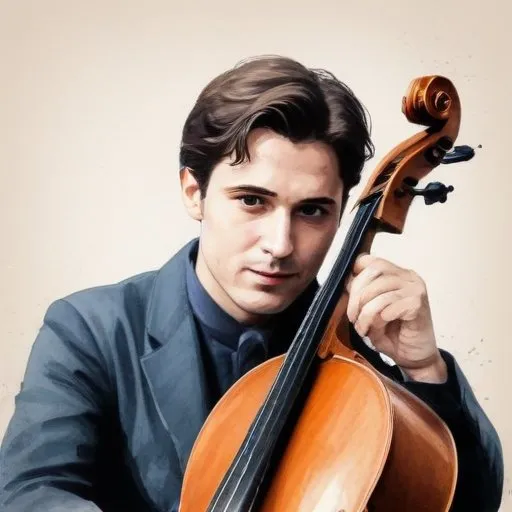
A renowned cellist and composer, he was a prominent figure in the Berlin Philharmonic, known for his expressive playing style and contributions to the classical music repertoire.
Hugo Becker was a renowned German cellist, cello teacher, and composer who left an indelible mark on the world of classical music. Known for his mastery of the cello and his contributions to the development of cello music, Becker was a prominent figure in the late 19th and early 20th centuries.
Becker was born on February 13, 1863, in Strasbourg, France, which later became part of the German Empire in 1871. His father, Jean Becker, was a famous violinist who attempted to teach Hugo the violin at the age of six. However, the young Becker had other plans and switched to the cello at the age of nine.
By the age of 15, Becker was already touring with a string quartet consisting of his family members. He later became a leading cellist in the court orchestra in Mannheim and eventually landed a position as solo cellist with the Frankfurt Opera Orchestra in 1884.
Becker's pedagogical skills were highly sought after, and he became the leading cello teacher at the Frankfurt Hoch Conservatory in 1885. Among his notable students was George Georgescu, who would later remark, "All I know, I learned from Hugo Becker." Becker also gave finishing lessons to renowned cellist Beatrice Harrison.
Becker's performing career was marked by extensive touring and collaborations with prominent musicians of his time, including Eugène Ysaÿe and Ferruccio Busoni in a piano trio. He later formed the third Schnabel Trio with Artur Schnabel and Carl Flesch between 1914 and 1921.
Becker's compositional output was limited but significant. His two movements from "Liebesleben, Op. 7" (1894) for cello and piano have been recorded by Adrian Bradbury and Andrew West. He also owned two Stradivarius cellos, including the 1700 Cristiani and the 1719 Becker.
Hugo Becker's legacy extends beyond his compositions and performances. He played a significant role in shaping the careers of many prominent cellists and left an indelible mark on the world of classical music. His contributions to the development of cello music continue to inspire and influence musicians to this day.
Hugo Becker passed away on July 30, 1941, but his music and legacy continue to live on, a testament to his enduring impact on the world of classical music.
Born in 1770
A musical genius who expanded the possibilities of classical music, creating iconic symphonies and piano sonatas that continue to inspire and influence generations of artists.
Born in 1833
A renowned pianist and composer, he crafted complex, expressive works that blended traditional and innovative techniques, leaving an indelible mark on classical music.
Born in 1811
A virtuosic pianist and composer who revolutionized classical music with his technically demanding and emotionally expressive works, blending Hungarian folk influences with Romantic-era drama.
Born in 1810
A renowned Romantic-era composer and influential music critic, known for his expressive and emotionally charged works, including symphonies, piano music, and art songs.
Born in 1809
A renowned 19th-century musician who masterfully blended classical and romantic styles, creating iconic works like the "Wedding March" and "Elijah" oratorio. His compositions continue to inspire and influence generations of artists.
Born in 1782
A virtuosic violinist and composer who revolutionized the instrument's technical possibilities, leaving an indelible mark on classical music.
Born in 1831
A renowned virtuoso violinist, composer, and conductor who revolutionized the classical music scene with his expressive performances and innovative compositions. He's also credited with premiering many iconic works, including Brahms' Violin Concerto.
Born in 1819
A renowned 19th-century pianist and composer, she was one of the first females to achieve recognition in a male-dominated field, creating over 60 pieces of music. Her compositions showcased romanticism and lyricism.
