


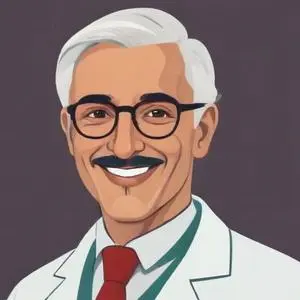
Developed a non-surgical treatment for clubfoot, a congenital deformity, using a gentle manipulation and casting technique that has become the gold standard worldwide. This method has helped millions of children walk normally.
Ignacio Ponseti, a renowned Spanish-American physician, revolutionized the field of orthopedics with his groundbreaking, non-surgical treatment for congenital clubfoot - the Ponseti Method. This innovative approach, which has brought hope and happiness to millions of families worldwide, is a testament to his unwavering dedication to improving human lives.
Born on June 3, 1914, in Menorca, Balearic Islands, Spain, Ignacio Ponseti was the son of a watchmaker. His early exposure to the intricacies of watch repair laid the foundation for his exceptional manual dexterity, a skill that would later benefit his patients. Ponseti pursued his passion for medicine at the University of Barcelona, where he graduated as a medical doctor.
The outbreak of the Spanish Civil War in 1936 interrupted Ponseti's academic pursuits. He served as a medical officer with the Loyalists, treating orthopedic injuries of wounded soldiers during the three-year conflict. This experience, though challenging, instilled in him a sense of purpose and direction, ultimately leading him to specialize in orthopedics.
In the 1950s, Ponseti developed his pioneering, non-surgical technique for correcting congenital clubfoot. The Ponseti Method involves a series of casts, followed by an abduction brace, to gently guide the foot into its normal position. This innovative approach has successfully treated millions of children worldwide, restoring their ability to walk and move with confidence.
As Professor Emeritus in the Department of Orthopaedic Surgery at the University of Iowa Hospitals and Clinics, Ponseti continued to nurture the next generation of orthopedic surgeons. His dedication to improving the human condition earned him numerous accolades, including the prestigious Albert Lasker Clinical Medical Research Award in 2007.
Ponseti's work embodied his profound respect for human dignity and his deep empathy for those suffering from debilitating conditions. His groundbreaking research and innovative approach have inspired generations of healthcare professionals to prioritize compassion, creativity, and collaboration.
The Ponseti Method has had a profound impact on modern society, enabling millions of children to lead active, independent lives. This pioneering work has also encouraged the development of innovative, non-surgical treatments for various orthopedic conditions, improving the quality of life for countless individuals worldwide.
Ponseti's remarkable career was marked by numerous publications, lectures, and awards, all testifying to his tireless pursuit of excellence in orthopedic research and treatment. His most notable work, the Ponseti Method, remains a cornerstone of clubfoot treatment, a testament to his unwavering dedication to improving human lives.
Ignacio Ponseti's remarkable journey serves as a beacon of hope, inspiring us to strive for excellence, compassion, and innovation. His groundbreaking work continues to touch the lives of millions, a poignant reminder of the transformative power of human compassion and dedication.
Born in 1514
A pioneering figure in the study of human anatomy, known for performing detailed dissections and creating accurate drawings of the body's inner workings, revolutionizing medical understanding.
Born in 1578
Discovered the circulatory system and described how blood flows through the body, revolutionizing understanding of human physiology.
Born in 1632
Pioneering microbiologist who discovered microorganisms like bacteria, yeast, and protists, laying the foundation for modern microbiology.
Born in 1749
Developed the smallpox vaccine, revolutionizing disease prevention and saving countless lives.
Born in 1822
Developed vaccines for rabies and anthrax, and pioneered the germ theory of disease, revolutionizing our understanding of microbiology and disease prevention.
Born in 1856
Pioneering psychoanalyst who developed theories on the subconscious mind, childhood experiences, and the structure of personality, revolutionizing our understanding of human behavior and psychology.
Born in 1914
Developed the first inactivated poliovirus vaccine, leading to the near eradication of polio, and founded the Salk Institute for Biological Studies.
