


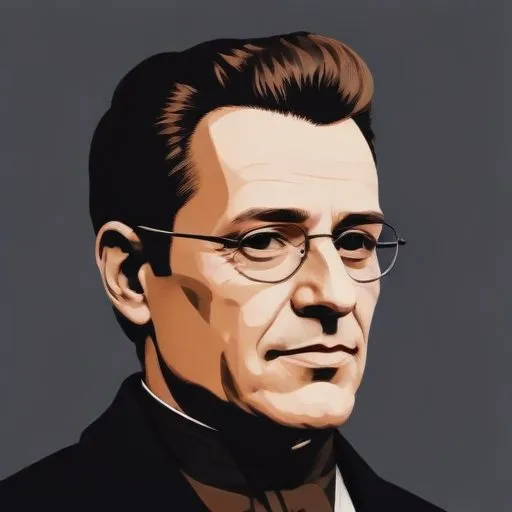
Austrian composer and educator who wrote operas, symphonies, and chamber music, and was a key figure in the development of the classical symphony. He was a prominent teacher and influenced many notable composers.
Ignaz Holzbauer, a stalwart of the 18th century Austrian music scene, is renowned for his prolific compositions of symphonies, concertos, operas, and chamber music. With a staggering 196 symphonies to his credit, Holzbauer's legacy is inextricably linked with the Mannheim school, a style that would go on to influence generations of musicians, including a young Wolfgang Amadeus Mozart.
Born in Vienna on September 18, 1711, Holzbauer's passion for music was evident from a young age. Despite his parents' wishes for him to pursue a career in law, Holzbauer's determination to follow his musical calling led him to study music, eventually becoming kapellmeister to Count Rottal and at the Court Theatre of Vienna in 1745.
Holzbauer's big break came in 1753 with the premiere of his opera, Il figlio delle selve, at the Schlosstheater Schwetzingen. The opera's success catapulted Holzbauer to fame, earning him a coveted position as kapellmeister at the Mannheim court, where he would spend the rest of his life teaching, composing, and inspiring a new generation of musicians.
Holzbauer's music is characterized by its affinity with the Sturm und Drang movement, a style that emphasized intense emotion, drama, and individualism. His operas, in particular, showcased his mastery of the genre, with complex harmonies, intricate melodies, and a deep understanding of human psychology.
Holzbauer's teaching legacy is as impressive as his compositional output. His students included Johann Anton Friedrich Fleischmann, a renowned pianist, and Carl Stamitz, a prominent composer and musician in his own right. Holzbauer's pedagogical approach emphasized the importance of technical skill, musicality, and creativity, shaping the musical landscape of the Mannheim school.
Holzbauer's influence on Mozart cannot be overstated. In 1778, Mozart composed nine numbers for insertion in Holzbauer's Miserere, a testament to the respect and admiration Mozart held for his elder composer. Although these compositions have sadly been lost, their significance in the annals of musical history remains.
Holzbauer's operatic oeuvre boasts an impressive range of works, including Lucio Papirio, Sesostri, and Vologeso, all showcasing his mastery of the genre. His opera, Gnther von Schwarzburg, an early German national opera, premiered in 1777, and its influence on Mozart's own operatic style is well-documented.
Holzbauer's legacy extends far beyond his impressive compositional output. His commitment to teaching, his innovative approach to music, and his unwavering dedication to his craft have inspired generations of musicians, composers, and music lovers alike. As we continue to rediscover and appreciate the music of the past, Ignaz Holzbauer's contributions to the world of classical music remain an enduring testament to his genius.
Born in 1714
A pioneering opera composer who revolutionized the art form with his innovative and expressive works, blending music and drama in a way that captivated audiences.
Born in 1756
A child prodigy and master of classical music, he composed over 600 works, including symphonies, operas, and chamber music, that continue to inspire and influence musicians today.
Born in 1732
A renowned composer and pianist of the Classical period, known for his symphonies, operas, and chamber music that showcased his innovative and expressive style. He played a significant role in shaping the Classical music era.
Born in 1770
A musical genius who expanded the possibilities of classical music, creating iconic symphonies and piano sonatas that continue to inspire and influence generations of artists.
Born in 1797
A renowned composer of symphonies, operas, and chamber music, particularly famous for his emotional and expressive lieder (art songs) that showcased his mastery of melody and harmony.
Born in 1750
A renowned 18th-century composer and conductor, known for his operas and rivalry with Mozart, as depicted in the movie Amadeus.
Born in 1782
A virtuosic violinist and composer who revolutionized the instrument's technical possibilities, leaving an indelible mark on classical music.
Born in 1752
A renowned pianist, composer, and conductor who revolutionized piano music with his technically demanding and expressive compositions, influencing generations of musicians.
