


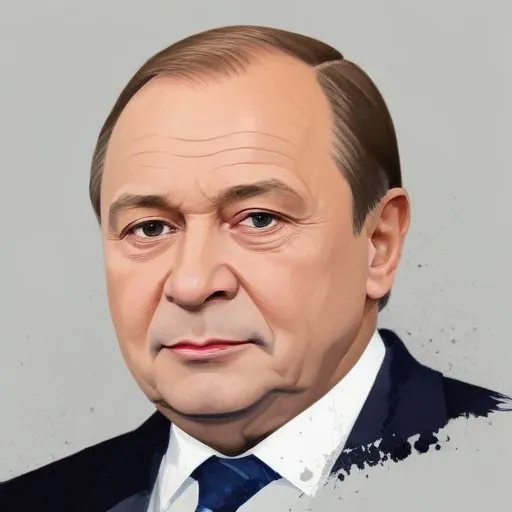
Russian Minister of Foreign Affairs from 1998 to 2004, known for playing a key role in shaping Russia's foreign policy and international relations during a pivotal period. He was a skilled diplomat who navigated complex global issues.
Igor Sergeyevich Ivanov is a renowned Russian politician who made his mark as the Foreign Minister of Russia from 1998 to 2004, serving under both the Yeltsin and Putin administrations. He is particularly known for his strong opposition to NATO's actions in Yugoslavia and the US invasion of Iraq, showcasing his commitment to international diplomacy.
Born on September 23, 1945, in Moscow, Ivanov is the son of a Russian father and a Georgian mother, Elena Sagirashvili. He graduated from the Maurice Thorez Moscow Institute of Foreign Languages (now known as Moscow State Linguistic University) in 1969.
Ivanov's diplomatic career spans over four decades, beginning in 1973 when he joined the Soviet Foreign Ministry. He spent a decade in Spain, where he honed his skills as a diplomat. In 1991, he became the ambassador to Madrid, a position he held until 1998.
On September 11, 1998, Ivanov was appointed Minister of Foreign Affairs, a position he held until 2004. During his tenure, he played a crucial role in mediating a deal between Georgian President Eduard Shevardnadze and opposition parties during Georgia's Rose Revolution in 2003.
After leaving the Ministry of Foreign Affairs, Ivanov was appointed Secretary of the Russian Security Council by President Vladimir Putin in 2004. He later resigned from the post in 2007. Ivanov has been recognized for his contributions, being awarded the title of Hero of the Russian Federation in 1999 and the Order of Merit for the Fatherland.
Ivanov is currently the president of the Russian International Affairs Council (RIAC) and a professor at the Moscow State Institute of International Relations (MGIMO University). He is also a member of the Supervisory Council of the International Luxembourg Forum on Preventing Nuclear Catastrophe and the European Council on Tolerance and Reconciliation.
In recent years, Ivanov has stepped back from the limelight, choosing not to engage in politics and public activities proactively.
Igor Ivanov's extensive diplomatic career has left an indelible mark on international relations. His commitment to diplomacy and opposition to military intervention have cemented his reputation as a seasoned and respected diplomat.
73 Years Old
A Russian politician who has dominated the country's politics for over two decades, known for his authoritarian leadership style and controversial foreign policy decisions.
60 Years Old
Russian lawyer and politician who served as President of Russia from 2008 to 2012, known for his efforts to modernize Russia's economy and politics. He also served as Prime Minister from 2012 to 2020.
76 Years Old
Russia's top diplomat, responsible for shaping the country's foreign policy and representing its interests on the global stage, known for his sharp wit and tough negotiating style.
95 Years Old
The last leader of the Soviet Union, who introduced reforms that led to the end of the Cold War and the collapse of communism, earning a Nobel Peace Prize. He's known for his policies of glasnost and perestroika, which transformed the Soviet Union and the world.
95 Years Old
First President of Russia, leading the country's transition from communism to democracy, and known for his bold reforms and iconic leadership style.
75 Years Old
Russia's first post-Soviet foreign minister, known for his pro-Western reforms and efforts to integrate Russia into the global community. He played a key role in shaping Russia's foreign policy in the 1990s.
96 Years Old
A Ukrainian-Russian journalist and politician who served as Russia's Prime Minister from 1998 to 1999, known for his efforts to stabilize the country's economy and foreign policy during a tumultuous period.
