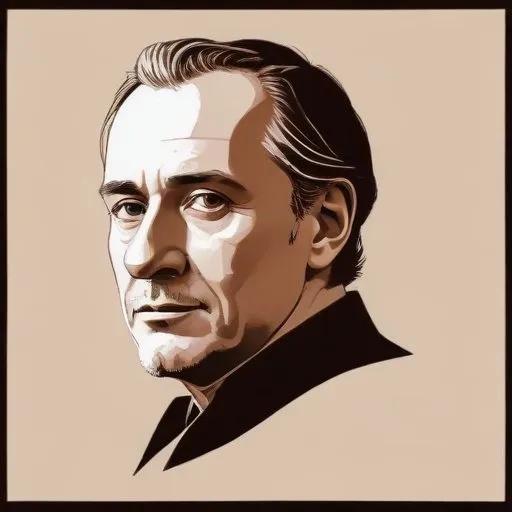
Ilja Hurnk: A Czech Composer and Essayist of Distinction
A Life of Musical Innovation
Ilja Hurnk was a renowned Czech composer and essayist, known for his innovative and eclectic style, which blended elements of modernism, neoclassicism, and folk music. His contributions to the world of classical music are multifaceted, with a diverse range of compositions that showcase his unique talent and artistic vision.
Early Life and Education
Born on November 25, 1922, in Poruba, now part of Ostrava, Hurnk's early life was marked by a passion for music. He entered the Prague Conservatory, where he honed his skills, and later attended the Prague Academy of Arts, studying under the guidance of Ilona Kurzová, daughter of Vítězslav Kurz.
Compositional Style and Notable Works
Hurnk's compositional style is characterized by its fusion of traditional Czech folk music with modernist and neoclassical elements. One of his most notable works is the 1952 Sonata da camera, a beautiful piece for flute, oboe, cello, and harpsichord, which has been recorded on Cedille Records. Another significant work is his 1951 ballet, Ondr, which showcases his mastery of orchestral composition.
- Ondr, Ballet, Silesian Folk Ballad (1949)
- Dma a lupii, Comic Opera in 4 acts (1966)
- Mudrci a bloudi, Opera in 3 Scenes on Themes of Antiquity, the Middle Ages and Modern Times (1986)
- Diogenes, Apocrypha (1973)
- Faux pas de quatre, Ballet-grotesque (1978)
- Rybi v sti, Comic Opera (1981)
- Oldich a Boenka, Opera (1984)
- Tance z baletu Ondr, Suite (1949, 1951)
- Komorn hudba, Chamber Music for string orchestra (1962)
- Kyklopes (1965)
- Serenade for string orchestra (1970)
- Vci, Divertimento for small orchestra (1977)
- Klicperovsk pedehra, Overture à la Klicpera (1978)
- Symfonieta (1996)
- Con brio (published 2000)
- Symphony in C (2000)
Legacy and Influence
Ilja Hurnk's legacy extends beyond his compositions, as he was also an influential figure in Czech musical circles. He was the father of Lukáš Hurník, a well-known composer and musician, and brother-in-law of Petr Eben, a prominent Czech composer. Hurnk's contributions to the world of classical music have left an indelible mark, and his music continues to inspire and delight audiences today.
Personal Life and Milestones
Hurnk passed away on September 7, 2013, at the age of 90, leaving behind a rich legacy of music and artistic expression. Throughout his life, he was driven by a passion for creativity and a desire to push the boundaries of classical music.
Influence on Modern Society
Ilja Hurnk's music has had a significant impact on modern society, contributing to the development of Czech classical music and inspiring future generations of composers. His innovative style and approach to composition have left a lasting legacy, and his music continues to be performed and admired by audiences around the world.
FAQ
What kind of music did Ilja Hurník compose?
Ilja Hurník was a Czech composer and playwright who wrote music in a variety of genres, including opera, ballet, and chamber music.
What was Ilja Hurníks most famous work?
Ilja Hurníks most famous work is the opera Bayerova.
Did Ilja Hurník teach music?
Yes, Ilja Hurník taught music theory and composition at the Prague Conservatory.
What awards did Ilja Hurník win?
Ilja Hurník won several awards for his work, including the Czech State Prize for Music.
When did Ilja Hurník pass away?
Ilja Hurník passed away on September 7, 2013, at the age of 90.