


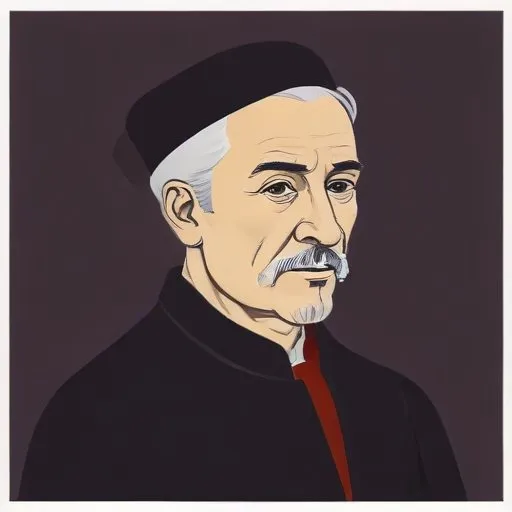
A 15th-century Polish historian and chronicler who wrote the first comprehensive history of Poland, providing valuable insights into the country's medieval past.
Jan Dugosz, also known as Johannes Longinus, is renowned for his monumental work, Annals or Chronicles of the Famous Kingdom of Poland, a 12-volume masterpiece that chronicles the history of Poland and southeastern Europe from 965 to 1480. This pioneering historian, diplomat, soldier, and secretary to Bishop Zbigniew Olenicki of Krakow left an indelible mark on Polish historiography, earning him the title of Poland's first historian.
Born on December 1, 1415, Jan Dugosz belonged to the Wieniawa coat of arms. He received his education at the University of Krakow, where he honed his skills in Latin, theology, and literature. This solid foundation laid the groundwork for his future endeavors as a chronicler and historian.
Dugosz's magnum opus, Annals or Chronicles of the Famous Kingdom of Poland, is a testament to his dedication and perseverance. Written in Latin, this exhaustive work covers events in Poland and southeastern Europe, as well as Western Europe, from 965 to 1480. Dugosz's innovative approach combined the features of medieval chronicles with elements of humanistic historiography, setting a new standard for historical writing.
As a diplomat, Dugosz was sent by King Casimir IV Jagiellon of Poland on missions to the Papal and Imperial courts. He played a crucial role in the king's negotiations with the Teutonic Knights during the Thirteen Years' War (1454-1466) and participated in the peace negotiations. These experiences broadened his perspective, allowing him to incorporate valuable insights into his historical writings.
In 1434, Dugosz's uncle appointed him canon of St. Martin's church in Kobuck, where he founded a canonical monastery. He later became a canon at Krakow, residing in the Dugosz House. Despite his many accomplishments, Dugosz humbly wrote about himself in the third person, a trait that speaks to his modest character.
Jan Dugosz's contributions to Polish historiography cannot be overstated. His work not only preserved Poland's rich history but also set a precedent for future historians. The Annals was first printed in 1701-1703, and its influence can be seen in the development of Polish historiography in the centuries that followed.
Jan Dugosz's remarkable life and works have left an indelible mark on Polish history and historiography. As a historian, diplomat, and Renaissance man, he embodied the spirit of his time, leaving behind a legacy that continues to inspire and educate generations to come.
Born in 1310
The last Piast king of Poland, who reformed the country's judicial system, established universities, and promoted trade and commerce, earning him the title "the Great".
Born in 1326
King of Hungary and Poland who ruled with an iron fist, expanding his kingdom and establishing a strong centralized government. He's also known for his military campaigns against the Ottoman Empire.
Born in 1554
Established the Congregation for the Propagation of the Faith, a missionary organization that aimed to spread Catholicism globally, and standardized the papal conclave process.
Born in 1536
Led the Catholic Church during a tumultuous period, issuing papal bulls and playing a key role in the Counter-Reformation. He's also famous for his coffee habit, being the first Pope to try and approve of it.
Born in 1521
The shortest-reigning pope in history, serving for only 13 days in 1590, he is remembered for his brief but tumultuous tenure.
