


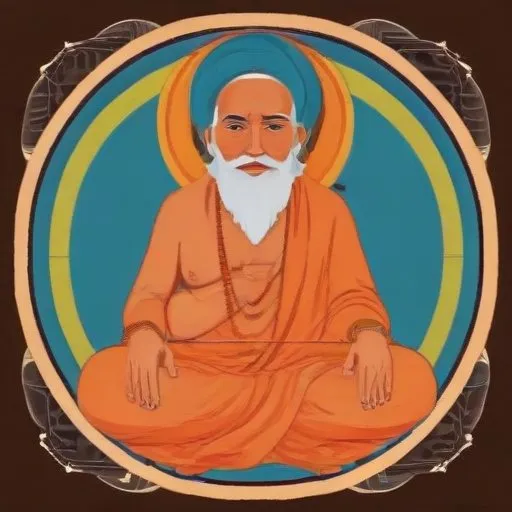
The spiritual leader of the Kanchi Matha monastery, a revered Hindu institution, known for his wisdom, teachings, and philanthropic efforts, guiding millions on the path of spirituality and self-realization.
Jayendra Saraswathi, the 69th Shankaracharya Guru and head of the Kanchi Kamakoti Peetham, left an indelible mark on Indian spirituality and social development. He was a revered religious leader, scholar, and philanthropist who traversed the length and breadth of the country, spreading the message of Adi Shankaracharya and guiding his followers towards a path of spiritual enlightenment.
Born as Subrahmanyam Mahadeva Iyer on July 18, 1935, Jayendra Saraswathi was nominated by his predecessor, Chandrashekarendra Saraswati, as his successor at the tender age of 19. He was given the pontifical title Sri Jayendra Saraswathi on March 22, 1954, and eventually succeeded Mahaperiyava Chandrashekara Saraswati Swamigal in 1960.
Throughout his illustrious career, Jayendra Saraswathi emphasized the importance of spirituality, education, and social welfare. He was a staunch advocate of the Advaita Vedanta philosophy, which he believed was the cornerstone of Indian spiritual heritage. His discourses and writings illuminated the principles of Vedanta, making it accessible to people from all walks of life.
Jayendra Saraswathi's tenure as the pontiff of Kanchi Kamakoti Peetham saw the establishment of numerous schools, hospitals, and eye clinics across India. He believed that education and healthcare were the pillars of a progressive society and worked tirelessly to provide these basic necessities to the underprivileged. His efforts led to the establishment of a direct connect with the people, earning him the respect and admiration of millions.
Jayendra Saraswathi's teachings and philanthropic efforts have had a profound impact on modern Indian society. His emphasis on education, healthcare, and social welfare has inspired generations of individuals to work towards the betterment of society. His legacy continues to inspire and guide people from all walks of life, making him one of the most revered spiritual leaders of our times.
“The true aim of human life is to realize the ultimate truth and attain liberation. Every individual should strive to achieve this goal, and that is the purpose of human existence.”
“Education is the key to unlock the potential of an individual and empower them to contribute to the development of society.”
“Service to humanity is the highest form of worship, and we must strive to serve others selflessly, without expecting anything in return.”
Jayendra Saraswathi's contributions to Indian spirituality and social development have cemented his place in history. As the 69th Shankaracharya Guru, he has carried forward the legacy of Adi Shankaracharya and his predecessors, inspiring generations to come. His selfless service to humanity has earned him a place in the hearts of millions, making him a true champion of Indian spirituality.
Born in 1918
Founded a style of yoga that emphasizes precise alignment, sequencing, and the use of props, which has become a widely practiced and respected approach to yoga globally.
Born in 1863
A key figure in introducing Indian philosophies to the Western world, he's known for his inspiring lectures and writings on spirituality, self-realization, and the unity of all religions.
99 Years Old
A spiritual leader and mystic who preached love, non-violence, and self-realization, attracting millions of followers worldwide with his alleged supernatural abilities and charitable works.
Born in 1896
Founded the Hare Krishna movement, promoting spiritual growth and self-realization through devotion to Lord Krishna. Known for translating ancient Indian texts and spreading Krishna consciousness globally.
Born in 1916
A renowned Indian spiritual guru and educator who popularized the teachings of Vedanta, a philosophy that emphasizes self-realization and spiritual growth, through his writings, lectures, and institutions.
Born in 1824
Founded the Arya Samaj, a Hindu reform movement that aimed to promote social and religious reform, and is known for his efforts to revitalize Hinduism and challenge social evils like casteism and child marriage.
