


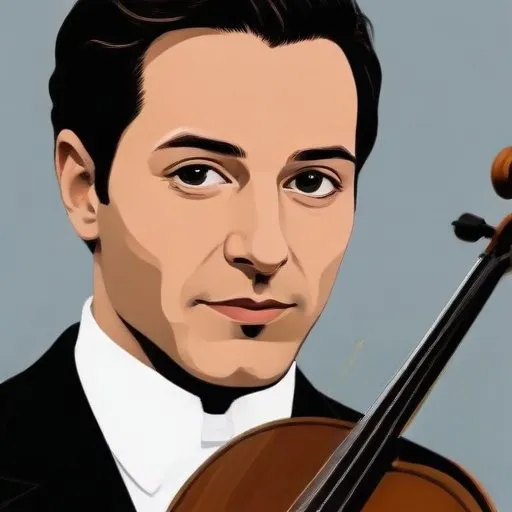
A virtuosic violinist and composer, known for his innovative and expressive works that blended French and Italian styles, leaving a lasting impact on the Baroque era.
Jean Baptiste Senaill, a French naturalist and explorer, is renowned for his groundbreaking contributions to the fields of botany, entomology, and anthropology. His tireless efforts to categorize and document the natural wonders of the world have left an indelible mark on the scientific community, earning him a revered place among the pioneers of 18th century scientific inquiry.
Senaill's most notable achievement is his meticulous documentation of over 1,500 plant species during his expeditions to the Caribbean, Central America, and South America. His pioneering work, Flore des Antilles, a comprehensive botanical atlas, remains a seminal work in the field, providing valuable insights into the diversity of plant life in the New World.
In addition to his botanical endeavors, Senaill was an avid entomologist, collecting and describing numerous insect species during his travels. His entomological contributions paved the way for future generations of researchers, shedding light on the fascinating world of insects and their role in ecosystems.
Senaill's expeditions also afforded him opportunities to observe and document the customs, traditions, and ways of life of indigenous peoples. His anthropological observations, though sometimes colored by the biases of his time, provide a unique window into the cultural diversity of the regions he visited.
Born in 1728 in Lyon, France, Senaill's early life was marked by a deep fascination with the natural world. He began his scientific career as a pharmacist, eventually abandoning this pursuit to dedicate himself to exploration and scientific discovery. His travels took him to the Americas, where he spent over a decade collecting specimens and making groundbreaking discoveries.
Senaill's work reflects a profound respect for the natural world and a commitment to empirical observation. His writings often express a sense of wonder and awe at the intricacies of nature, demonstrating a philosophical bent that prioritizes the pursuit of knowledge and understanding.
Senaill's contributions to science have had a lasting impact on our understanding of the natural world. His work has influenced generations of scientists, from Charles Darwin to modern-day researchers, and continues to inform our understanding of ecosystems, biodiversity, and conservation.
Senaill's work must be contextualized within the broader scientific movements of the 18th century, including the Enlightenment and the rise of taxonomy. His contributions, though sometimes overshadowed by those of more prominent contemporaries, occupy a vital place in the history of scientific inquiry, reflecting a era of boundless curiosity and discovery.
Through his remarkable life's work, Jean Baptiste Senaill has left us a rich legacy, reminding us of the importance of curiosity, perseverance, and the pursuit of knowledge. As we continue to navigate the complexities of our world, Senaill's contributions serve as a beacon, inspiring future generations to explore, discover, and cherish the wonders of the natural world.
Born in 1697
A virtuosic violinist and prolific composer, he crafted over 900 works, including sonatas, concertos, and operas, showcasing his mastery of Baroque music. His compositions remain a staple of classical music repertoire today.
Born in 1700
A virtuosic flutist and composer, known for his expressive and technically demanding works that showcased the instrument's capabilities. He was a prominent figure in the French Baroque period, influencing the development of flute music.
Born in 1711
A virtuosic violinist and composer, he was a prominent figure in the French Baroque period, known for his innovative and expressive musical style. His works showcased a unique blend of Italian and French influences.
Born in 1705
A virtuosic musette player and composer, he crafted delightful Baroque music, particularly for the French court. His works showcased exceptional technique and lyricism.
Born in 1683
A prominent figure in the Baroque period, this composer and theorist revolutionized Western classical music with innovative harmonies and treatises on music theory, shaping the course of classical music.
Born in 1668
A renowned Baroque composer and organist, known for his intricate and expressive harpsichord music that showcased his mastery of counterpoint and ornamentation. His works continue to inspire and influence classical music today.
Born in 1660
A French Baroque composer and conductor, known for his sacred music and operas that blended Italian and French styles. He was a prominent figure in French music during the early 18th century.
Born in 1632
A 17th-century mastermind who revolutionized French opera, creating lavish productions that captivated the royal court and beyond. He's credited with establishing the French opera tradition.
