


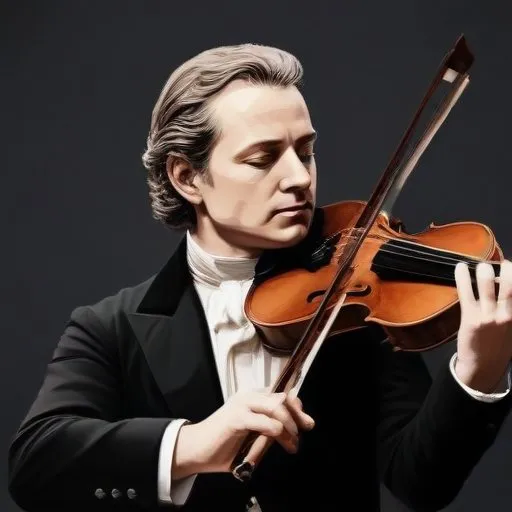
A virtuosic violinist and composer, he was a prominent figure in the French Baroque period, known for his innovative and expressive musical style. His works showcased a unique blend of Italian and French influences.
Jean-Joseph de Mondonville, a French violinist and composer, was a prominent figure in the 18th-century musical landscape, known for his virtuosic performances and innovative compositions that captivated the hearts of the royal court and theParisian elite. With a career spanning over three decades, Mondonville's contributions to the world of music remain unparalleled, earning him a reputation as one of the most celebrated musicians of his time.
Born on December 25, 1711, in Narbonne, Occitania, South France, Mondonville came from an aristocratic family that had fallen on hard times. Despite the family's financial struggles, Mondonville's talent and dedication to music earned him recognition, and in 1733, he moved to Paris, where he gained the patronage of Madame de Pompadour, the king's mistress.
Mondonville's compositional genius extended to operas and grands motets, which he produced for the Opéra and Concert Spirituel, respectively. His mastery of both orchestral and vocal music brought a new level of intensity and color to the grand motet, the dominant genre of the Chapelle royale's repertoire.
In 1755, Mondonville succeeded Pancrace Royer as the director of the Concert Spirituel, a position that cemented his status as a leading figure in French music.
Jean-Joseph de Mondonville's contributions to music continue to inspire and influence composers to this day. His innovative approach to the grand motet and opera, as well as his virtuosic violin performances, left an indelible mark on the musical landscape of 18th-century France. Despite his passing on October 8, 1772, at the age of 60, Mondonville's legacy endures, a testament to his unwavering dedication to the art of music.
Pierre-Louis Daquin, son of the composer Louis-Claude Daquin, once said, "If I couldn't be Rameau, there's no one I would rather be than Mondonville."
Born in 1683
A prominent figure in the Baroque period, this composer and theorist revolutionized Western classical music with innovative harmonies and treatises on music theory, shaping the course of classical music.
Born in 1668
A renowned Baroque composer and organist, known for his intricate and expressive harpsichord music that showcased his mastery of counterpoint and ornamentation. His works continue to inspire and influence classical music today.
Born in 1697
A virtuosic violinist and prolific composer, he crafted over 900 works, including sonatas, concertos, and operas, showcasing his mastery of Baroque music. His compositions remain a staple of classical music repertoire today.
Born in 1700
A virtuosic flutist and composer, known for his expressive and technically demanding works that showcased the instrument's capabilities. He was a prominent figure in the French Baroque period, influencing the development of flute music.
Born in 1715
A renowned Baroque-era organist and composer, known for his intricate and expressive harpsichord pieces that showcased his mastery of counterpoint and ornamentation.
Born in 1694
A renowned Baroque composer and organ virtuoso, known for his innovative and expressive harpsichord pieces, particularly his "Cuckoo and Nightingale" composition.
Born in 1689
A French Baroque composer who wrote over 100 operas, oratorios, and instrumental works, known for his contributions to the development of the French opera.
Born in 1632
A 17th-century mastermind who revolutionized French opera, creating lavish productions that captivated the royal court and beyond. He's credited with establishing the French opera tradition.
