


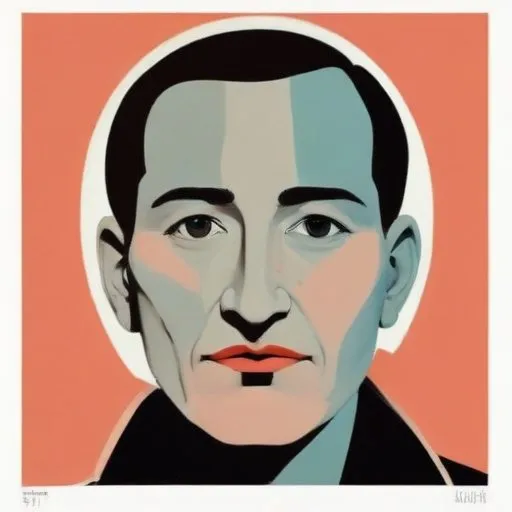
A Swiss-French painter who blended Cubism and Futurism to create vibrant, dynamic works that explored the relationship between color and movement. His unique style and experimentation with multiple art forms left a lasting impact on modern art.
Known for his vibrant colors and abstract forms, Jean Crotti was a French painter who made significant contributions to the development of modern art. Born in Switzerland in 1878, Crotti's artistic style evolved over the years, reflecting his associations with various avant-garde movements, including Fauvism, Art Nouveau, and Orphism.
Crotti was born in Bulle, Fribourg, Switzerland, to a family of modest means. He received his early training in Munich, Germany, at the School of Decorative Arts, before moving to Paris in 1901 to study art at the Académie Julian. During this period, he was heavily influenced by Impressionism, which is evident in his early works.
It was in Paris that Crotti's art began to take shape. He became friends with Marcel Duchamp and Francis Picabia, two influential artists who would later play a crucial role in shaping his style. Around 1910, Crotti started experimenting with Orphism, an offshoot of Cubism that emphasized geometric forms and vibrant colors. His association with Duchamp and Picabia in New York City further solidified his connection to this movement.
In 1915, Crotti fled to New York City to escape the turmoil of World War I. It was in this city that he became involved with the Dada movement, a radical anti-art movement that challenged traditional notions of art. During this period, he exhibited Orphist-like paintings, including his famous Portrait of Marcel Duchamp and Les Forces Mécaniques de l'amour Mouvement, which showcased his use of found objects.
In 1916, Crotti separated from his wife, Yvonne Chastel, and returned to Paris, where he began a romantic relationship with Suzanne Duchamp, Marcel's sister. They married in 1919, and Suzanne would go on to significantly influence Crotti's painting style. Throughout the 1920s, Crotti continued to produce remarkable works, including a portrait of Thomas Edison, and participated in several international exhibitions.
Today, Jean Crotti's works can be found in prominent museums and private collections around the world. His heirs donated his personal papers to the Archives of American Art, Smithsonian Institution, providing valuable insights into his artistic process and personal life. In 2011, Francis M. Naumann Fine Art showcased an exhibition, Inhabiting Abstraction, featuring some of Crotti's most important works.
Through his pioneering work in Orphism and his involvement with the Dada movement, Jean Crotti left an indelible mark on the development of modern art. His vibrant colors, abstract forms, and innovative use of found objects continue to inspire artists and art enthusiasts to this day.
Born in 1889
A pioneering artist of the Dada movement, known for creating innovative photomontages that challenged societal norms and blurred the lines between art and politics.
Born in 1887
A pioneer of Dadaism, creating avant-garde collages and assemblages that blurred the lines between art and everyday life. His innovative approach to art paved the way for future generations of artists .
Born in 1885
A pioneer of Orphism, a style of abstract art that emphasizes geometric shapes and vibrant colors, creating dynamic and expressive works that explore the emotional potential of color. 42
Born in 1896
French poet and author who founded Surrealism, a cultural movement that explored the subconscious and the world of dreams. He wrote novels, poems, and essays that continue to influence art and literature today.
Born in 1882
A pioneer of Cubism, creating fragmented forms and multiple perspectives in art, revolutionizing modern art movements.
