


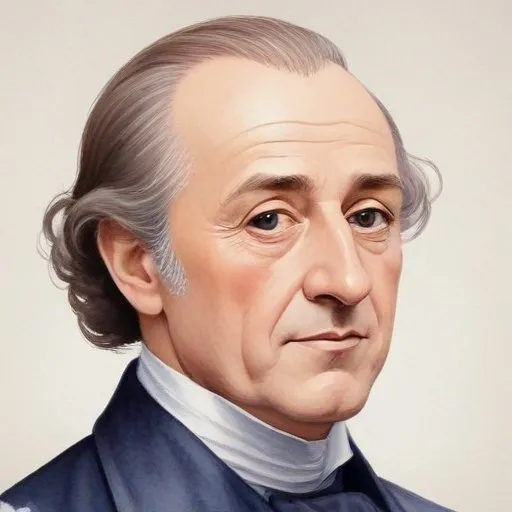
A French composer and educator who taught renowned composers like Hector Berlioz and Ambroise Thomas, and wrote operas and sacred music. He was a prominent figure in the Paris Conservatory.
JeanFranois Le Sueur was a renowned French composer, celebrated for his operas and oratorios that captivated audiences during the late 18th and early 19th centuries. His innovative approach to music, particularly in the sacred genre, earned him a reputation as a master of his craft.
Le Sueur was born on February 15, 1760, in Plessiel, a hamlet of Drucat near Abbeville, France. He hailed from a long-established family of Picardy, with a notable ancestor being the painter Eustache Le Sueur. Le Sueur's early musical inclinations were nurtured as a chorister at the collegial church of Abbeville and later at the cathedral of Amiens, where he pursued his music studies.
Le Sueur's talent and dedication soon earned him prominent positions in various French cities. He served as chorus master at the cathedral of Ses, and later in Dijon (1779), Le Mans (1782), and Tours (1783). His big break came in 1786 when he succeeded Abb Nicolas Roze as music director at the prestigious Notre-Dame de Paris.
Le Sueur's innovative spirit led him to introduce orchestral music to the Feast of the Assumption at Notre-Dame, garnering great success but also sparking resistance from ecclesiastical circles. In response, he published a pamphlet, Expos d'une musique imitative et particulière à chaque solennité (1787), defending his artistic choices.
Le Sueur's operatic career flourished in the 1790s, with three successful works at the Théâtre Feydeau: La Caverne, ou le Repentir (1793), Paul et Virginie, ou le Triomphe de la vertu (1794), and Tlmaque dans l'île de Calypso, ou le Triomphe de la sagesse (1796). During this period, he was also appointed professor at the École de la Garde Nationale (1793) and later became an inspector at the newly founded Conservatoire.
Le Sueur's contributions to French music are undeniable. His innovative approach to sacred music and opera paved the way for future generations of composers. His works continue to be celebrated for their beauty, elegance, and emotional depth.
JeanFranois Le Sueur passed away on October 6, 1837, leaving behind a rich musical legacy that continues to inspire and delight audiences to this day.
Born in 1714
A pioneering opera composer who revolutionized the art form with his innovative and expressive works, blending music and drama in a way that captivated audiences.
Born in 1683
A prominent figure in the Baroque period, this composer and theorist revolutionized Western classical music with innovative harmonies and treatises on music theory, shaping the course of classical music.
Born in 1782
A virtuosic violinist and composer who revolutionized the instrument's technical possibilities, leaving an indelible mark on classical music.
Born in 1668
A renowned Baroque composer and organist, known for his intricate and expressive harpsichord music that showcased his mastery of counterpoint and ornamentation. His works continue to inspire and influence classical music today.
Born in 1632
A 17th-century mastermind who revolutionized French opera, creating lavish productions that captivated the royal court and beyond. He's credited with establishing the French opera tradition.
Born in 1659
A renowned Baroque composer, known for his iconic opera "Dido and Aeneas" and contributions to English classical music.
Born in 1678
A virtuosic violinist and prolific composer, he crafted over 400 concertos, including "The Four Seasons," which remains a beloved and iconic masterpiece of classical music.
Born in 1756
A child prodigy and master of classical music, he composed over 600 works, including symphonies, operas, and chamber music, that continue to inspire and influence musicians today.
