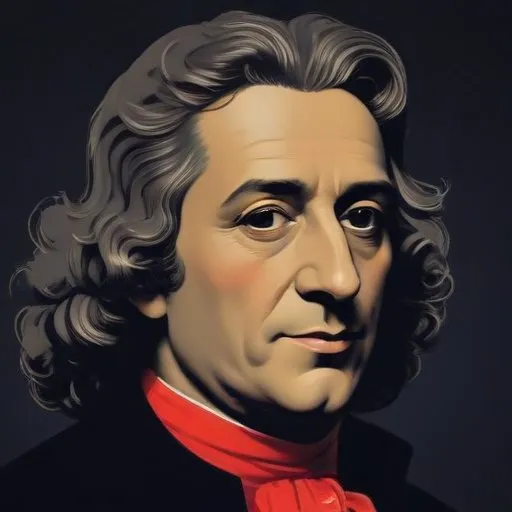
The Forgotten Prodigy: Jean-Louis Lully's Fleeting yet Fascinating Legacy
A Composer of Renown, Cut Short
Jean-Louis Lully, the youngest son of legendary composer
Jean-Baptiste Lully, was a French musician and composer in his own right. Born on September 24, 1667, in Paris, Jean-Louis was poised to follow in his father's footsteps, and at the tender age of 20, he succeeded his father as
surintendant and
compositeur de la musique de la chambre du roi, a prestigious position that solidified his status as a rising star in the world of music.
A Collaborative Spirit
While Jean-Louis's skill as a composer remains somewhat of an enigma, his collaborations with Pierre Vignon, a fellow musician, yielded several notable works. One such piece was the lyric tragedy
Zphir et Flore, written in 1688, with a libretto by Michel Duboullay. Interestingly, Jean-Louis's older brother Louis also contributed to this opera. Another notable work was an
Idylle, performed at Anet, showcasing Jean-Louis's versatility as a composer.
A Legacy Cut Short
Tragically, Jean-Louis's promising career was cut short when he passed away on December 23, 1688, at the age of 21. The music world was robbed of a potential genius, and the full extent of his talent was never fully realized.
Career Highlights and Major Works
- Zphir et Flore (1688) - a lyric tragedy, collaboration with Pierre Vignon and libretto by Michel Duboullay
- Idylle - performed at Anet, collaboration with Pierre Vignon
Influence on Modern Society
Although Jean-Louis's life was brief, his legacy lives on as a testament to the power of family ties and the importance of nurturing artistic talent. His story serves as a reminder of the fragility of life and the importance of seizing opportunities, making the most of one's talents, and leaving a lasting impact on the world.
Historical Context and Legacy
Jean-Louis Lully's life and career were inextricably linked to his father's, and his untimely death meant that he was never able to fully establish himself as a composer in his own right. Despite this, his collaborations with Pierre Vignon and his brief tenure as
surintendant and
compositeur de la musique de la chambre du roi demonstrate his potential and promise as a musician.
Trivia and Fun Facts
- Jean-Louis's father, Jean-Baptiste Lully, was a renowned composer and musician who dominated the French musical scene during the 17th century.
- Jean-Louis's elder brother, Louis, was also a composer and musician, and the two collaborated on several projects.
By examining Jean-Louis Lully's life and career, we gain a deeper understanding of the complexities of family dynamics, the importance of nurturing talent, and the transient nature of life. His story serves as a poignant reminder to cherish our time, pursue our passions, and leave a lasting impact on the world.
FAQ
What is Jean-Louis Lullys most famous work?
Jean-Louis Lully was a French composer who is best known for his opera Alceste, ou Le triomphe dAlcide. It was first performed in 1674 and is considered one of the greatest works of the French Baroque period.
What was Jean-Louis Lullys role in the development of French opera?
Jean-Louis Lully played a key role in the development of French opera. He was one of the first composers to write opera in the French language and developed the genre of tragédie en musique, a form of opera that combined music, dance, and drama.
What is the story behind Jean-Louis Lullys death?
Jean-Louis Lully died in 1687 after striking his foot with his conducting staff during a performance of his Te Deum. The injury became infected and eventually led to his death.
What was Jean-Louis Lullys relationship with King Louis XIV?
Jean-Louis Lully was a favorite of King Louis XIV, who was a great patron of the arts. Lullys music was frequently performed at the Palace of Versailles and he was granted a monopoly on opera performances in France.
What is Jean-Louis Lullys legacy in French music?
Jean-Louis Lullys legacy in French music is immense. He is remembered as one of the greatest composers of the French Baroque period and his music continues to be performed and celebrated today.