


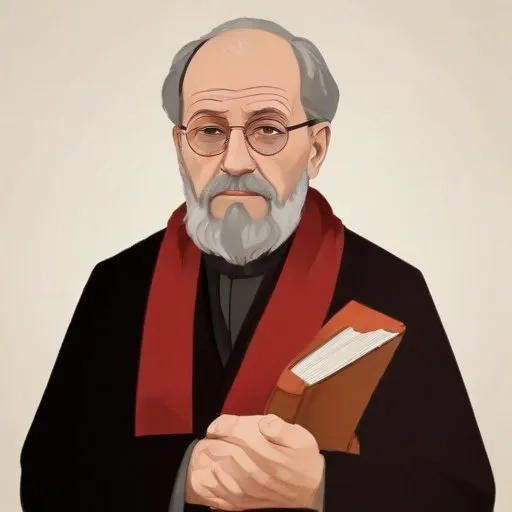
A German theologian and scholar who played a significant role in the Counter-Reformation, producing influential writings that defended Catholic doctrine against Protestantism. His works remain important for understanding the theological debates of the 16th century.
Jerome Emser, a German theologian, is best known for his fierce opposition to Martin Luther, the father of the Protestant Reformation. Born on March 20, 1477, in Ulm, Emser's life was marked by a passion for theology and a dedication to defending the Roman Catholic Church.
Emser's love for learning was evident from a young age. He studied Greek at Tübingen and jurisprudence at Basel, laying the foundation for a successful career in theology. His academic pursuits eventually led him to Erfurt, where he began lecturing on classics in 1504. It was during this time that Luther may have been among his audience, unaware that their paths would soon cross in a battle of theological wits.
Emser's talents did not go unnoticed. He soon caught the attention of Duke George of Albertine Saxony, who appointed him as his secretary. This position not only provided Emser with financial stability but also granted him access to the highest echelons of power. The Duke's influence secured Emser a prebend at Dresden in 1509 and another at Meissen, allowing him to focus on his studies and pursue his passion for theology.
As the Protestant Reformation gained momentum, Emser found himself at the forefront of the Catholic Counter-Reformation. He was initially sympathetic to Luther's calls for reform, but his liberal sympathies were rooted in humanism, unlike Luther's more radical approach. The Leipzig Debate in 1519 marked a turning point in their relationship, with Emser warning his Bohemian friends against Luther's teachings. The ensuing polemical battle between the two theologians would become legendary for its vitriol.
Emser's theology was characterized by a strong commitment to traditional Catholic doctrine and a desire for practical reform within the Church. He believed in the importance of canon law and the authority of the Church, which put him at odds with Luther's more radical ideas. Emser's humanistic approach to theology led him to champion the cause of education and intellectual inquiry, earning him the respect of scholars like Erasmus.
Jerome Emser's legacy is complex and multifaceted. While he is often remembered as Luther's antagonist, his contributions to Catholic theology and his commitment to education should not be overlooked. His debates with Luther helped shape the course of the Protestant Reformation, and his influence on Catholic theology continues to be felt to this day. Emser's life serves as a testament to the power of intellectual curiosity and the importance of standing by one's convictions, even in the face of adversity.
| 1477 | Jerome Emser born on March 20 in Ulm |
|---|---|
| 1504 | Emser begins lecturing on classics at Erfurt |
| 1509 | Emser becomes secretary to Duke George of Albertine Saxony |
| 1510 | Emser travels to Rome in search of materials for a life of Bishop Benno of Meissen |
| 1519 | The Leipzig Debate marks a turning point in Emser's relationship with Luther |
| 1527 | Jerome Emser dies on November 8 |
Jerome Emser's life was a testament to the power of intellect and conviction. His legacy serves as a reminder that even in the face of adversity, one's commitment to their beliefs can shape the course of history.
Born in 1483
A German monk and priest who sparked the Protestant Reformation, challenging Catholic Church authority and shaping Western Christianity. He's famous for nailing 95 theses to a church door, sparking a religious revolution.
Born in 1469
A 16th-century Dominican friar and theologian, he played a key role in the Catholic Counter-Reformation, engaging in debates with Protestant reformers like Martin Luther. He's known for his commentaries on Aristotle and Aquinas.
Born in 1484
Leader of the Swiss Reformation, advocating for church reform and inspiring other Protestant movements.
Born in 1509
A French pastor and theologian who played a key role in the Protestant Reformation, shaping Christian theology and influencing Western civilization. He's famous for his teachings on predestination and his role in establishing Calvinism.
Born in 1488
A German knight and scholar who played a key role in the Protestant Reformation, advocating for church reform and criticizing corruption within the Catholic Church.
Born in 1497
A 16th-century Renaissance scholar who made significant contributions to the development of the Protestant Reformation and education, known for his theological writings and astronomical observations.
Born in 1499
A prominent figure in the Protestant Reformation, this theologian played a key role in shaping Lutheran theology and was a close associate of Martin Luther. He's also known for his biblical commentaries and liturgical reforms.
