


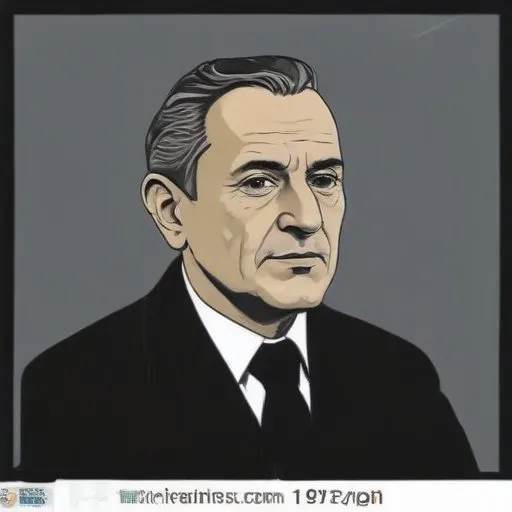
A Polish-Swedish physician and politician who pioneered radiation therapy for cancer treatment and served as a member of the Swedish Parliament. He's known for his groundbreaking work in oncology and humanitarian efforts.
Jerzy Einhorn, a Polish-born Swedish medical doctor, researcher, and politician, is renowned for his remarkable journey as a Holocaust survivor and his exceptional contributions to the field of oncology and radiotherapy. As the chief physician at Sweden's prestigious Radiumhemmet at the Karolinska University Hospital, Einhorn left an indelible mark on the medical community.
Born on July 26, 1925, in Częstochowa, Poland, Einhorn grew up in a Yiddish-speaking Jewish family. During World War II, he became a victim of the Holocaust, surviving the Warsaw Ghetto and the Czestochowa Ghetto, as well as the HASAG-Płaczów concentration camp between 1943 and 1945. His harrowing experiences during this period later inspired his book, Utvald att leva ("Chosen to Live").
After graduating from secondary school in 1945, Einhorn began studying medicine at the University of Łódź, Poland. He later continued his studies in Denmark, where he met his wife, Nina. The couple decided not to return to Poland due to the rising antisemitism and instead sought asylum in Sweden. Einhorn's medical career flourished in Sweden, where he became a professor of radiotherapy and director of the Karolinska Hospital in Stockholm.
As a distinguished researcher, Einhorn made significant contributions to the field of oncology, earning him numerous honors, including membership in the Nobel Prize Committee in medicine and an honorary membership with the gold medal of the Radiological Society of North America.
In addition to his medical pursuits, Einhorn was actively involved in politics, serving as a Swedish MP for the Christian Democrats from 1991 to 1994. Alongside his wife, Nina, he was dedicated to Zionist fundraising, demonstrating his commitment to the Jewish community.
Einhorn's children, Stefan and Lena Einhorn, are both accomplished authors in Sweden. Stefan Einhorn, a professor of molecular oncology at the Karolinska Institute, continues his father's legacy in the field of oncology.
Through his remarkable life story, Jerzy Einhorn inspires generations with his resilience, intellect, and dedication to humanity. His contributions to medicine, politics, and the Jewish community have left a lasting impact on the world.
By delving into the extraordinary life of Jerzy Einhorn, we are reminded of the importance of perseverance, compassion, and the pursuit of knowledge.
Born in 1897
A Polish-Swiss chemist and academic who discovered vitamin C and developed a method for its industrial production, earning a Nobel Prize in Physiology or Medicine in 1937.
Born in 1903
A Swedish biochemist and academic who discovered the oxidation enzyme and its effects on cells, earning him the Nobel Prize in Physiology or Medicine in 1955.
Born in 1900
A Finnish-Swedish physiologist who discovered the workings of the retina and developed the concept of receptive fields, earning him the Nobel Prize in Physiology or Medicine in 1967. His work laid the foundation for modern neuroscience and visual perception research.
Born in 1905
A Swedish physiologist and academic who discovered neurotransmitters, specifically noradrenaline, and its role in the nervous system, earning him a Nobel Prize in Physiology or Medicine in 1970.
Born in 1873
A Nobel Prize-winning biochemist who discovered the co-enzyme Q and its importance in cellular respiration, making significant contributions to our understanding of cellular energy production.
Born in 1924
A Swedish neurophysiologist and academic who discovered the organization and function of the visual cortex, and was awarded the Nobel Prize in Physiology or Medicine in 1981 for his work on the brain's visual system.
Born in 1926
A Nobel Prize-winning neurophysiologist who uncovered the inner workings of the visual cortex, revealing how the brain processes visual information. Their groundbreaking research revolutionized our understanding of the human brain.
