


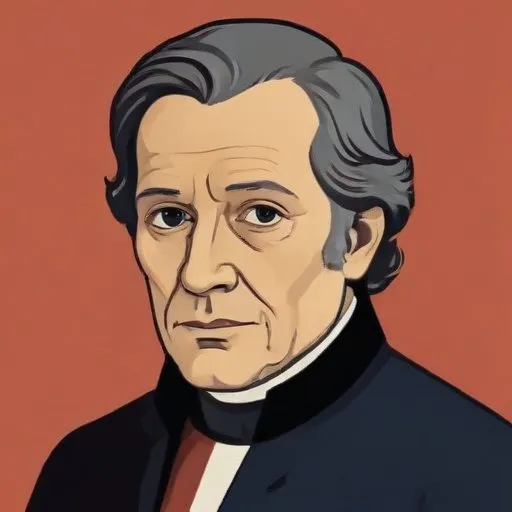
A prominent Swedish Baroque composer and music theorist, known for his contributions to the development of Swedish music and his influential treatise on harmony and composition.
Johan Helmich Roman, a Swedish Baroque composer, is revered as the "Father of Swedish Music" or the "Swedish Handel" for his immense contributions to the country's musical landscape. He was the leader of the Swedish Royal Orchestra during the first decades of Sweden's Age of Liberty, leaving an indelible mark on the nation's cultural heritage.
Roman was born on October 26, 1694, in Stockholm, to Johan Roman, a member of the Swedish royal chapel. The family name Roman is believed to be derived from the Finnish place name Rauma, as his ancestors lived in Finland. The young Roman received his first music lessons from his father and later joined the royal chapel in 1711 as a violinist and oboist.
Around 1715, King Charles XII granted Roman permission to study abroad, and he spent six years in London. During this period, he almost certainly studied under Johann Christoph Pepusch, met Francesco Geminiani, Giovanni Bononcini, and, most importantly, George Frideric Handel, whose music had a lasting impact on Roman's compositional style.
Roman returned to Sweden in 1721 and was soon appointed deputy master of the royal chapel. Six years later, he became the Chief Master of the Swedish Royal Orchestra. His life during the 1720s was marked by organizational activity, which led to improved standards at the chapel and the introduction of public concerts in Sweden in 1731. Roman's only work published during his lifetime, a collection of 12 sonatas for flute, violone, and harpsichord, appeared in 1727.
In 1730, Roman married, but his wife died just four years later. In 1734, he left Sweden to visit several European countries, including Austria, England, France, Germany, and Italy. He returned to Stockholm in 1737, bringing back a wealth of music by various composers for the royal chapel to perform. In 1738, Roman married again, and in 1740, he was elected a member of the newly established Royal Academy of Sciences.
Roman's successful career took a turn for the worse in the early 1740s, but his contributions to Swedish music are still celebrated today. He is remembered for his tireless efforts to promote Swedish music, his mastery of the Baroque style, and his influence on future generations of composers. Roman's legacy extends beyond his music, as he played a significant role in shaping Sweden's cultural identity during the Age of Liberty.
Roman was elected a member of the Royal Academy of Sciences in 1740, recognizing his contributions to the fields of music and science.
Johan Helmich Roman's rich legacy continues to inspire and influence Swedish music to this day, solidifying his position as one of the most important figures in the country's musical history.
Born in 1714
A renowned 18th-century musician, he was a prolific composer and virtuosic performer, known for his expressive and innovative keyboard music that bridged the Baroque and Classical styles. His compositions, particularly for harpsichord and piano, showcased his mastery of counterpoint and harmony.
Born in 1685
A renowned Baroque composer and organist, famous for creating majestic orchestral suites, operas, and oratorios, including the iconic "Messiah" masterpiece.
Born in 1685
A virtuosic harpsichordist and composer, renowned for crafting over 550 sonatas that showcased his innovative and expressive style, blending Italian and Portuguese influences. 42
Born in 1685
A master of Baroque music, he composed over 1,000 works, including orchestral suites, cantatas, and passions, that still inspire and influence musicians today. His innovative use of counterpoint and harmony raised the bar for classical music.
Born in 1686
A renowned Baroque composer and teacher, known for his operas and vocal music, influencing many famous composers, including Haydn and Mozart.
Born in 1696
A virtuosic violinist and composer, known for his innovative and expressive works that blended Italian and Germanic styles. His compositions showcased exceptional technical skill and emotional depth.
Born in 1710
A Baroque composer, violinist, and organist who made significant contributions to the development of opera and sacred music, particularly with his famous "Stabat Mater" composition.
Born in 1699
A renowned Baroque opera composer and accomplished singer, he wrote over 60 operas and numerous sacred works, influencing the development of classical music.
